
Summary of AttoBasic HOME using Atmega168 microcontroller
AttoBasic is an interactive BASIC interpreter for Atmel AVR controllers, enabling direct execution of programs without compilation. It supports debugging, data acquisition, and peripheral control via serial communication. Key features include saving and recalling programs from EEPROM for automatic startup execution after a reset. The system operates on various AVR chips with 2K or more Flash memory.
Parts used in the AttoBasic Project:
- ATMEGA328 microcontroller
- ATMEGA168 microcontroller
- ATMEGA88M microcontroller
- ATMEGA32U4 microcontroller
- ATMEGA32 microcontroller
- ATMEGA163 microcontroller
- ATMEGA8515 microcontroller
- ATTINY2313 microcontroller
- AT90S8515 microcontroller
- AT90S2313 microcontroller
- Serial terminal or emulator
- EEPROM memory
This is the central location for resource for all versions of AttoBasic for Atmel AVR controllers and Adurino computers
Devices directly supported include ATMEGA328, ATMEGA168, ATMEGA88M, ATMEGA32U4, ATMEGA32, ATMEGA163, ATMEGA8515, ATTINY2313, AT90S8515, AND AT90S2313
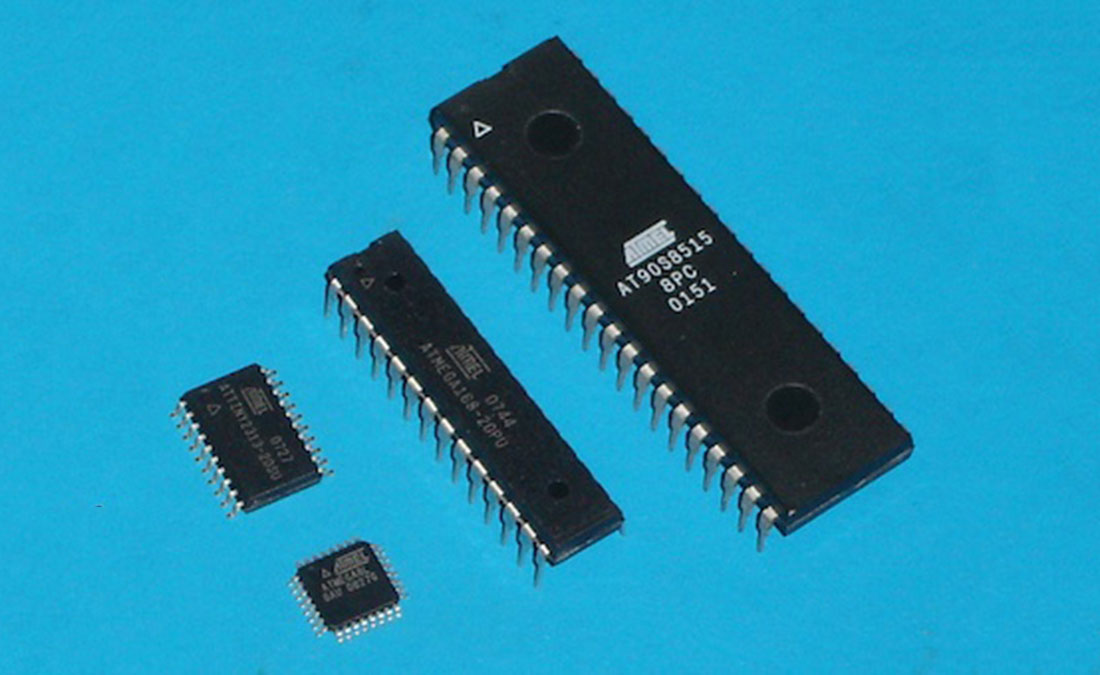
Versions of AttoBasic run on several AVR controllers with 2K or more of Flash
Overview
AttoBasic is a on-chip resident interactive Basic interpreter loosely based on memories of NASCOM Tiny Basic. AttoBasic interpets single lines from a terminal or an entire program stored in memory without the delay of compiling and loading an entire program. It is an excellent tool for debugging and experimentation on hardware.
AttoBasic controllers can be used with a serial terminal or terminal emulator, or as part of a larger system to provided one-chip digital and analog data acquisition and output as a BASIC programmable peripheral interface controller for other microcontrollers or computers via unidirectional or bidirectional serial communications, and they can also be used as the core of instruments.
The ability to save to and recall programs from EEPROM memory allow automatic execution of the program when the controller comes out of reset.
For more detail: AttoBasic HOME using Atmega168 microcontroller
- What is AttoBasic?
It is an on-chip resident interactive Basic interpreter loosely based on NASCOM Tiny Basic. - How does AttoBasic handle program execution?
It interprets single lines from a terminal or entire programs stored in memory without compiling delays. - Can AttoBasic save programs automatically?
Yes, it saves to and recalls programs from EEPROM memory to allow automatic execution after reset. - Which devices are directly supported by AttoBasic?
Supported devices include ATMEGA328, ATMEGA168, ATMEGA88M, ATMEGA32U4, ATMEGA32, ATMEGA163, ATMEGA8515, ATTINY2313, AT90S8515, and AT90S2313. - What is the minimum Flash requirement for running AttoBasic?
Versions run on several AVR controllers with 2K or more of Flash. - Can AttoBasic be used as a peripheral interface controller?
Yes, it can provide one-chip digital and analog data acquisition and output for other microcontrollers or computers. - Does AttoBasic require a separate computer to run?
No, it runs on-chip but can connect to a serial terminal or emulator for interaction. - How does AttoBasic assist in hardware debugging?
It serves as an excellent tool for debugging and experimentation because it avoids the delay of compiling and loading entire programs.
