
Summary of Graphene MEMS Outperforms Silicon
Researchers at KTH Stockholm discovered that graphene membranes boost MEMS sensor sensitivity by 100 times due to their sub-nanometer thinness. Unlike traditional silicon-based piezoresistive sensors, this new design suspends a monolayer of graphene over an etched cavity in silicon dioxide on a silicon substrate. This extreme thinness significantly enhances the electromechanical effect, allowing for superior performance compared to standard silicon components.
Parts used in the Graphene MEMS Sensor:
- Graphene membrane
- Silicon dioxide film
- Silicon substrate
- Piezoresistive silicon resistors
- Ethylated cavity structure
Graphene can increase the sensitivity of micro-electro-mechanical system (MEMS) Sensors by up to 100 times, according to researchers at the Swedish KTH (Kungliga Tekniska Högskolan) Royal Institute of Technology in Stockholm.
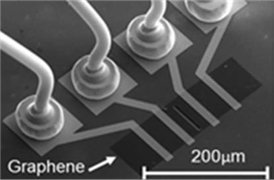
“The advantage of using graphene membranes for piezoresistve Sensors is their extreme thinness,” Frank Niklaus, a professor at KTH, told EE Times. “The sensitivity of piezoresistive membrane sensors scale with reduced membrane thickness.”
Piezoresistive pressure Sensors typically integrate piezoresistive silicon resistors into sensor membranes, so that resistivity reads out strain. The MEMs version suspends the membrane over a cavity by etching out the silicon dioxide on the layer below it. KTH’s version suspends an extremely thin layer of graphene over a cavity etched into a silicon dioxide film on a silicon substrate. The extreme thinness of graphene membrane — sub-nanometer for monolayers — correspondingly increases the sensitivity of the electromechanical effect that makes the sensor work.
For more detail: Graphene MEMS Outperforms Silicon
- How much does graphene increase MEMS sensor sensitivity?
It increases sensitivity by up to 100 times. - Why are graphene membranes advantageous for piezoresistive sensors?
Their extreme thinness allows sensitivity to scale with reduced membrane thickness. - What material is suspended over the cavity in KTH's version?
An extremely thin layer of graphene is suspended over the cavity. - How is the cavity created in the silicon dioxide film?
The cavity is formed by etching out the silicon dioxide layer. - Does the sensitivity depend on membrane thickness?
Yes, sensitivity scales directly with reduced membrane thickness. - What is the thickness of the monolayer graphene used?
The monolayers have a sub-nanometer thickness. - What effect makes the sensor work?
The electromechanical effect driven by strain reading via resistivity.
