
Summary of How a Microwave oven works?
This article explains the heating mechanism of a microwave oven. It details how the magnetron, a vacuum tube, generates radio frequencies that make water molecules in food vibrate rapidly to produce heat. The text also illustrates the concept of standing waves within the oven cavity and mentions using melted cheese to measure the wavelength of these radio waves before concluding with a summary of the magnetron's function.
Parts used in the Microwave Oven:
- Microwave vacuum tube (magnetron)
- Radio frequencies
- Water in food
- Standing wave inside the oven
- Melted cheese (used for measurement)
Bill details how a microwave oven heats food. He describes how the microwave vacuum tube, called a magnetron, generates radio frequencies that cause the water in food to rotate back and forth.
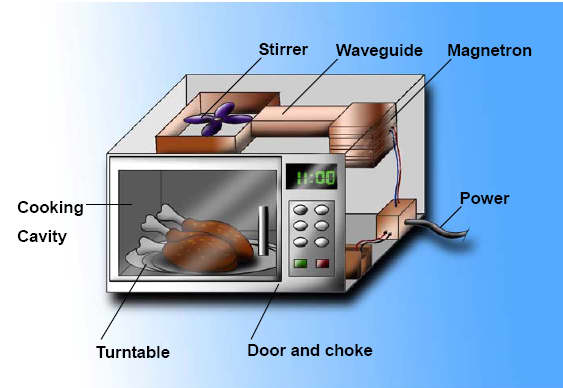
He shows the standing wave inside the oven, and notes how you can measure the wavelength with melted cheese. He concludes by describing how a magnetron generates radio waves.
- How does a microwave oven heat food?
The magnetron generates radio frequencies that cause the water in food to rotate back and forth. - What component generates the radio frequencies?
A microwave vacuum tube called a magnetron generates the radio frequencies. - What happens to water molecules when exposed to microwaves?
The water molecules rotate back and forth due to the generated radio frequencies. - Can you measure the wavelength inside an oven?
Yes, you can measure the standing wave wavelength with melted cheese. - What is shown inside the oven cavity?
A standing wave is shown inside the oven. - Does the magnetron generate radio waves?
Yes, the magnetron generates radio waves as described in the conclusion. - What is the primary function of the magnetron?
The primary function is to generate radio frequencies that heat food.
