
Summary of How Flexplay DVDs Work
The Flexplay Twist summary: Flexplay DVDs include an extra oxygen-reactive layer in place of normal adhesive between bonded disc halves. Sealed in airtight packaging, the layer remains transparent; once opened, exposure to air slowly creates an opaque compound that blocks the laser, rendering the disc unreadable after a controlled rental period (typically about 48 hours to cloud, with packaging extending shelf life to at least a year). The visible color shifts from red to black as the reaction proceeds. Manufacturers substitute Flexplay proprietary adhesive into standard production to form this time-limited layer.
Parts used in the Flexplay Twist:
- Standard DVD disc halves with data tracks
- Flexplay proprietary adhesive (oxygen-reactive layer)
- Resin adhesive (standard, replaced in Flexplay production)
- Airtight packaging
- Reflective inner layers of the DVD
- Manufacturing bonding machinery
The Flexplay Twist
The secret to Flexplay discs is an extra layer added to a standard DVD structure. This specialized layer includes a chemical compound that readily combines with oxygen in the atmosphere to form a new chemical compound.
While the original chemical compound is transparent, the new chemical compound is opaque. When the layer is transparent, the laser passes straight through to the reflective layers, reading the DVD as it normally would. When the layer is opaque, the laser can’t make it to the inner reflective layer, so the disc is effectively blank to the DVD player.
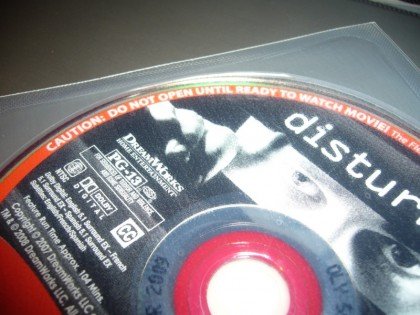
The disc comes in an airtight package, so oxygen can’t get to the additional layer. When you open the packaging, the oxygen in the atmosphere starts a chemical reaction. The particular chemicals are balanced so that the reaction proceeds very slowly at first, during the “rental period,” and then speeds up. When the reaction speeds up, the specialized layer goes from clear to cloudy. By varying the exact chemical mix in the this added layer, Flexplay can adjust the length of the rental period.
The airtight package slows the reaction down to the point that the DVD will remain fully functional for at least a year.
You can actually see the process at work in the disc. When you first open the airtight package, the disc has a reddish color. When the compound changes, the red color turns to black.
To make these modified DVDs easy to mass produce, Flexplay needed a way to add the specialized layer without overhauling the standard manufacturing process. As we saw in the last section, the two data tracks start out on two separate discs, which the manufacturing machinery bonds together with resin adhesive. To make a Flexplay DVD, the disc manufacturers replace the normal adhesive with Flexplay’s proprietary adhesive. This adhesive hardens to form the specialized plastic layer that clouds up over 48 hours.
It’s anybody’s guess how far this technology will go. The program doesn’t have to edge out traditional video stores to be a success — it simply needs to find a core audience who prefer its unique rental system. Only time will tell.
For more information about Flexplay DVDs and related technologies, check out the links in the next section.
For more detail: How Flexplay DVDs Work
- How does the extra layer in a Flexplay DVD work?
The extra layer contains a chemical that reacts with oxygen to form an opaque compound, blocking the laser and making the disc unreadable. - Can a Flexplay DVD be stored for a long time before opening?
Yes; airtight packaging slows the reaction so the DVD remains functional for at least a year before opening. - How long does it take for a Flexplay DVD to become unreadable once opened?
The specialized layer clouds over about 48 hours, with the reaction slow at first during the rental period then accelerating. - Does the disc visibly change as the reaction proceeds?
Yes; the disc color shifts from reddish when first opened to black as the compound changes. - What do manufacturers change to make a Flexplay DVD?
Manufacturers replace the normal resin adhesive with Flexplay's proprietary adhesive during the bonding of two disc halves. - Can the rental period be adjusted?
Yes; Flexplay varies the chemical mix in the added layer to adjust the length of the rental period. - Why is Flexplay able to use standard DVD manufacturing equipment?
Because they only substitute the adhesive with their proprietary adhesive, avoiding an overhaul of standard production machinery. - Does the extra layer affect how the DVD is read before it clouds?
No; while the layer is transparent the laser passes through to the reflective layers and the DVD reads normally.
