
Summary of NEXT GENERATION MIXED SIGNAL OSCILLOSCOPE TARGETS ELECTRIC VEHICLE DESIGNS
Yokogawa launched the DLM5000 mixed-signal oscilloscope, succeeding the DLM4000 with redesigned hardware offering double the sampling rate. It features four or eight analog inputs and up to 32 logic channels, targeting electric vehicles, mechatronics, and power electronics. The device supports multi-channel waveform measurement for high-performance motors and Electronic Control Units (ECU), enabling simultaneous protocol analysis like CAN, SPI, and UART without requiring external units.
Parts used in the Yokogawa DLM5000 Oscilloscope:
- Eight analog inputs
- Up to 32 bits of logic input (16 standard plus 16 optional)
- Math channels
- Vehicle serial bus analysis capabilities
- Protocol analysis for UART, I2C, SPI, CAN, CAN FD, LIN, CXPI, SENT, and FlexRay
- Redesigned hardware components
Yokogawa’s DLM5000 features eight analog inputs and the ability to link two units to boost measurement flexibility
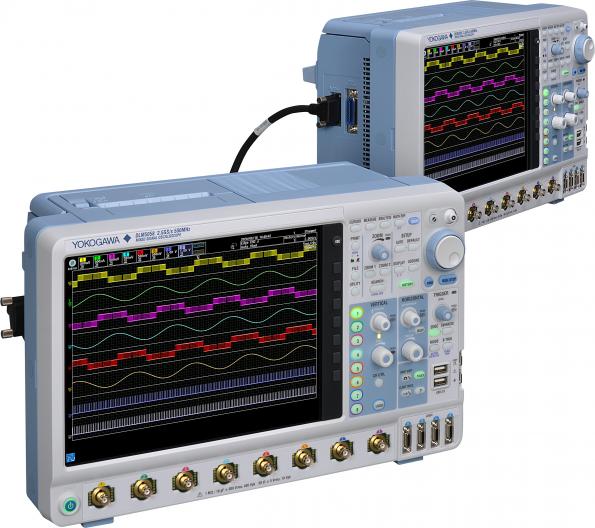
Yokogawa has launched its next generation of a mixed-signal oscilloscope with options for four or eight analog inputs.
The DLM5000 oscilloscope is the successor to the previous 8-channel DLM4000 model. With redesigned hardware, the DLM5000 offers major improvements in both performance and operability, including a sampling rate double that of the DLM4000. It is aimed at applications such as mechatronics, power electronics, automotive, aerospace, railway and consumer electronics.
Yokogawa says there is a specific focus on intelligent power-semiconductor technologies and mechatronics in modern electric vehicles, motor controls, and energy-efficient electronic designs that need up to eight analog channels and 32 bits of logic, together with additional math channels, vehicle serial bus analysis, and numerous other analysis features.
A large number of channels are key to developing efficient and reliable high-performance electric motors. Based on modern inverters, the successful development of these motors demands multi-channel, highspeed waveform measurement. These types of measurements often need more than four channels, which is why the DLM5000 offers eight true analog inputs.
The DLM5000 is also aimed at the development of Electronic Control Units (ECU) for mechatronics systems. In this application, numerous I/O analog, digital, and serial-bus waveforms need to be measured. With the ability to monitor eight analog channels and up to 32-bits of logic input, 16 as standard plus 16 optional, while simultaneously performing protocol analysis such as UART, I2C, SPI, CAN, CAN FD, LIN, CXPI, SENT and FlexRay, the DLM5000 can speed up development when four channels are not enough.
Read more: NEXT GENERATION MIXED SIGNAL OSCILLOSCOPE TARGETS ELECTRIC VEHICLE DESIGNS
- What is the primary upgrade of the DLM5000 over the DLM4000?
The DLM5000 offers a sampling rate double that of the DLM4000 along with redesigned hardware. - How many analog inputs does the DLM5000 offer?
The DLM5000 is available with options for four or eight analog inputs. - Can the DLM5000 link two units together?
Yes, the DLM5000 features the ability to link two units to boost measurement flexibility. - Which industries can benefit from the DLM5000?
It is aimed at applications such as mechatronics, power electronics, automotive, aerospace, railway, and consumer electronics. - Does the DLM5000 support protocol analysis?
Yes, it performs protocol analysis such as UART, I2C, SPI, CAN, CAN FD, LIN, CXPI, SENT, and FlexRay. - Why are eight true analog inputs necessary for motor development?
Successful development of modern inverters and high-performance electric motors demands multi-channel, high-speed waveform measurements often needing more than four channels. - What logic input capacity does the DLM5000 provide?
It monitors up to 32 bits of logic input, consisting of 16 bits standard plus 16 optional. - Is the DLM5000 suitable for Electronic Control Unit development?
Yes, it is designed for ECU development where numerous I/O analog, digital, and serial-bus waveforms need to be measured simultaneously.
