
Summary of DIGITAL CLASS D AMPLIFIER CIRCUIT TAS5706A PCM1850A ATMEGA128
This article details the design of a Digital Class D Amplifier circuit centered on the TAS5706A digital signal processor. The system integrates an audio converter and a microcontroller to manage signal processing, power supply requirements, and control methods. The author selected the TAS5706A for its simplicity and fixed internal elements, pairing it with the PCM1850A for analog-to-digital conversion and the ATmega128A for system control via SPI and I2C interfaces.
Parts used in the Digital Class D Amplifier Circuit:
- TAS5706A Digital Signal Processor
- PCM1850A Delta-Sigma A/D Converter
- ATmega128A Microcontroller
TAS5706A Class D Amplifier was itself the signal processor. From this parts depend all the other elements. Has an impact on the type of power supply, the control method of the type converter. That… Electronics Projects, Digital Class D Amplifier Circuit TAS5706A PCM1850A ATmega128 “audio amplifier circuits, avr project, class d amplifier circuit, ic amplifier, microcontroller projects, “
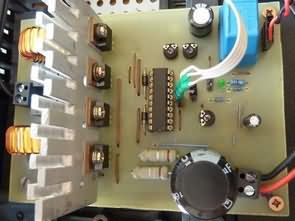
TAS5706A Class D Amplifier was itself the signal processor. From this parts depend all the other elements. Has an impact on the type of power supply, the control method of the type converter. That is why he was first selected DSP processor.
There are more firms that produce the processed signal processors whose internal connection is possible in many ways to reconfigure. However, the need was that the management was as simple as possible, therefore, programmable signal processors are discarded from consideration. Was selected processor TAS5706A from the company Texas Instruments. TAS5706A is a digital signal processor with fixed elements*1 and integrated by the final degree class D.
TAS5706A CLASS D AMPLIFIER CIRCUIT SCHEMATICS


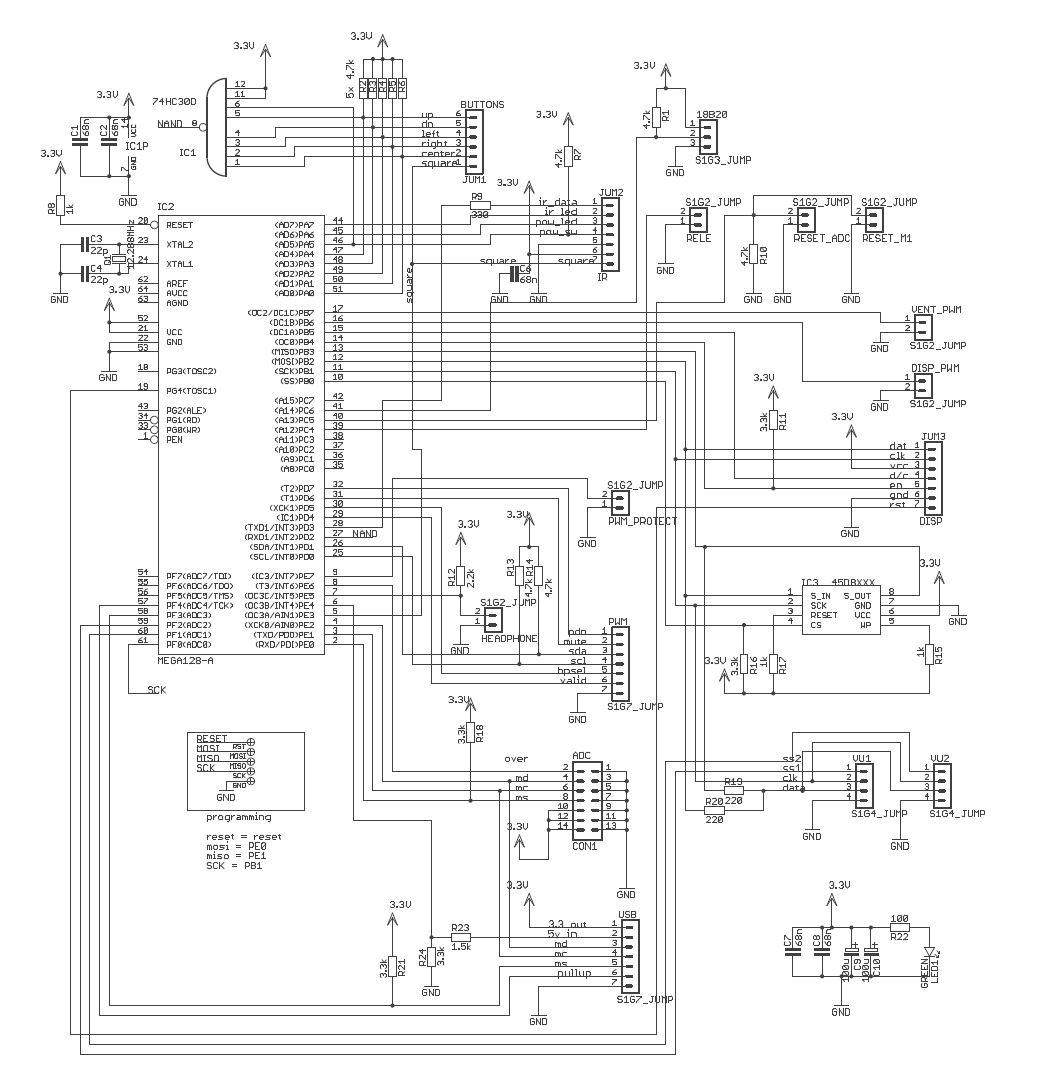
The digital audio signal is received from A/D into the DSP via four wires. SDIN (serial data in) is input navzorkovaných data. MCLK (master clock) is input signal has the highest frequency. SCLK (serial clock) is the input additional hour
PCM1850A from the company Texas Instruments. The converter was set into a fashion master, has the task to create hourly signal, and send the data separately. He was elected the format of left-justified with sampled by frequency of 48 kHz and a resolution of 24 bit. From the catalog letter [4] was to see that it is fully compatible with TAS5706A.
PCM1850A contains: 6 stereo inputs multiplexovaných, up to 24 bit resolution at the sampling frequencies of (16-96) kHz, Delta-Sigma A/D converter, anti aliasing filter, option mode the master or the slave, left-justified, I2S and right-justified output format, 256x, 384x, or 512x resampling, the output decimačný filter 64x upscaling.
ATmega128A is an 8-bit RISC mikrokontrolér with 128 kB memory for program FLASH, 4 kBram, SRAM and 4 kB memory EEPROM. Contains 8 and 16 bit counter, timers along with the generators PWM. The hardware-implemented blocks to support communication via the SPI and I2C. The computational performance on the taktovacej a frequency of 16 MHz up to 16 MIPS.
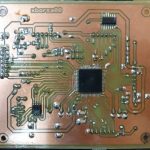
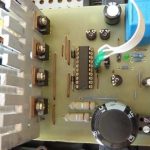
Source: DIGITAL CLASS D AMPLIFIER CIRCUIT TAS5706A PCM1850A ATMEGA128
tas5706a class d amp circuit pcb schematic all files alternative links: digital-class-d-amplifier-circuit-tas5706a-pcm1850a-atmega128.rar alternative link2
- Why was the TAS5706A selected as the signal processor?
The TAS5706A was chosen because it is a digital signal processor with fixed elements that allows for simple management, unlike programmable processors. - How does the PCM1850A handle audio data input?
The PCM1850A receives digital audio signals from the A/D converter via four wires including serial data, master clock, and serial clock inputs. - What sampling frequency and resolution does the PCM1850A support?
The converter operates with a 48 kHz sampling frequency and a 24-bit resolution using a left-justified format. - What are the memory specifications of the ATmega128A microcontroller?
The ATmega128A features 128 kB program FLASH memory, 4 kB RAM, and 4 kB EEPROM memory. - Does the ATmega128A support communication protocols like SPI and I2C?
Yes, the microcontroller contains hardware-implemented blocks to support communication via both SPI and I2C. - Can the PCM1850A operate in different output formats?
Yes, the converter supports left-justified, I2S, and right-justified output formats. - What is the computational performance of the ATmega128A?
The device achieves up to 16 MIPS at a clock frequency of 16 MHz.
