
Summary of Dintervalometer, A Custom Made Intervalometer For DSLR Cameras
This article describes the Dintervalometer, a custom-built device for DSLR cameras developed by Daniel Knezevic. It functions as an intervalometer for time-lapse photography and enables bulb mode exposures exceeding 30 seconds. The device features a PCD8544 LCD display with a unique DIY backlight system and charges via USB.
Parts used in the Dintervalometer:
- Atmega328P microcontroller
- PCD8544 84×48 pixel monochrome LCD display
- Backlight components (white paper, transparent plastic, double-sided tape)
- 3.5mm male jack connector
- Two tactile push buttons
- Small PCB
If you want to take a timelapse with your camera, it may be helpful to use an intervalometer. It is an attachment or facility on a camera that operates the shutter regularly at set intervals over a period, in order to take timelapse series or take pictures after a set delay.
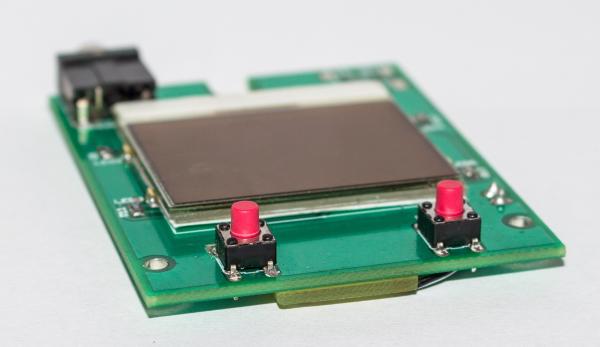
Daniel Knezevic had developed a custom made intervalometer for DSLR cameras. Dintervalometer (Deni’s intervalometer) enables cameras to shoot time lapses and allows shutter speeds longer than the 30s.
The Dintervalometer is built with an Atmega328P clocked at 10MHz, a PCD8544 84×48 pixel monochrome LCD display with a backlight, a 3.5mm male jack connector, and two tactile push buttons all combined together on a small PCB.
Dintervalometer Features
- Intervalometer: It is used for time-lapse photography. It controls how often, how long and how many shots are taken.
- Bulb mode: It allows to take time exposures longer than 30s.
- Backlight
- Charging via USB
The Display & Backlight
The PCD8544 LCD display can be powered using 3V3 and it draws very small amounts of power (around 200uA) making it extremely good for use in battery powered devices. It is typically used in Nokia 5110/3310 phones, and it interfaces to microcontrollers through a serial bus interface (SPI).
A custom made backlight were designed to allow using the Dintervalometer in the dark without an additional lamp. It operates like a backlight of a cell phone: it is active for 10 seconds when the user presses a button or the Dintervalometer finishes some job.
The backlight consists of these materials:
- A sheet of white paper
- A piece of transparent plastic
- A double-sided tape
The first layer of the backlight is a sheet of white paper. Its main function is to reflect the light of the LEDs. Then it comes the piece of transparent plastic. The top of the plastic is sanded with a fine sandpaper to diffuse the light. Finally, the LCD comes on the top. The layers are glued together with a double-sided tape.
Read more: Dintervalometer, A Custom Made Intervalometer For DSLR Cameras
- What is the primary function of the Dintervalometer?
It operates the camera shutter regularly at set intervals to take timelapse series or pictures after a delay. - How does the Dintervalometer handle long exposures?
It allows shutter speeds longer than 30 seconds using its built-in bulb mode. - What microcontroller powers the device?
The device uses an Atmega328P clocked at 10MHz. - How is the backlight activated?
The backlight activates for 10 seconds when a button is pressed or a job finishes. - What materials are used to construct the custom backlight?
The backlight consists of a sheet of white paper, a piece of transparent plastic, and double-sided tape. - Can the Dintervalometer be powered by batteries?
Yes, the LCD display draws very small amounts of power, making it suitable for battery-powered devices. - How does the LCD interface with the microcontroller?
It interfaces through a serial bus interface known as SPI. - How is the Dintervalometer charged?
The device supports charging via USB.
