
Summary of MI/O- ATMEGA328 BASED SMART WATCH BY MARKUS BINDHAMMER
The MI/O is a slimmed-down smartwatch designed by Markus Bindhammer, prioritizing functionality over fashion. Unlike conventional smartwatches that use low-power sleep modes, the MI/O completely powers down the OLED display and ATmega328 MCU when not in use, leaving only the Real-Time Clock (RTC) active to maximize battery efficiency. Its unique design allows users to access extra functionality by flipping the watch, enabling it to serve as a core platform for custom feature development.
Parts used in the MI/O:
- Microchip ATmega328 MCU
- OLED display
- Real-Time Clock (RTC)
Wristwatches are an integral part of our dressing, and also help us plan our day to day activities, making sure we don’t miss meetings, gym, exams, parties etc. These days, a good looking watch speaks volumes about the wearer, because it’s one of the most noticeable accessories a person wears. We have seen smartwatches taking over the conventional analog watches gradually, due to a host of features smartwatches offer. To this end, Markus Bindhammer has committed to the design and production of his own, slimmed-down “smartwatch” called the MI/O, which looks quite different from conventional smart watches. We can visibly see the components it is made of. It features a Microchip ATmega328 MCU at its core, with its primary aim at functionality rather than fashion.
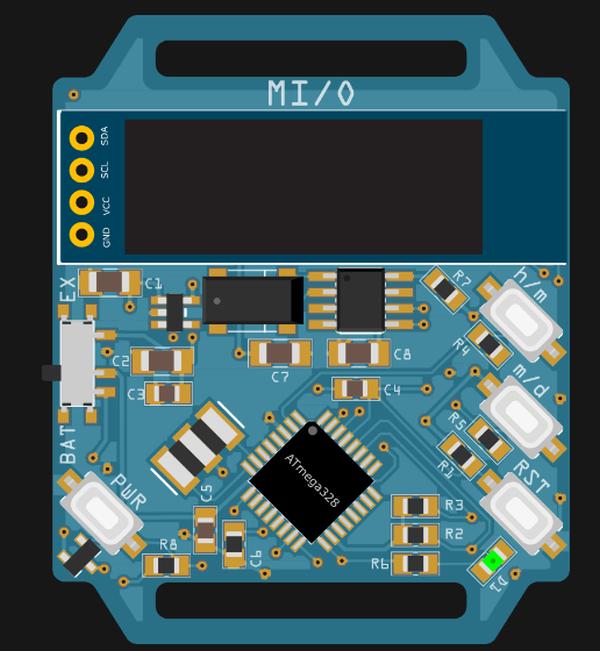
The MI/O functions by powering down the OLED display and ATmega, rather than dropping the controller into a low-power mode. Unlike other watch designs where the microcontroller is put into sleep mode, MI/O completely switches off everything except the RTC when the watch is not in use. This method of power control is remarkable, and effective, because there is a high level of difference between the lowest of power modes, and actual shutdown in almost entire MCU, so utilizing an external low-power mode of arranging things is ideal. When you turn the MI/O over, you find some extra functionality that enables you to input your own feature sets, with the MI/O acting as the core for any creations you have in mind.
Read more: MI/O- ATMEGA328 BASED SMART WATCH BY MARKUS BINDHAMMER
- What makes the MI/O different from conventional smartwatches?
The MI/O looks quite different from conventional smart watches and prioritizes functionality rather than fashion. - How does the MI/O manage power consumption?
It functions by powering down the OLED display and ATmega rather than dropping the controller into a low-power mode. - Does the MI/O keep the microcontroller running when not in use?
No, it completely switches off everything except the RTC when the watch is not in use. - What component serves as the core of the MI/O?
The Microchip ATmega328 MCU sits at the core of the device. - Can users add custom features to the MI/O?
Yes, turning the watch over enables you to input your own feature sets with the MI/O acting as the core for creations. - Why is the external low-power mode ideal for this design?
There is a high level of difference between the lowest power modes and actual shutdown in almost the entire MCU.
