
Summary of Temperature Measurement with NTC Thermistors
This article explains NTC thermistors, which decrease resistance as temperature rises, for use in microcontroller-based temperature measurement. It details key specifications found in data sheets, including resistance at 25°C, tolerance, B constant, operating ranges, thermal time constants, and power dissipation limits. Understanding these parameters is essential for accurate temperature sensing while avoiding self-heating issues or component damage.
Parts used in the NTC Thermistor Temperature Measurement Project:
- NTC Thermistor
- Microcontroller
- Manufacturer's Data Sheet
Thermistors (thermal resistors) are temperature dependent variable resistors. There are two types of thermistors, Positive Temperature Coefficient (PTC) and Negative Temperature Coefficient (NTC). When the temperature increases, PTC thermistor resistance will increase and NTC thermistor resistance will decrease. They exhibit the opposite response when the temperature decreases.
Both types of thermistors are used in a variety of application areas. However, here the focus will be on using NTC thermistors to measure temperature in microcontroller based applications. 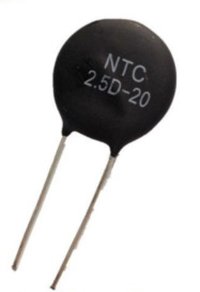 Thermistor Specifications
The following NTC thermistor parameters can be found in the manufacturer’s data sheet.
-
- Resistance
This is the thermistor resistance at the temperature specified by the manufacturer, often 25°C.
- Resistance
-
- Tolerance
Indicates how much the resistance can vary from the specified value. Usually expressed in percent (e.g. 1%, 10%, etc). For example, if the specified resistance at 25°C for a thermistor with 10% tolerance is 10,000 ohms then the measured resistance at that temperature can range from 9,000 ohms to 11000 ohms.
- Tolerance
-
- B (or Beta) constant
A value that represents the relationship between the resistance and temperature over a specified temperature range. For example, “3380 25/50” indicates a beta constant of 3380 over a temperature range from 25°C to 50°C.
- B (or Beta) constant
-
- Tolerance on Beta constants
Beta constant tolerance in percent.
- Tolerance on Beta constants
-
- Operating Temperature Range
Minimum and maximum thermistor operating temperature.
- Operating Temperature Range
-
- Thermal Time Constant
When the temperature changes, the time it takes to reach 63% of the difference between the old and new temperatures.
- Thermal Time Constant
-
- Thermal Dissipation Constant
Thermistors are subject to self-heating as they pass current. This is the amount of power required to raise the thermistor temperature by 1°C. It is specified in milliwatts per degree centigrade (mW/°C). Normally, power dissipation should be kept low to prevent self-heating.
- Thermal Dissipation Constant
-
- Maximum Allowable Power
Maximum power dissipation. It is specified in Watts (W). Exceeding this specification will cause damage to the thermistor.
- Maximum Allowable Power
- Resistance Temperature Table
Table of resistance values and associated temperatures over the thermistors operating temperature range. Thermistors operate over a relatively limited temperature range, typically -50 to 300°C depending on type of construction and coating.
For more detail: Temperature Measurement with NTC Thermistors
- How does an NTC thermistor respond when temperature increases?
When the temperature increases, the NTC thermistor resistance will decrease. - What does the tolerance specification indicate?
Tolerance indicates how much the resistance can vary from the specified value, usually expressed in percent. - What is the B constant?
The B constant represents the relationship between resistance and temperature over a specified temperature range. - What is the thermal time constant?
It is the time it takes for the thermistor to reach 63% of the difference between the old and new temperatures when the temperature changes. - Why should power dissipation be kept low?
Power dissipation should be kept low to prevent self-heating caused by current passing through the thermistor. - What happens if maximum allowable power is exceeded?
Exceeding this specification will cause damage to the thermistor. - What is the typical operating temperature range for thermistors?
Thermistors typically operate over a range of -50 to 300 degrees Celsius depending on construction and coating.
