
Summary of How WiFi Detectors Work
WiFi detectors are handheld tools that identify wireless signals in specific frequency bands (2.4 GHz or 5 GHz) used by standards like 802.11b and 802.11g. They utilize tuned antennas to isolate these frequencies, processors to demodulate data, and interfaces to alert users of signal presence and strength.
Parts used in the WiFi Detector:
- Tuned antenna
- Processor
- Interface for alerts
- Signal gauge
Mechanics of WiFi Detectors
A wireless signal can travel only so far. Specifically, a typical signal can extend as far as 1,000 feet (304.8 meters) in an unobstructed, open area and about 300 feet (91.44 meters) in a closed area that has obstructions [source: Graves]. Because the signals themselves are invisible and the access points (routers) that emit them are usually hidden, a WiFi detector can be a handy tool. WiFi detectors are basically just gadgets that can quickly and easily tell you whether you’re around a WiFi signal.
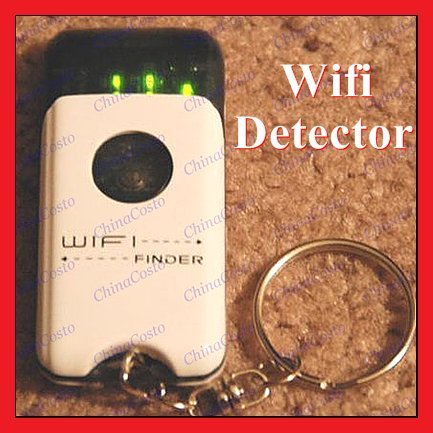
Before we can understand the mechanics of WiFi detectors, let’s take a quick look at wireless Internet. Although wireless Internet travels in waves similar to radio waves, it travels on very different frequencies. It actually travels on frequencies significantly higher than those of other common devices, such as cell phones. These frequencies that carry wireless Internet fall into the ranges of 2.4 GHz or 5 GHz, depending on the standard used.
In order to standardize the wireless Internet process, a group called the Institute of Electrical and Electronics Engineers (IEEE) has specified 802.11 as the group of networking standards it uses. Such standards specify how data travels through the waves. Different letter-signifiers further specify the set of standards. Some common ones are 802.11b and 802.11g, both of which use the 2.4-GHz band. Within the 2.4-GHz band, you have specific channels. In the United States, wireless Internet has 11 available channels on the 2.4-GHz band (other countries may have fewer or as many as 14).
The detector’s job is to pick up on the waves with frequencies meant for transmitting wireless Internet. To accomplish this task, the antenna must be designed to receive the right kind of signals. Much like the antenna on your car radio is tuned to pick up on a specific range of frequencies (and not, say, frequencies that carry police communications), the antenna on a WiFi detector is tuned to pick up only on the specific band that carries wireless Internet. If you examine the specifics of detectors, many will list that they’re meant for picking up 802.11b and 802.11g networks.
Antennas alone, however, wouldn’t make very useful travel gadgets. A detector must have some sort of interface for alerting you when it does pick up on the right signals. Many will also gauge just how strong the signal is and convey that to you. In addition, many modern WiFi detectors also come with processers that allow them to demodulate (or process) the data to give you some valuable information before you decide to set up camp with your laptop.
For more detail: How WiFi Detectors Work
- How far can a typical WiFi signal extend?
A typical signal extends up to 1,000 feet in open areas and about 300 feet in obstructed closed areas. - What frequencies do wireless Internet waves travel on?
Wireless Internet travels on frequencies significantly higher than cell phones, specifically falling into the 2.4 GHz or 5 GHz ranges. - Which organization specifies the 802.11 networking standards?
The Institute of Electrical and Electronics Engineers (IEEE) specified 802.11 as the group of networking standards. - How many channels are available on the 2.4-GHz band in the United States?
In the United States, there are 11 available channels on the 2.4-GHz band. - Why must the antenna be designed specifically for certain signals?
The antenna must be tuned to pick up only the specific band that carries wireless Internet, similar to how a car radio is tuned to specific frequencies. - What function does the processor serve in modern WiFi detectors?
The processor allows the detector to demodulate or process data to provide valuable information before setting up camp. - Does the detector only indicate signal presence?
No, many detectors also gauge how strong the signal is and convey that information to the user. - Can WiFi detectors detect police communications?
No, the antenna is tuned to pick up only the specific band for wireless Internet and not other frequencies like those carrying police communications.
