
Summary of Desulfator for 12V Car Batteries, in an Altoids Tin
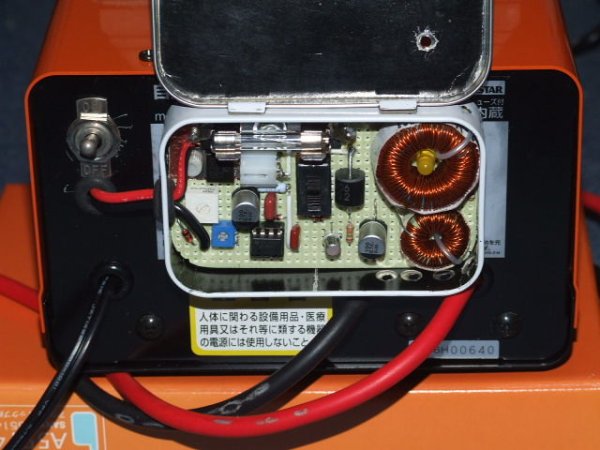
The author built a Battery Desulfator circuit to revive car batteries degraded by lead sulphate crystals, inspired by their wife's vehicle failing in Tokyo's cold winter. This device reverses sulfation caused by insufficient charging, extending battery life and reducing environmental waste. The project is housed in an Altoids tin and offers a cost-effective alternative to buying new batteries or frequent jump-starts.
Parts used in the Battery Desulfator:
- Battery Desulfator circuit
- Altoids tin
After a year or so of reading and drooling over other people’s wonderful projects in these pages I decided to finally make one of my own. Here is my first instructable, a version of the ever popular Battery Desulfator, which I built in an Altoids tin.
First, some background:
My urge to build this project came when my wife’s car refused to turn over after a three day weekend away. Here in Tokyo, during winter, the temperature can drop to the low 20’s (F) at night and since we have no garage, her car just has to endure the cold as best it can. Many people don’t realize that you don’t have put up with repeated jump-starts or run to the nearest garage and plunk down 7,500 yen ($85) for a new battery every time this happens. Your old battery may just have built up a layer of lead sulphate crystals on its plates and that is preventing the acid from contacting them over their full surface area. This is caused by subjecting the battery to long periods of insufficient charge, as in the cases of unplugged golf carts over the winter, infrequently used automobiles, and PV systems that don’t get enough sunlight to charge their batteries. The result is a great reduction in the battery’s ability to produce electricity.
With a desulfator circuit you can reverse this process and rejuvenate the battery to like new condition. You can also save money and prevent water and ground pollution at the same time by keeping your old battery out of the local landfill. As long as nothing is seriously wrong with the battery it can last many times the two or three years that people typically use them. You can even get free batteries from garages that routinely throw them away, desulfate them, and never buy another battery again. Save money and help the environment – now there’s a green ecology scheme I can get into!
For more detail : Desulfator for 12V Car Batteries, in an Altoids Tin
- Why did the author decide to build this project?
Their wife's car refused to turn over after a three-day weekend due to cold weather. - What causes a battery to lose its ability to produce electricity?
A layer of lead sulphate crystals builds up on the plates from long periods of insufficient charge. - How does a desulfator circuit help a battery?
It reverses the process of sulfation to rejuvenate the battery to like-new condition. - Can you get free batteries using this method?
Yes, you can get free batteries from garages that throw them away, desulfate them, and reuse them. - How much money might be saved by using this project instead of buying new batteries?
You can avoid paying 7,500 yen ($85) for a new battery every time one fails. - Does this project help the environment?
Yes, it prevents old batteries from ending up in local landfills and reduces water and ground pollution. - What types of systems are susceptible to the issue described?
Unplugged golf carts over winter, infrequently used automobiles, and PV systems lacking enough sunlight. - How long can a desulfated battery last compared to typical usage?
It can last many times longer than the two or three years people typically use batteries.
