
Summary of Hardent Publishes an FPGA vs. DSP Primer in the Xilinx Xcell Journal
This article announces a Q1 2012 XCell journal piece by Reg Zatrepalek comparing DSP and FPGA technologies. It introduces FPGA architecture, demonstrates an FIR filter implementation using both methods, and guides engineers on selecting the optimal solution. Additionally, Hardent offers a video guide and training courses to help systems engineers transition between these architectures effectively.
Parts used in theXCell Journal Article:
- DSP (Digital Signal Processor)
- FPGA (Field-Programmable Gate Array)
- FIR Filter
- XCell journal issue 78
- Video clip: DSP vs. FPGA: How to make this change?
Montreal, Quebec (PRWEB) January 31, 2012
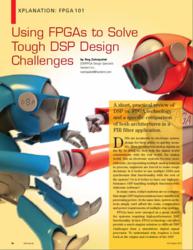
A comprehensive and up-to-date review of DSP and FPGA technologies, authored by Hardents FPGA Expert and Trainer, Reg Zatrepalek, will be available in the first quarter 2012 edition (issue 78) of the XCell journal. This article, entitled Using FPGAs to Solve Tough DSP Design Challenges, was written to be an accessible introduction to FPGA for engineers who have experienced some challenges with DSP implementations. It describes the basics of the FPGA architecture, and then proceeds to illustrate an implementation of an FIR filter using first DSP and then FPGA technologies. In the article, engineers of all backgrounds will find useful information on the various advantages of both DSP and FPGA, and how to choose between them.
The concept of this article was born out of the need for systems engineers with a background in DSP to understand where FPGAs may provide the better solution. Through their electronic design training sessions and workshops, Hardent noticed that many of its trainees did not understand what the benefits of FPGA implementations were, and when it would be better to continue using DSPs. We thought that this first step in understanding FPGA vs DSP was the biggest barrier for engineers wishing to improve their knowledge, said Simon Robin, CEO of Hardent, many do not know how simple the transition between the two architectures can be.
In addition to the article, Hardent has also produced a video clip entitled DSP vs. FPGA: How to make this change?. This brief video covers the operational jump from FPGA to DSP, the ideal way for system architects to make the switch, and which courses they may wish to consider.
For further information about the advantages and disadvantages of DSPs and FPGAs, please download Hardents article from the XCell journal attached to this press release. There are also further videos available on Hardents YouTube channel.
About Hardent
Hardent serves as an extension of companies electronic design and engineering departments to achieve faster time-to-market and high electronic innovation. With a rapid understanding of company and project requirements, Hardents problem-solving skills and cutting-edge design expertise produce creative electronic solutions. The company offers transparent communication, high project visibility and never-ending support. For further information about electronic design services, visit the Hardent website.
Hardent is also a highly-experienced training house and exclusively accredited Xilinx Authorized Training Provider for Canada, New England and Southeastern United States. Hardent offers FPGA courses, digital signal processing (DSP) design training, embedded software course training, and a range of other courses targeted to electronic design experts. Refer to the Hardent website for more on the Hardent training schedule.
# # #
- Who authored the review of DSP and FPGA technologies?
Reg Zatrepalek, a Hardents FPGA Expert and Trainer. - When will the article Using FPGAs to Solve Tough DSP Design Challenges be available?
In the first quarter 2012 edition, issue 78, of the XCell journal. - What specific filter implementation is illustrated in the article?
The article illustrates an implementation of an FIR filter using first DSP and then FPGA technologies. - Why was this article concept created?
It was born out of the need for systems engineers with a DSP background to understand where FPGAs provide a better solution. - What additional resource did Hardent produce alongside the article?
Hardent produced a video clip entitled DSP vs. FPGA: How to make this change?. - What does the video cover regarding system architects?
The video covers the operational jump from FPGA to DSP and the ideal way for system architects to make the switch. - How can readers access further information about DSP and FPGA advantages?
Readers can download Hardents article from the XCell journal attached to the press release or watch videos on Hardents YouTube channel. - What is Hardents role as an Xilinx Authorized Training Provider?
Hardent offers FPGA courses, digital signal processing design training, embedded software course training, and other courses for electronic design experts.
