
Summary of Techsol’s TSCM-233 Computer Module Enables Low-cost Hand-held Devices
Techsol's Medallion Linux on ARM computer module offers a cost-effective solution for industrial handhelds and HMIs. It features a 500 MIPS Freescale i.MX processor, DDR memory, and various I/O options including USB, UART, SPI, and Ethernet. The board supports fanless operation, direct TFT LCD connections with touch screens, and runs pre-installed Medallion Linux 2.6.3x with multiple GUI and software package options.
Parts used in the Medallion Linux ARM Computer Module:
- 500 MIPS FreeScale i.MX ARM processor
- 64 MB or DDR memory
- NAND or uSD card boot support
- User SD card connector
- Serial NOR FLASH (optional)
- 2mm dual-row headers
- 18-bit direct-wire interface for TFT LCDs
- 4-wire resistive touch-screen connection
- Hi-speed USB 2.0 host port
- Hi-speed USB 2.0 device port
- Dual UARTs with IrDA support
- Dual I2C interfaces
- Hi-speed SPI and GPIOs
- Power-supply interface for 3.3v DC or Li-Ion battery
- Integrated battery charger
- 1-wire interface for coulomb counter
- Stereo Head-phone amplifier
- Built-in MIC amplifier
- Analog inputs
- Optional 10/100-BaseT Ethernet interface
- SW-controlled beeper
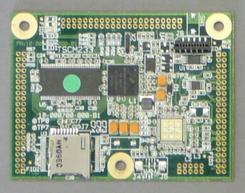
Vancouver, BC (PRWEB) June 21, 2011
Techsol is now offering an extremely cost-effective computer with a Color TFT LCD and Touch panel interfaces plus assorted serial, Audio, and other I/O, targeting low-cost devices such as industrial handhelds and other HMI (Human-Machine Interface) applications. This standard, off-the-shelf, Medallion Linux on ARM-powered computer module features:
500 MIPS FreeScale i.MX ARM processor running Techsol’s Medallion Linux OS
64 MB or DDR memory
Booting from NAND or uSD card on-board
Direct-connect support for user SD card in addition
Optional boot from Serial NOR FLASH for ultra-high-reliability applications
Connects to Display board or I/O boards with simple, low-cost 2mm dual-row headers
Extremely low power consumption permits fanless operation and portable applications
18-bit direct-wire for TFT LCDs
4-wire resistive touch-screen connection
Hi-speed USB 2.0 host port
Hi-speed USB 2.0 device port (shared internally via MUX)
Dual UARTs with IrDA support
Dual I2C for HW management, and user device interface
Hi-speed SPI, GPIOs, etc.
Power-supply interface for 3.3v DC in, or single Li-Ion battery
Integrated battery charger for single Li-Ion battery
1-wire interface for coulomb counter
On-board stereo Head-phone amplifier
Built-in MIC amplifier
Analog inputs for battery monitoring or other uses
Optional 10/100-BaseT Ethernet interface with lines for LED status indicators
SW-controlled beeper with frequency/tone control
Ships with the proven Medallion Linux 2.6.3x plus drivers pre-installed.
Dimensions: Width: 80 mm, 3.4″ Height: 60 mm, 2.4″ Thickness: 5 mm, 0.2″
Mounting: There are 3 holes for #4 bolts to secure the board-stack if required.
There is an option for “pass-through” headers to stack between display and I/O boards.
Construction: all parts on one-side of the board, for reduced assembly processes, lowering device cost
GUI options include:
Linux Framebuffer (FB), operating in 16-bit, 65,536-color mode
X11 (KDrive) on FB for standard Linux/Unix graphics
FLTK on X, for a full-featured, extensible, yet free GUI
GTK+ on X, for full PC compatibility
Qt on X, or Qt Embedded
too many other GUIs to list
Ask about Web Browser Support
Other SW packages:
Database packages
Web-servers
Security
DHCP
USB drivers for many devices
WiFi drivers for USB-Wireless dongles
and much more
WHY SHOULD I BUY IT
“These computers are built to the same quality levels as our Classic Medallion CPU modules,” said Brian Empey, P.Eng., CEO of Techsol, “but they have more features integrated and a lower acquisition cost, making them suitable for a wider variety of low-cost applications.”
Not surprisingly, Techsol is already developed some products powered by TSCM products for its clients, as this technology has been under development since 2009.
WHAT DOES IT COST
Pricing for units without Ethernet or the optional “pass-through” headers are:
Order-Quantity
- What is the primary target application for this computer module?
It targets low-cost devices such as industrial handhelds and other HMI applications. - How does the module handle power consumption?
Its extremely low power consumption permits fanless operation and portable applications. - Which operating system comes pre-installed on the board?
It ships with the proven Medallion Linux 2.6.3x plus drivers pre-installed. - Can the device boot from multiple storage types?
Yes, it boots from NAND or uSD card on-board, with optional boot from Serial NOR FLASH. - Does the module support wireless connectivity?
Yes, WiFi drivers are available for USB-Wireless dongles. - What GUI options are supported by the system?
Supported options include Linux Framebuffer, X11, FLTK, GTK+, Qt, and others. - How is the board constructed to reduce costs?
All parts are placed on one side of the board to reduce assembly processes. - What physical mounting options are available?
There are 3 holes for #4 bolts, and an option for pass-through headers to stack boards.
