
Summary of How Satellite TV Works
Satellite TV delivers television programming via radio signals from orbiting satellites to dishes at viewers' homes, overcoming broadcast TV range and distortion limits caused by Earth's curvature and obstacles. Unlike terrestrial broadcast, satellites provide broader line-of-sight coverage and clearer reception using specialized satellite dishes, offering an alternative to cable and over-the-air TV as the technology evolves.
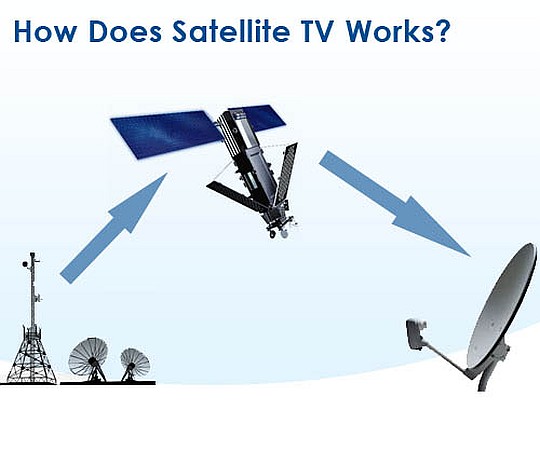
Parts used in the Satellite TV project:
- Satellite
- Satellite dish (specialized antenna)
- Transmitter on the satellite
- Receiver at the viewer's house
- Radio signal link between satellite and dish
- TV station/originating broadcaster
Satellite TV offers many solutions to broadcast and cable TV problems. Though satellite TV technology is still evolving, it has already become a popular choice for many TV viewers.
In this article, we’ll find out how satellite TV works, from TV station to TV set. We’ll also learn about the changing landscape of TV viewing and some basic differences that distinguish satellite TV from cable and over-the-air broadcast TV.
Problems with Broadcast TV
Conceptually, satellite TV is a lot like broadcast TV. It’s a wireless system for delivering television programming directly to a viewer’s house. Both broadcast television and satellite stations transmit programming via a radio signal (see How Radio Works for information about radio broadcasting).
Broadcast stations use a powerful antenna to transmit radio waves to the surrounding area. Viewers can pick up the signal with a much smaller antenna. The main limitation of broadcast TV is range. The radio signals used to broadcast television shoot out from the broadcast antenna in a straight line. In order to receive these signals, you have to be in the direct line of sight of the antenna. Small obstacles like trees or small buildings aren’t a problem; but a big obstacle, such as the Earth, will reflect these radio waves.
If the Earth were perfectly flat, you could pick up broadcast TV thousands of miles from the source. But because the planet is curved, it eventually breaks the signal’s line of sight. The other problem with broadcast TV is that the signal is often distorted, even in the viewing area. To get a perfectly clear signal like you find on cable, you have to be pretty close to the broadcast antenna without too many obstacles in the way.
The Satellite TV Solution
Satellite TV solves the problems of range and distortion by transmitting broadcast signals from satellites orbiting the Earth. Since satellites are high in the sky, there are a lot more customers in the line of sight. Satellite TV systems transmit and receive radio signals using specialized antennas called satellite dishes.
For more Detail: How Satellite TV Works
- How does satellite TV solve broadcast TV range problems?
By transmitting signals from satellites high in the sky, increasing the line of sight to many more customers and overcoming Earth's curvature limitations. - Can satellite TV reduce signal distortion compared to broadcast TV?
Yes. Satellite transmission provides clearer reception and reduces distortion common in terrestrial broadcast signals. - What equipment is needed at the viewer's house for satellite TV?
A specialized satellite dish and a receiver to pick up radio signals from the satellite. - How are satellite TV signals transmitted?
Satellite TV systems transmit and receive radio signals between orbiting satellites and satellite dishes at viewers' homes. - Is satellite TV similar to broadcast TV?
Conceptually yes; both are wireless systems delivering programming via radio signals, but satellite TV uses orbiting satellites instead of terrestrial transmitters. - Why do broadcast TV signals become limited over long distances?
Because the radio signals travel in straight lines and the Earth's curvature eventually breaks the line of sight, limiting range. - Do small obstacles affect broadcast TV reception?
Small obstacles like trees or small buildings usually are not a problem, but large obstacles can block the signal. - What advantage do satellites have over powerful broadcast antennas?
Satellites' high position provides line-of-sight coverage to many more customers than a single terrestrial antenna can reach.
