
Summary of ATmega16 Analog-Looking Digital Clock Project
This article describes an analog-looking digital clock project using an ATmega16 microcontroller. The system features a 7-inch LCD screen (though smaller screens like 3 or 4 inches are also viable) and is powered by a 9V battery regulated to 5V via a 7805 chip. The circuit integrates a DS1307 real-time clock module with a 32.768 KHz crystal and a backup CR2032 battery to retain time data. Buttons connected to specific processor pins allow for user interaction, and the design supports Proteus simulation along with downloadable code and PCB files.
Parts used in the ATmega16 Analog-Looking Digital Clock:
- ATmega16 microcontroller
- 7-inch LCD screen
- 7805 voltage regulator chip
- 9 Volt battery
- DS1307 real-time clock integrated circuit
- 32.768 KHz crystal oscillator
- 3-volt CR2032 backup battery
- Pull-up resistors
- Touchpad cable
Atmega16 microcontroller in our circuit monitor 7 inch in size. Screen “3 inch” or “4 inch” may be, it doesn’t matter. We have the biggest screen by controlling the foot links we could find…. Electronics Projects, ATmega16 Analog-Looking Digital Clock Project “avr project, microcontroller projects, ”
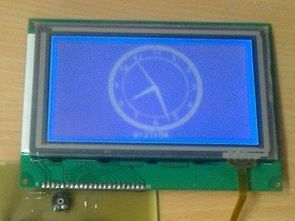
Atmega16 microcontroller in our circuit monitor 7 inch in size. Screen “3 inch” or “4 inch” may be, it doesn’t matter. We have the biggest screen by controlling the foot links we could find.
In circuit 7805 voltage regulated chip. 9 Volt battery restraints when it integrated provides the proper functioning of the circuit elements, constants and 5 volts.
Proteus isis circuit diagram;
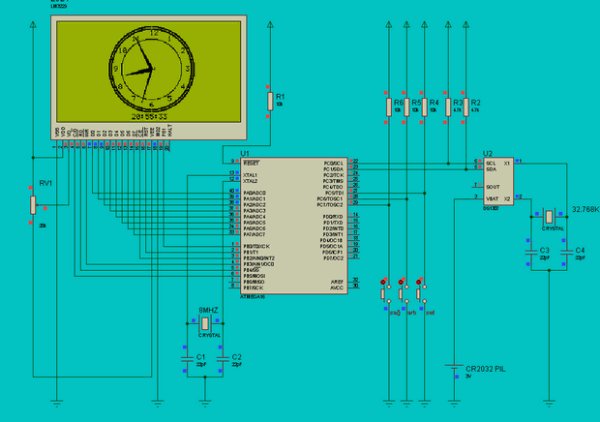
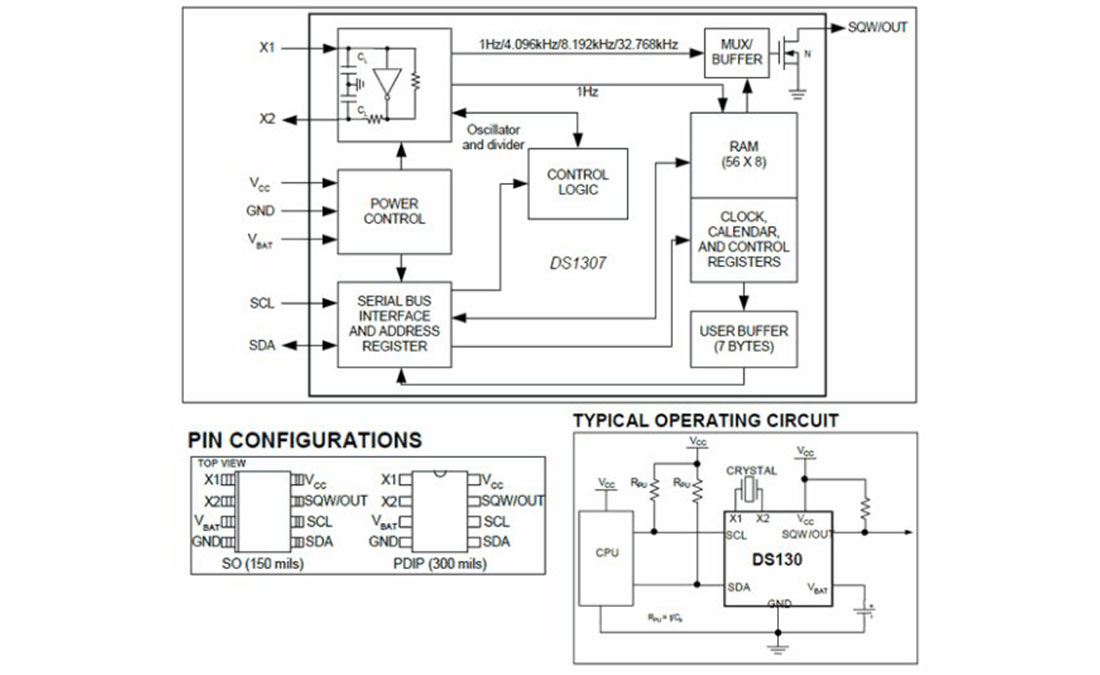
Integration of the DS1307 circuit for clock function. This is the chip clock frequency 32.768 KHz crystal. DS1307 internal structure, integrated circuit a typical Foot connection shapes and hours link shape respectively the following illustration.
Integrated circuit time signal from 5 and 6 hours. 3-volt CR2032 battery 3 end-to-end networked to that memory clock is not lost. Pull up resistors and two standing no. 5 and 6 as well as the processor 27-28 and 29 of the restraints the buttons. This is in keeping with the arrival of the signal logic status 1 pinlerdeki resistors beautiful preventing parasites.
Our processor is the Atmega is 16. We may also use the Atmega 32 this is not much different. Only capacity differs. Foot links are the same.
LCD screen located on the touchpad cable wear and use anywhere.
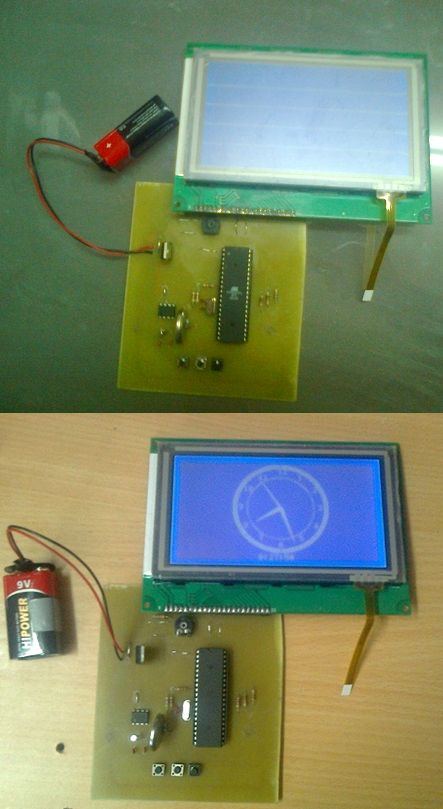
ATmega16 Analog-looking digital clock for the project proteus isis schema, pcb and code files: ATmega16 Analog-Looking Digital Clock Project.rar
Alternative File Download LINK list (in TXT format): LINKS-22771.zip
- What microcontroller is used in this project?
The project uses an Atmega16 microcontroller, though Atmega32 can also be used as they share the same foot links. - Can I use a smaller screen than 7 inches?
Yes, the article states that a 3-inch or 4-inch screen may be used and it does not matter. - How is the circuit powered and regulated?
A 9 Volt battery is used with a 7805 voltage regulated chip to provide proper functioning at 5 volts. - Which chip handles the clock function?
The DS1307 integrated circuit is integrated for the clock function with a 32.768 KHz crystal. - How is the memory clock preserved when power is lost?
A 3-volt CR2032 battery is networked end-to-end to ensure the memory clock is not lost. - What prevents parasitic signals on the buttons?
Pull-up resistors and connections to pins 5, 6, 27, 28, and 29 of the processor prevent parasites. - Where is the LCD screen located?
The LCD screen is located on the touchpad cable so it can be used anywhere. - Are there resources available for simulation?
Yes, Proteus ISIS circuit diagrams, PCB files, and code files are available for download.
