
Summary of Build And Simulate Quantum Software Applications With Rigetti Forest 1.0
Rigetti Computing is a full-stack quantum company developing hardware and software to solve problems beyond classical computers, such as molecular simulation and weather prediction. The article highlights their new Fab-1 facility for rapid prototyping of 3D-integrated quantum circuits and the Forest 1.0 service, which allows developers to write and simulate applications using Quil and Python tools on a virtual machine.
Parts used in the Rigetti Quantum Computing Project:
- Fab-1 facility
- 3D-integrated quantum circuits
- Quantum bits (qubits)
- Forest 1.0 service
- 30-qubit quantum virtual machine
- Quil instruction language
- Open-source Python tools
Rigetti Computing is a full-stack quantum computing company. They build hardware and software with fundamentally new integrated circuits that store and process quantum information.
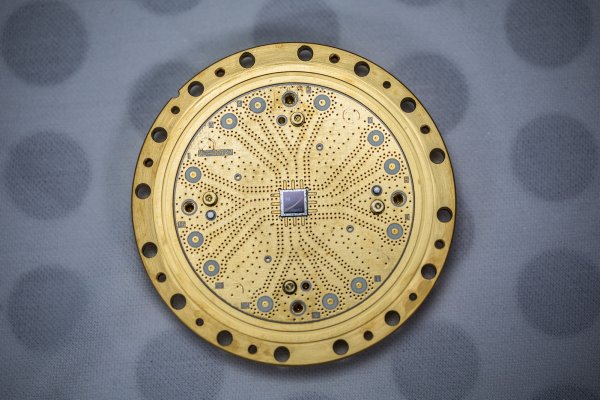
Accordingly, this Silicon Valley company is providing solutions for existing problems that traditional computers can not solve. These problems include the ability to provide molecular simulation showing all interactions and to accurately predict next week’s weather.
Thus, Rigetti is using quantum mechanics for computation. Adding one quantum bit (qubit) can double the performance. Below is a table mapping the computation power of qubits with classical memories.
Rigetti Computing recently unveiled its Fab-1 facility. A facility which will enable its engineers to rapidly build new generations of quantum computing hardware based on quantum bits, or qubits. In fact, the facility can spit out entirely new designs for 3D-integrated quantum circuits within about two weeks—much faster than the months usually required for academic research teams to design and build new quantum computing chips. It’s not so much a quantum computing chip factory as it is a rapid prototyping facility for experimental designs.
Software is also included
It has also announced its Forest 1.0 service that enables developers to begin writing quantum software applications and simulating them on a 30-qubit quantum virtual machine. Forest 1.0 is based on Quil—a custom instruction language for hybrid quantum/classical computing—and open-source python tools intended for building and running Quil programs.
“Developing quantum computing software is one of the most fascinating and challenging emerging fields of engineering. Today, that field is at the foundational stage, where learning and discovery are at a premium. Our full-stack strategy allows us to run faster, more tightly coupled iteration cycles between hardware, software, and applications.” – Chad Rigetti, Founder & CEO
Read more: Build And Simulate Quantum Software Applications With Rigetti Forest 1.0
- What problems can Rigetti's quantum solutions solve?
Rigetti provides solutions for problems traditional computers cannot solve, including molecular simulation showing all interactions and accurately predicting next week’s weather. - How does adding a qubit affect performance?
Adding one quantum bit doubles the performance of the system. - How long does it take to design new designs at the Fab-1 facility?
The facility can spit out entirely new designs for 3D-integrated quantum circuits within about two weeks. - What is the purpose of the Fab-1 facility?
It serves as a rapid prototyping facility for experimental designs rather than a mass production chip factory. - What programming language is used in the Forest 1.0 service?
Forest 1.0 is based on Quil, a custom instruction language for hybrid quantum/classical computing. - Which tools are provided for building Quil programs?
The service includes open-source Python tools intended for building and running Quil programs. - How many qubits are available in the Forest 1.0 virtual machine?
Developers can simulate applications on a 30-qubit quantum virtual machine. - What strategy does Chad Rigetti mention for development?
The full-stack strategy allows for faster, more tightly coupled iteration cycles between hardware, software, and applications.
