
Summary of Isolated USB-to-UART converter
The article describes a project to build a low-cost, isolated USB-to-UART converter to protect computers from hardware failures and grounding issues. The author recounts a personal experience where a faulty device destroyed a computer's USB port, emphasizing that simple isolation circuits can prevent such damage. This solution is particularly useful for developing battery-powered devices and connecting untested boards to expensive laptops, ensuring grounds remain separate and preventing high-voltage faults from reaching the host system.
Parts used in Isolated USB-to-UART Converter:
- Sparkfun USB-to-UART breakout board (BOB)
- Isolation circuit components
I stood in stunned silence at the smoke billowing up from the hardware on the workbench. Just moments before, it had been operating as expected, before self-destructing with a sound that can only be compared with a gunshot. The failure of the hardware under test had an unexpected consequence: the computer that had been using a USB-to-UART converter to communicate with the hardware experienced a USB fault that was not recoverable. The computer was now damaged and worthless.
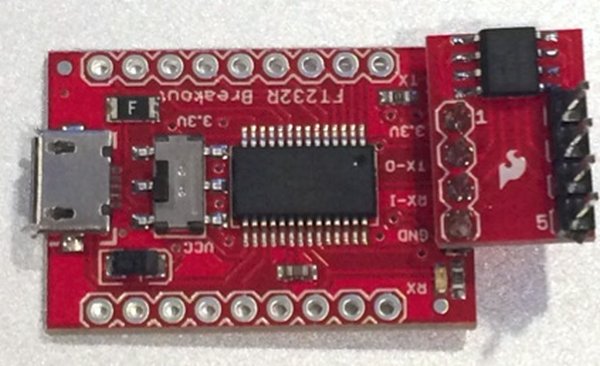
A simple isolation circuit that costs only a few dollars could have been used to protect the USB port on the computer. Embedded system developers get used to plugging strange hardware and components into their computers on a daily basis and rarely consider the consequences of what their actions might bring.
This Design Idea documents a low-cost, isolated USB-to-UART converter using the Sparkfun USB-to-UART breakout board (BOB).
There are a number of times when an isolated USB-to-UART converter can come in handy. For example, during development of battery powered devices, there is a tendency to leave the USB-to-UART converter attached to the device, which, without isolation, will connect it through the host’s ground to an Earth ground. The device may work perfectly, but when detached from the computer, it doesn’t work at all. The isolated converter will keep the device and host grounds separate, allowing any grounding issues to be found early on rather than later.
The most important use of an isolated USB-to-UART converter is of course in fault conditions. Consider the consequences of connecting an untested electronic board to an expensive laptop such as a MacBook Pro. The USB specification and hardware layer does have protection circuits, but they may not be rated for devices operating at hundreds of volts DC. When a device fails on the USB bus and has the potential to put more than 5V, or significant current, onto the bus, it is a wise decision to spend $20 and isolate the two devices.
For more detail: Isolated USB-to-UART converter
-
How does an isolated USB-to-UART converter protect a computer?
It prevents high voltage or significant current from a failing device on the USB bus from damaging the computer's USB port. -
Can this converter help with battery-powered device development?
Yes, it keeps the device and host grounds separate, allowing grounding issues to be found early before the device stops working when detached. -
What happens if you connect an untested board without isolation?
The USB specification protection may not handle hundreds of volts DC, potentially destroying the connected laptop if the device fails. -
Why do embedded developers often overlook this protection?
Developers are used to plugging strange hardware into computers daily and rarely consider the consequences of potential hardware failures. -
What is the estimated cost of the isolation circuit mentioned?
The simple isolation circuit costs only a few dollars, with a recommendation to spend around twenty dollars for full isolation. -
Does the standard USB specification protect against all faults?
No, while it has protection circuits, they may not be rated for devices operating at hundreds of volts DC.
