
Summary of How ChronoTrack B-Tags Work
The article describes RFID-based race timing devices used in major running events, focusing on ChronoTrack Systems' D-Tag (a sticky paper shoelace tag) and newer B-Tag (worn on the chest). Both use UHF RFID and timing mats with antennas to detect individual runners, enabling fast, reliable timing for hundreds or thousands of participants.
Parts used in the ChronoTrack B-Tag and D-Tag project:
- Sticky paper D-Tag (shoelace affixed RFID tag)
- B-Tag chest-worn RFID tag
- UHF RFID technology components (RFID chips)
- Timing mats with antennas
- Receivers/sensors embedded in mats
- Race timing system to log and process tag signals
Since major running events typically attract hundreds and thousands of runners, organizers have to depend on something other than pen, paper and a stopwatch to clock everyone’s time. The 1990s saw the rise of personal timing devices, usually affixed to each runner’s shoelaces, and the technology continues to evolve, increasing the speed and reliability of race results with each new design.
The ChronoTrack Systems D-Tag is just such a shoelace tracking gizmo — and the slip of sticky paper that slides around your lace works much like the smart chips that keep you from shoplifting clothes at the mall. Remember that My Little Pony T-shirt you fleetingly thought about stuffing in your bag? If you’d gone through with the plan, the smart tag would have set off an alarm when you passed between the sensors at the entrance to the store.
Both security smart chips and the D-Tag system depend on UHF radio-frequency identification (RFID) technology. During the course of the race, runners trample over special timing mats that contain antennas that receive the signal from each individual runner’s tag. This allows the system to track hundreds, or even thousands, of competing runners and their individual RFID tags.
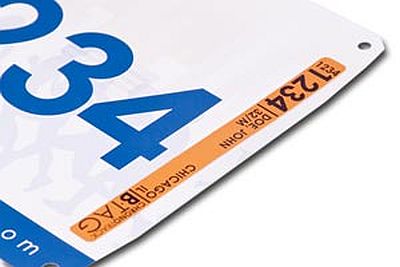
Now ChronoTrack Systems has another product on the market: the B-Tag. Fear not, barefoot runners! This number doesn’t go on your laces, and your wrists and arms remain free for your normal selection of watches, heart-rate monitors and MP3 players. You wear this little number right on your chest.
For more Detail: How ChronoTrack B-Tags Work
- What technology do ChronoTrack tags use?
They use UHF radio-frequency identification RFID technology. - Where is the D-Tag worn?
The D-Tag is affixed to the runner's shoelaces. - Where is the B-Tag worn?
The B-Tag is worn on the chest. - How do timing mats detect runners?
Timing mats contain antennas that receive signals from each runner's RFID tag. - Can the system handle hundreds or thousands of runners?
Yes, the RFID system allows tracking of hundreds or even thousands of runners and individual tags. - Do chest-worn B-Tags interfere with watches or wrist devices?
No, B-Tags leave wrists and arms free for watches, heart-rate monitors, and MP3 players. - Are D-Tags similar to retail security tags?
Yes, the D-Tag works much like smart chips used in retail security that trigger sensors at store entrances.
