
Summary of How the Dyson Bladeless Fan Works
The Dyson Air Multiplier uses a hidden motor with nine asymmetric blades to pull air into the pedestal, which then flows through a hollow tube. This design utilizes fluid dynamics principles called inducement and entrainment to multiply airflow by 15 times the intake amount without visible front blades. The technology creates a smooth breeze by drawing surrounding air along with the expelled air.
Parts used in the Dyson Air Multiplier:
- Pedestal
- Motor
- Nine asymmetrically aligned blades
- Hollow tube
- Channel
- Slits
The Mechanics of the Air Multiplier
There are blades in the fan — you just can’t see them. The pedestal hides the blades. A motor rotates nine asymmetrically aligned blades to pull airinto the device. According to Dyson, these blades can pull in up to 5.28 gallons (about 20 liters) of air per second.
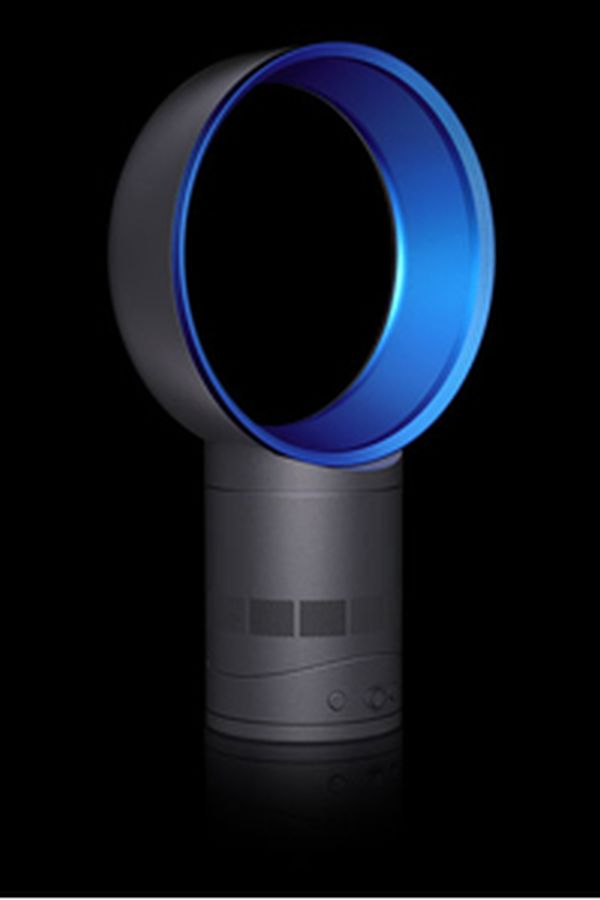
The air flows through a channel in the pedestal up to the tube, which is hollow. The interior of the tube acts like a ramp. Air flows along the ramp, which curves around and ends in slits in the back of the fan. Then, the air flows along the surface of the inside of the tube and out toward the front of the fan. But how does the fan multiply the amount of air coming into the pedestal of the device?
It boils down to physics. While it’s true that the atmosphere is gaseous, gases obey the physical laws of fluid dynamics. As air flows through the slits in the tube and out through the front of the fan, air behind the fan is drawn through the tube as well. This is called inducement. The flowing air pushed by the motor induces the air behind the fan to follow.
Air surrounding the edges of the fan will also begin to flow in the direction of the breeze. This process is called entrainment. Through inducement and entrainment, Dyson claims the Air Multiplier increases the output of airflow by 15 times the amount it takes in through the pedestal’s motor.
Upon its launch, Dyson made available two sizes of the Air Multiplier. The larger model has a fan with a 12-inch diameter (about 30.5 centimeters).
For more detail: How the Dyson Bladeless Fan Works
- Where are the blades located in the fan?
The blades are hidden inside the pedestal. - How much air can the blades pull in per second?
According to Dyson, they can pull in up to 5.28 gallons or about 20 liters of air per second. - What physical process draws air from behind the fan?
This process is called inducement. - What happens to the air surrounding the edges of the fan?
The air begins to flow in the direction of the breeze through a process called entrainment. - How many times does the fan increase its output airflow compared to intake?
Dyson claims it increases the output by 15 times the amount taken in. - What diameter size was available for the larger model upon launch?
The larger model has a fan with a 12-inch diameter. - Does the fan have visible blades on the front?
No, there are no visible blades; the interior of the tube acts like a ramp for the air.
