
Summary of PHOTOVOLTAIC CELL BATTERY CHARGER / SOLAR CELL LI-ION BATTERY TRICKLE CHARGER WITH MPPC
This article describes a compact solar-powered battery charger module using the LTC3105 chip to charge Li-ion or CR2032 batteries from low-voltage sources like photovoltaic cells. It features Maximum Power Point Control (MPPC) for efficiency, supports 225mV to 5V input, and outputs 4.1V for Li-ion charging. The design also allows NiMH charging via resistor adjustments and includes safety features like output disconnect and soft start.
Parts used in the Photovoltaic Cell Battery Charger:
- LTC3105 step-up DC-DC converter chip
- Small photovoltaic cell
- Jumper J1
- Feedback resistors R1 and R2
- Resistor R4 set to 470K
- Resistor R5 set to 0 Ohms
- Digikey Part 1996-1024-ND solar cell
- PCB board
This is a tiny module that allows users to charge small Li-ion batteries, CR2032 or equivalent, from a low power source such as a small photovoltaic cell. The project consists of the LTC3105 step-up DC-DC converter chip which features Maximum Power Point Control (MPPC) and 250mV start-up voltage which enables operational directly from low power, high impedance alternative power sources such as photovoltaic cells. A user-programmable MPPC set point maximizes the energy that can be extracted from any power source. Burst Mode operation, with a proprietary self-adjusting peak current, optimizes converter efficiency and output voltage ripple overall operating conditions. The circuit works with single-cell or dual-cell in parallel. The operating supply of this project is as low as 225mV and a maximum of 5V. Input supply should not exceed 5V DC. The module is programmed to output 4.1V which is important to charge the Li-On battery. Jumper J1 should be open for normal operation, close to disable the output.
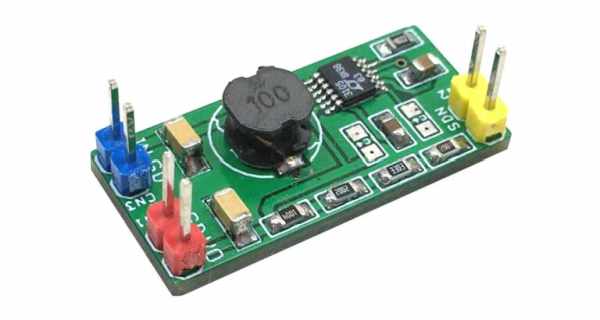
MPPC The maximum power point control circuit allows the user to set the optimal input voltage operating point for a given power source. The MPPC circuit dynamically regulates the average inductor current to prevent the input voltage from dropping below the MPPC threshold. When VIN is greater than the MPPC voltage, the inductor current is increased until VIN is pulled down to the MPPC set point. If VIN is less than the MPPC voltage, the inductor current is reduced until VIN rises to the MPPC set point.
Trickle Charge: Trickle charging means charging a fully charged battery at a rate equal to its self-discharge rate, thus enabling the battery to remain at its fully charged level.
NIMH Battery Charging: charging NiMH battery is also possible with this module by changing feedback resistors value, R4 = 470K, R5= 0 Ohms. R1 and R2 remain unchanged. This change will provide 3.2V output and it’s sufficient to charge 2x NiMH batteries.
Suitable Solar Cell -> Digikey Part: 1996-1024-ND
FEATURES
- Input Supply 225mV to 5V (Photovoltaic Cell)
- Output 4.1V / Approx. 20mA
- Maximum Power Point Control
- Output Disconnect and Inrush Current Limiting
- VIN > VOUT Operation
- Soft Start
- Automatic Power Adjust
- PCB Dimensions 29.05 x 13.81mm
Read more: PHOTOVOLTAIC CELL BATTERY CHARGER / SOLAR CELL LI-ION BATTERY TRICKLE CHARGER WITH MPPC
-
What voltage does the module output for charging Li-ion batteries?
The module is programmed to output 4.1V which is important to charge the Li-On battery. -
How can I configure this module to charge NiMH batteries?
Charging NiMH battery is possible by changing feedback resistors value where R4 equals 470K and R5 equals 0 Ohms. -
Does the MPPC circuit adjust the inductor current dynamically?
Yes, the MPPC circuit dynamically regulates the average inductor current to prevent the input voltage from dropping below the MPPC threshold. -
What happens if the input voltage is less than the MPPC voltage?
If VIN is less than the MPPC voltage, the inductor current is reduced until VIN rises to the MPPC set point. -
Can this module operate directly from a small photovoltaic cell?
Yes, the project enables operational directly from low power, high impedance alternative power sources such as photovoltaic cells. -
What is the function of Jumper J1 on the circuit?
Jumper J1 should be open for normal operation and close to disable the output. -
What is the maximum input supply voltage allowed for this project?
The operating supply has a maximum of 5V and the input supply should not exceed 5V DC. -
What Digikey part number is recommended for the solar cell?
The suitable solar cell part number listed is 1996-1024-ND.
