
Summary of SN-GC SERIES LASER TYPE PARTICULATE MATTER (PM) SENSOR
Panasonic has introduced a new laser-type particulate matter (PM) sensor designed to detect various airborne particles like dust, smoke, and fumes. This compact device features an onboard microprocessor, micro-fan, and laser diode. The integrated fan operates based on detected particle levels to clean the sensor area, significantly extending its lifespan compared to standard commercial equivalents. With dimensions of 37mm x 37mm x 12mm and a weight of 13g, it supports I2C and UART interfaces with a response time of one second.
Parts used in the Panasonic Laser Type PM Sensor:
- On-board microprocessor
- Micro-fan
- Laser diode
Panasonic expands its sensor technology offering to include the laser type particulate matter sensor
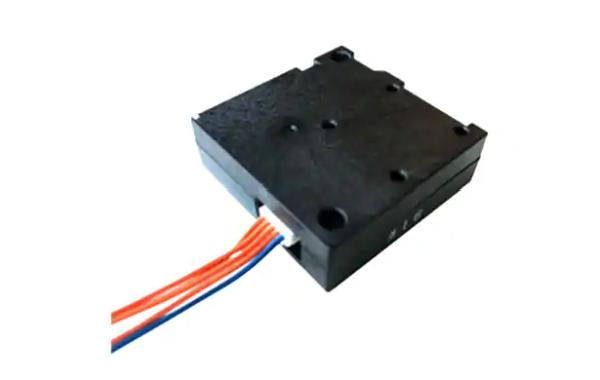
Panasonic’s laser type PM sensor is an addition to its already broad range of specialty sensor solutions. It is comprised of an on-board microprocessor, micro-fan, and laser diode. This sensor has been programmed so that the fan will operate based on the amount of particle dust surrounding the laser diode so that overall lifespan or usefulness of the sensor can be extended much longer than its average commercially available equivalent.
Featuring a very small footprint of 37 mm x 37 mm x 12 mm, the Panasonic laser type PM sensor can be used to detect a wide variety of PM including, but not limited to, dust, fly ash, soot, smoke, aerosols, fumes, mists and condensing vapors, solid fuels, construction materials, cooking/smoking of plant matter, fireplaces and furnaces, house/forest fires, waste incineration, and much more.
Specifications
- 5V (±10%) power supply voltage
- Below 100mA of current consumption
- I2C and UART external interface
- 0.3μm minimum detectable particle
- Response time 1sec
- Time to first reading 8sec
- Small footprint of 37mm x 37mm x 12mm
- Weighs about 13g
Read more: SN-GC SERIES LASER TYPE PARTICULATE MATTER (PM) SENSOR
- What components make up the Panasonic laser type PM sensor?
The sensor is comprised of an on-board microprocessor, micro-fan, and laser diode. - How does the sensor extend its operational lifespan?
The fan operates based on the amount of particle dust surrounding the laser diode to keep the sensor clean. - Can this sensor detect soot and smoke?
Yes, it can detect a wide variety of PM including dust, fly ash, soot, smoke, aerosols, fumes, mists, and condensing vapors. - What are the physical dimensions of the sensor?
The sensor has a footprint of 37 mm x 37 mm x 12 mm. - Does the sensor support I2C and UART interfaces?
Yes, the specifications list both I2C and UART as external interface options. - What is the minimum detectable particle size?
The sensor can detect particles as small as 0.3μm. - How long does it take for the first reading?
The time to first reading is 8 seconds. - What is the power supply voltage requirement?
The sensor requires a 5V (±10%) power supply voltage.
