
Summary of Waffle implant supplies drugs
This article details a collaboration between MIT spinout Microchips Biotech and Teva Pharmaceutical to commercialize implantable microchip devices. These wirelessly controlled chips store drugs in microscopic reservoirs and release precise doses over up to 16 years via electric current, aiming to replace injections and pills for chronic conditions like diabetes and cancer. The partnership includes a $35 million upfront payment to advance clinical trials, potentially improving medication adherence and reducing healthcare costs associated with non-compliance.
Parts used in the Implantable Microchip Device:
- Wirelessly controlled device
- Hundreds of pinhead-sized reservoirs
- Metal membrane caps
- Tiny doses of therapeutics or chemicals
- Electric current delivery system
An implantable, microchip-based device may soon replace the injections and pills now needed to treat chronic diseases: Earlier this month, MIT spinout Microchips Biotech partnered with a pharmaceutical giant to commercialize its wirelessly controlled, implantable, microchip-based devices that store and release drugs inside the body over many years.
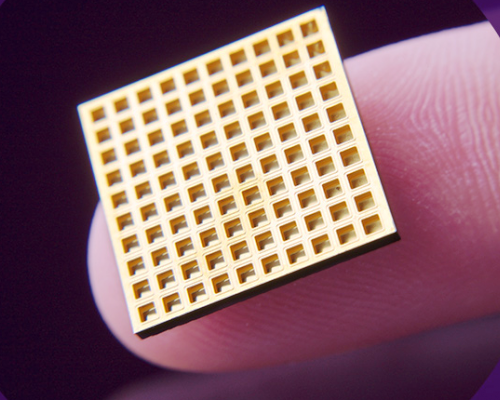
Invented by Microchips Biotech co-founders Michael Cima, the David H. Koch Professor of Engineering, and Robert Langer, the David H. Koch Institute Professor, the microchips consist of hundreds of pinhead-sized reservoirs, each capped with a metal membrane, that store tiny doses of therapeutics or chemicals. An electric current delivered by the device removes the membrane, releasing a single dose. The device can be programmed wirelessly to release individual doses for up to 16 years to treat, for example, diabetes, cancer, multiple sclerosis, and osteoporosis.
Now Microchips Biotech will begin co-developing microchips with Teva Pharmaceutical, the world’s largest producer of generic drugs, to treat specific diseases, with licensing potential for other products. Teva paid $35 million up front, with additional milestone payments as the device goes through clinical trials before it hits the shelves.
“Obviously, this is a huge validation of the technology,” Cima says. “A major pharmaceutical company sees how this technology can further their efforts to help patients.”
Apart from providing convenience, Microchips Biotech says these microchips could also improve medication-prescription adherence — a surprisingly costly issue in the United States. A 2012 report published in the Annals of Internal Medicine estimated that Americans who don’t stick to prescriptions rack up $100 billion to $289 billion annually in unnecessary health care costs from additional hospital visits and other issues. Failure to follow prescriptions, the study also found, causes around 125,000 deaths annually and up to 10 percent of all hospitalizations.
For more detail: Waffle implant supplies drugs
- Who invented the microchip technology?
The technology was invented by Michael Cima and Robert Langer. - How long can the device release doses?
The device can be programmed to release individual doses for up to 16 years. - What diseases could this treat?
It may treat diabetes, cancer, multiple sclerosis, and osteoporosis. - How does the device release a dose?
An electric current delivered by the device removes the metal membrane cap. - Which pharmaceutical company partnered with Microchips Biotech?
Teva Pharmaceutical, the world's largest producer of generic drugs, is the partner. - How much did Teva pay upfront?
Teva paid $35 million upfront plus additional milestone payments. - Why is medication adherence important?
Poor adherence causes around 125,000 deaths annually and up to 10 percent of hospitalizations. - Does the device require physical contact to operate?
No, the device is programmed wirelessly.
