
Summary of World´s Smallest Wearable Made to Help Prevent Skin Cancer
This article discusses UV Sense, the world's smallest wearable device developed by Northwestern University and L'Oréal to prevent skin cancer. Measuring less than an M&M, it tracks UV exposure without a battery or moving parts. The device syncs with a smartphone app that displays daily usage data and sends alerts when safe sun limits are exceeded. Funded by a $2 million NIH grant, this technology aims to reduce the millions of annual nonmelanoma skin cancer cases in the U.S.
Parts used in the UV Sense Project:
- UV sensor
- Smartphone application
- Fingernail attachment
Wearables are devices that incorporate and interact with different parts of our bodies and perform a specific task. The tasks can be to improve our health (count steps, heart rate etc.) or to make our life easier (GPS, smartwatches etc.). Technology industry has dominated the wearable market since its easier for a technology company to produce technologic devices, but other companies have joined the trend and now companies in the textile, fashion and medical industry started producing their own wearables with specific purposes. L’Oréal the world leader on makeup, cosmetics skin care etc. has now joined the race.
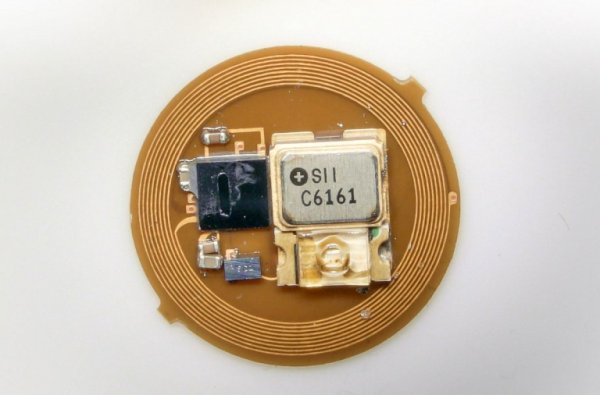
In a research project with Northwestern university, the world´s smallest wearable was created. Measuring less than an M&M in circumference and weighting less than a raindrop this device was designed to measure UV exposure of the user to reduce skin cancer by modulating their exposure to the sun. UV Sense has no battery, no moving parts, its waterproof, and it can be attached to any part of the body preferably a location with good sun exposure.
The device connects to an app that shows you the exposure you have had in a day or over a period. Also, the app can be configured to send notifications when users exceed daily safe sun limit.
According to the skin cancer foundation “Each year in the U.S over 5.4 million cases of nonmelanoma skin cancer are treated in more than 3 million people, and each year there are more new cases of skin cancer”, but with this device skin cancer could be prevented instead of treated. The researchers at Northwestern have received roughly 2 million grant from the National institutes of Health to deploy fingernail UV sensors.
Read more: World´s Smallest Wearable Made to Help Prevent Skin Cancer
- How does the UV Sense device function?
The device measures user UV exposure to help reduce skin cancer risk by modulating sun exposure. - Can the UV Sense device be worn on any body part?
Yes, it can be attached to any part of the body, preferably where there is good sun exposure. - Does the UV Sense device require a battery?
No, the device has no battery and no moving parts. - What happens if I exceed my daily safe sun limit?
The connected app can be configured to send notifications when users exceed their daily safe sun limit. - Is the UV Sense device waterproof?
Yes, the device is waterproof. - Who funded the deployment of fingernail UV sensors?
The National Institutes of Health provided roughly 2 million in grants for this project. - What is the size of the UV Sense device?
The device measures less than an M&M in circumference and weighs less than a raindrop. - Which companies joined the wearable market trend mentioned in the text?
Companies in the textile, fashion, medical, and technology industries have joined the trend.
