
Summary of HS101: A HIGH QUALITY, AND CHEAP DIY OSCILLOSCOPE
This article introduces the HS101, a low-cost DIY oscilloscope designed for makers and electronics engineers. It overcomes the high cost of traditional scopes by utilizing an STM32F103 microcontroller paired with an Android device running the HScope app. The system samples signals through onboard conditioning components like resistors, capacitors, and diodes to visualize waveforms, frequency, and voltage levels effectively.
Parts used in the HS101 Oscilloscope:
- HS101 portable and compact DIY oscilloscope
- Android-based mobile phone or tablet
- HScope app
- STM32F103 microcontroller
- Resistors
- Capacitors
- Diodes
One of the most interesting thing about being a maker is you never get tool-stranded, with the right components, makers tend to have the ability to build makeshift tools on the go. Today, we will take a look on how to build a cheap version of one of the most important tools for any electronics engineer or maker; The Oscilloscope.
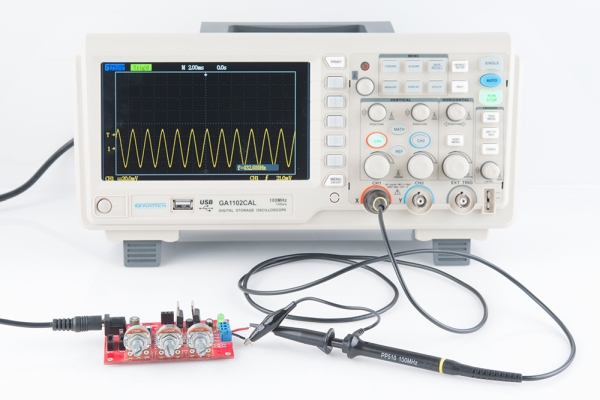
The Oscilloscope is a test instrument used for the visualization and observation of varying signal voltages, usually as a two-dimensional plot with one or more signals plotted against time. They are used in the design and debugging of electronic devices to view and compare waveforms, determine voltage levels, frequency, noise and other parameters of signals applied at its input as it changes with time. This makes Oscilloscopes a very important tool on the desk of an electronics engineer or maker. However, Oscilloscopes are quite expensive, they cost between $45 – $100 for a small oscilloscope and above $300 for advanced oscilloscopes, which puts them beyond the reach of basic users. But what if we could create something cheaper, compact, and highly functional using the components familiar to makers? That is the question that led to today’s tutorial.
For today’s tutorial, we will build the HS101 Oscilloscope. The HS101 Oscilloscope setup comprises of the HS101 portable and compact DIY oscilloscope, connected to an Android-based mobile phone or tablet running the HScope app. The oscilloscope is based on the STM32F103microcontroller which has 2 fast, 12-bits ADC and it samples the signal to be examined (after it has passed condition elements, like a network of resistors capacitors and diodes) on board.
Read more: HS101: A HIGH QUALITY, AND CHEAP DIY OSCILLOSCOPE
- What is the primary function of an oscilloscope?
It is used for the visualization and observation of varying signal voltages as a two-dimensional plot against time. - How much do advanced oscilloscopes typically cost?
Advanced oscilloscopes cost above $300. - Which microcontroller powers the HS101 setup?
The HS101 is based on the STM32F103 microcontroller. - What software is required to run the HS101?
The project requires an Android-based mobile phone or tablet running the HScope app. - What components condition the signal before sampling?
A network of resistors, capacitors, and diodes conditions the signal on board. - Can this DIY solution be considered cheap?
Yes, it is designed to be a cheap version compared to expensive commercial models. - What parameters can be determined using this tool?
Users can determine voltage levels, frequency, noise, and other signal parameters.
