
Summary of An universal programming adapter for the Atmel STK500 using AVR microcontroller
This article describes a DIY adapter to enable an STK500 development board to program newer AVR controllers lacking native socket support. The project involves constructing a custom universal programming interface using basic electronics components to bridge pinout differences between the board and various microcontrollers.
Parts used in the Universal Programming Adapter:
- Prototype PCB board
- Female pin header connectors (single or double-row)
- ZIF socket for the controller
- Solder wire
- Soldering iron
- 28-pin DIP zero-insertion-force socket
- Two 28-pin long strips of female headers
- Two pieces of 5x2 contacts
You have an STK500 development board for the AVR controllers from Atmel?
And you want to use it with a newer AVR controller which is not supported by any of the 8 sockets on board?
And you do not own an STK505 extension board?
Welcome to my world until yesterday!
This is my first instructable which will describe how I helped myself yesterday. You might find an update on my blog as well…
Step: 1 What you need
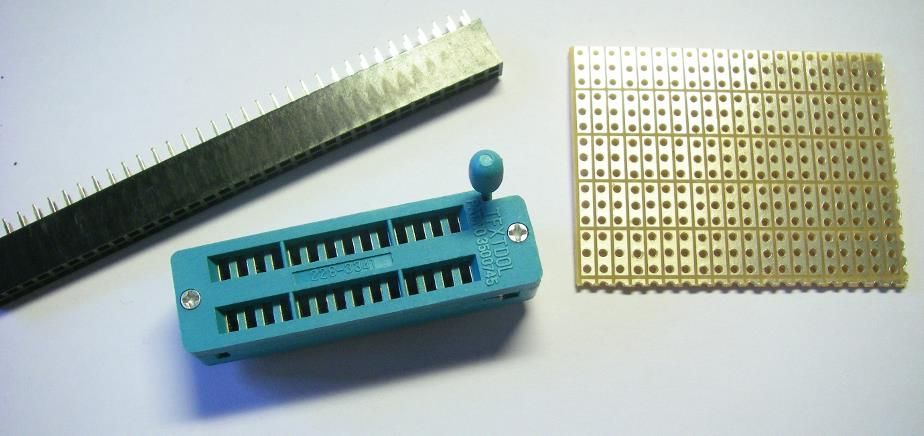
All you need to build yourself an adapter which will support all different kinds of controller pinouts for your ST500 is
– some piece of prototype pcb board
– some strip of female pin header connectors (single or double-row)
– a socket for the controller, preferably a zif socket
– solder wire and a soldering iron
I used a narrow 28-pin DIP zero-insertion-force socket, similar to the famous Textool brand, but labeled as TFXTDOL. For a 28-pin socket you will need two 28-pin long strips of the female header. For the connection to the ISP10PIN header on the STK500 you will need another two pieces of 5×2 contacts.
Step: 2 Put it together
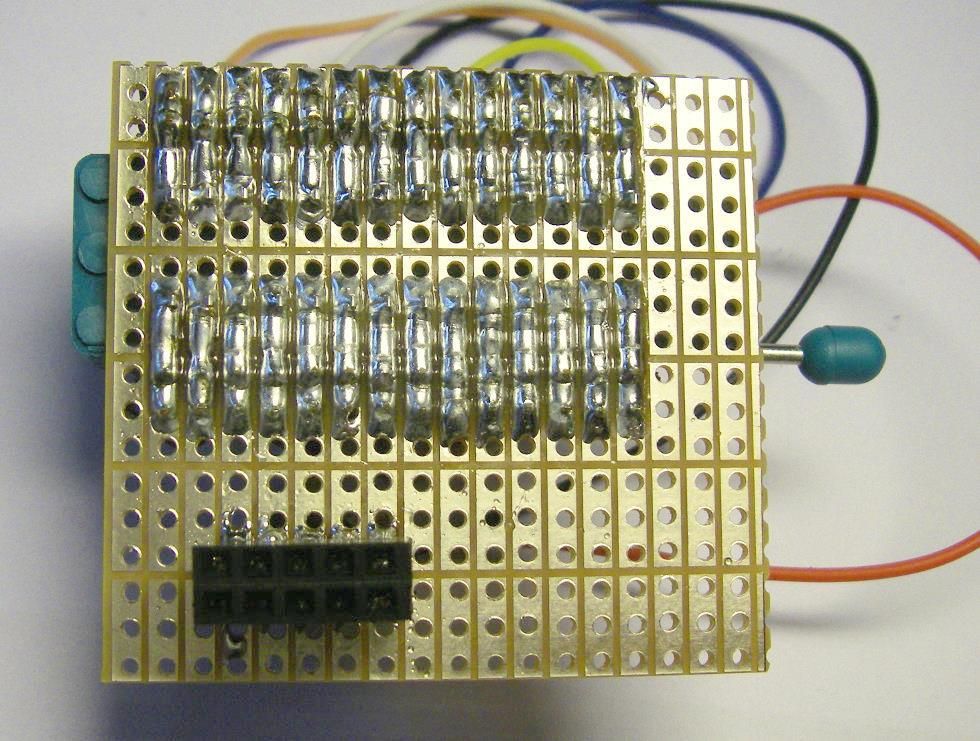
Cut the female pin header strips to the corresponding lengths. Then solder the socket and the pin header strips to the circuit board – align the pin header strips along both sides of the socket.
Connect each pin of the socket to the corresponding pin(s) on the adjacent pin header.
Finally solder a 5×2 pin header strip to the top of the circuit board, next to the socket arrangement, but without aking any connections between the two areas.
Take the second 5×2 pin header, slightly bend the solder pins slightly outward and solder it from the bottom of the pcb onto the connections of the 5×2 header on the top side.
For more detail: An universal programming adapter for the Atmel STK500 using AVR microcontroller
- What is the purpose of this project?
To build an adapter that supports all different kinds of controller pinouts for the STK500. - How can I use an STK500 with a newer AVR controller not supported by the board sockets?
You can build a custom adapter using a prototype PCB, ZIF socket, and pin headers. - Does this project require an STK505 extension board?
No, this guide describes how to help yourself without owning an STK505 extension board. - What type of socket is recommended for the controller?
A ZIF socket is preferred, specifically a narrow 28-pin DIP zero-insertion-force socket. - How do you connect the socket to the ISP10PIN header on the STK500?
You solder two pieces of 5x2 contacts to the top of the circuit board next to the socket arrangement. - Can you use single-row headers instead of double-row headers?
Yes, you need some strip of female pin header connectors which can be single or double-row. - What is the best way to attach the second 5x2 pin header?
Bend the solder pins slightly outward and solder it from the bottom of the PCB onto the connections of the 5x2 header on the top side. - Are there electrical connections between the socket area and the ISP10PIN header area?
No, you should place the 5x2 pin header next to the socket arrangement without making any connections between the two areas initially.
