
Summary of BLEUIO: BLE 5.0 USB ADAPTER
Summary: USB Bluetooth dongles enable wireless communication by plugging into a PC USB port, supporting peripherals like phones, printers, headsets, and keyboards. They operate at 2.4 GHz with ranges from about 2 to 100 meters. Bluetooth Low Energy (BLE), developed from Wibree, reduces power and cost for devices like wearables while keeping similar range. Bluetooth 5.0 doubles BLE data rate to 2 Mbps, extends range up to ~260 feet (line-of-sight), and benefits smart home and IoT applications.
Parts used in the USB Bluetooth dongle project:
- USB connector
- Bluetooth radio transceiver
- Built-in antenna
- 2.4 GHz frequency band circuitry
- BLE (Bluetooth Low Energy) compatible chipset
- Bluetooth 5.0 capable controller (for Bluetooth 5.0 dongles)
- Power management components
- PCB (printed circuit board)
The USB Bluetooth dongles are quite popular nowadays. Most wireless computer mouse comes with a USB Bluetooth dongle which enables wireless communications to your PC. A USB Bluetooth dongle is a very quick and inexpensive means to allow Bluetooth communications onto your computer. To use the dongle, you simply need to plug it in the USB port of your PC and any Bluetooth peripheral devices will be able to communicate with your PC. You can connect various peripherals like cellphones, printers, PDAs, Wireless earphones, wireless keyboards, etc.
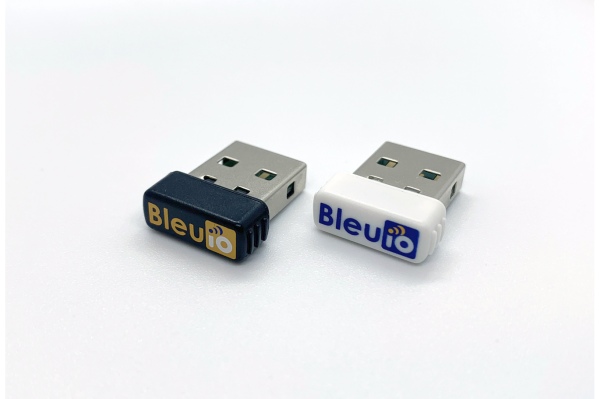
A USB Bluetooth dongle has a built-in antenna that has a range of 2 to 100 meters and operates on a 2.4GHz frequency band. The Bluetooth dongles are used for various applications like transferring videos, photos, and in many other applications like this.
Bluetooth Low Energy
Bluetooth Low Energy (BLE) is a wireless personal area network technology independent of the classic Bluetooth and has distinct compatibility. The original BLE specifications were developed by Nokia in 2006 under the name Wibree and are intended for applications in fitness products, healthcare, security, and home entertainment. BLE features a significant reduction in power consumption and also cost as compared to standard Bluetooth. Very low-power devices which operate for months or years on a button cell uses BLE for communication. However, a similar communication range is maintained and the same 2.4GHz frequency band is used.
As mentioned earlier, BLE’s compatibility is different from the basic Bluetooth protocol but BR/EDR and LE systems are permitted.
Bluetooth 5.0
Bluetooth 5.0 is the latest Bluetooth standard in the industry. Bluetooth 5.0 supported devices can transfer data at up to 2Mbps speed which is twice the speed of Bluetooth 4.2. In addition, the range is extended up to 260 feet (if no walls interfere). BLE 5.0 will have a big impact on smart home systems and other IoT devices as per the experts. Low energy, increased range, and increased speed means that the devices can switch over from Wi-Fi.
Read more: BLEUIO: BLE 5.0 USB ADAPTER
- What is a USB Bluetooth dongle?
A small device that plugs into a PC USB port to enable Bluetooth communications with peripherals. - What devices can connect using a USB Bluetooth dongle?
Peripherals like cellphones, printers, PDAs, wireless earphones, and wireless keyboards can connect. - What frequency band do Bluetooth dongles use?
They operate on the 2.4 GHz frequency band. - What is the typical range of a USB Bluetooth dongle?
Built-in antennas provide ranges from about 2 to 100 meters. - What is Bluetooth Low Energy?
BLE is a low-power wireless personal area network technology, originally called Wibree, intended for low-power applications like fitness and healthcare devices. - How does BLE differ from classic Bluetooth?
BLE features significantly reduced power consumption and cost and has distinct compatibility from classic Bluetooth, though BR/EDR and LE systems are permitted. - What advantages does Bluetooth 5.0 offer?
Bluetooth 5.0 offers up to 2 Mbps data rate (double Bluetooth 4.2) and extended range up to about 260 feet without walls. - How will Bluetooth 5.0 impact smart home and IoT devices?
Its low energy, increased range, and higher speed can enable devices to shift from Wi-Fi and improve smart home and IoT performance.
