
Summary of FLIR HADRON THERMAL/VISIBLE SENSOR MODULE FOR DRONES, ROBOTICS, AND IMAGING
FLIR Systems launched the Hadron, the industry's first dual thermal and visible sensor module designed for drones, robotics, and imaging OEMs. Weighing only 42.8 grams, it combines a 12-megapixel visible camera with a Boson thermal sensor (320x240 resolution) in a compact form factor. This integration aims to reduce development costs, improve time to market, and enhance flight performance by minimizing weight and power consumption for lightweight airframes.
Parts used in the FLIR Hadron Project:
- 12-megapixel visible camera
- Boson 320 x 240-resolution thermal camera
- Lightweight sensor module chassis (24 x 45 x 36 mm)
- Vantage Robotics micro-gimbal platform
- Teal Drones Golden Eagle UAS platform
Thermal imaging products company FLIR Systems has announced what it claims is the industry’s first thermal and visible sensor module for drone, robotic, and imaging manufacturers.
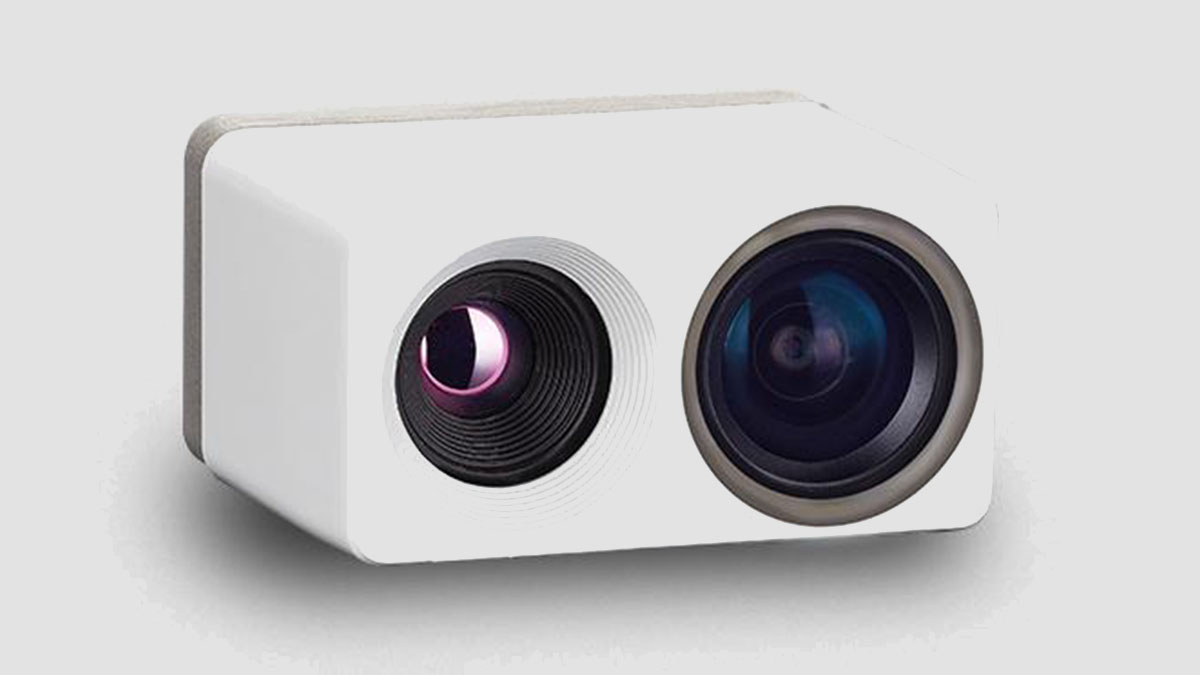
The FLIR Hadron dual sensor module for drone, robotic, and imaging original equipment manufacturers (OEMs) is designed to help reduce development costs and improve time to market. Offered in a lightweight (42.8 g), low-power, and 24 x 45 x 36-mm form factor, the device includes a 12-megapixel visible camera paired with the company’s Boson 320 x 240-resolution thermal camera with up to a 60-Hz frame rate.
With the introduction of Hadron, FLIR Systems is leading the way in offering low-cost, dual sensor integration across a variety of industries from commercial drones to industrial imaging systems,” says Paul Clayton, General Manager, Components Business at FLIR. “Although our unmanned aerial system (UAS) customers are first to market with Hadron, this product empowers all of our OEM customers to increase performance with out-of-the-box functionality and simplified integration.
In developing the Hadron, the company says it worked closely with drone manufacturers Vantage Robotics and Teal Drones to perfect the module for use on lightweight drone airframes. Vantage Robotics integrated the module into its micro-gimbal platform featuring its proprietary stabilization technology, offering a dual-sensor, OEM solution for existing UAS airframes and potentially other robotic platforms.
Tobin Fisher, CEO at Vantage Robotics says
Hadron is far and away the lightest and smallest combined visible-thermal sensor that has ever been commercially available. For an aircraft where you’re trying to push the limit on flight performance, every gram matters. The ability to get these sensor capabilities in a package this small makes an enormous difference.
Teal has also integrated Hadron within its 2-lb (1 kilogram) Golden Eagle UAS platform, taking advantage of the module’s compact size to create a lightweight yet dynamic payload that helps preserve battery life and maximize flight time on a small airframe.
Teal Drones CEO and founder, George Matus says,
Hadron enables us to speed development and time to market for small airframes with thermal and visual sensors. It’s high quality, low weight, and compact size allows for rapid integration to quickly develop prototypes.
Read more : FLIR HADRON THERMAL/VISIBLE SENSOR MODULE FOR DRONES, ROBOTICS, AND IMAGING
- What is the primary function of the FLIR Hadron module?
It serves as the industry's first dual thermal and visible sensor module for drone, robotic, and imaging manufacturers. - How does the Hadron help reduce development costs?
It offers out-of-the-box functionality and simplified integration for OEM customers. - What are the dimensions of the Hadron device?
The device has a form factor of 24 x 45 x 36 mm. - Does the module include a high frame rate thermal camera?
Yes, it includes a Boson thermal camera with up to a 60-Hz frame rate. - Which companies collaborated with FLIR to perfect the module?
FLIR worked closely with Vantage Robotics and Teal Drones during development. - Why is the weight of the Hadron significant for aircraft?
Every gram matters for flight performance, and its low weight preserves battery life. - Can the Hadron be integrated into existing UAS airframes?
Yes, it can be integrated into existing UAS airframes and potentially other robotic platforms. - What specific platform did Teal Drones use to integrate Hadron?
Teal integrated the module within its 2-lb Golden Eagle UAS platform.
