
Summary of How Radio Works
Radio waves invisibly transmit data globally, powering diverse technologies like cell phones, GPS, and Wi-Fi. Despite their societal impact, the core technology is simple; basic components like a 9-volt battery and a coin can create a functional radio transmitter capable of sending static or Morse code over short distances.
Parts used in The Simplest Radio:
- Fresh 9-volt battery
- Coin
- AM radio
“Radio waves” transmit music, conversations, pictures and data invisibly through the air, often over millions of miles — it happens every day in thousands of different ways! Even though radio waves are invisible and completely undetectable to humans, they have totally changed society. Whether we are talking about a cell phone, a baby monitor, a cordless phone or any one of the thousands of other wireless technologies, all of them use radio waves to communicate.
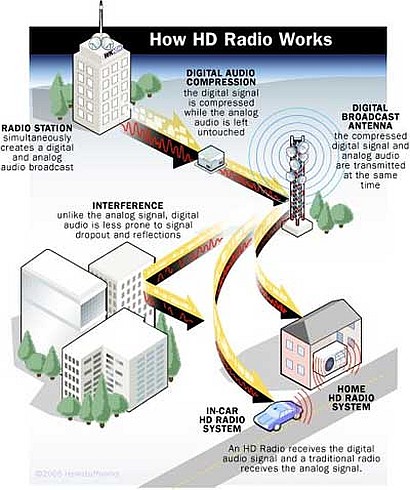
Here are just a few of the everyday technologies that depend on radio waves:
- AM and FM radio broadcasts
- Cordless phones
- Garage door openers
- Wireless networks
- Radio-controlled toys
- Television broadcasts
- Cell phones
- GPS receivers
- Ham radios
- Satellite communications
- Police radios
- Wireless clocks
The list goes on and on… Even things like radar and microwave ovens depend on radio waves. Things like communication and navigation satellites would be impossible without radio waves, as would modern aviation — an airplane depends on a dozen different radio systems. The current trend toward wireless Internet access uses radio as well, and that means a lot more convenience in the future!
The funny thing is that, at its core, radio is an incredibly simple technology. With just a couple of electronic components that cost at most a dollar or two, you can build simple radio transmitters and receivers. The story of how something so simple has become a bedrock technology of the modern world is fascinating!
In this article, we will explore the technology of radio so that you can completely understand how invisible radio waves make so many things possible!
The Simplest Radio
Radio can be incredibly simple, and around the turn of the century this simplicity made early experimentation possible for just about anyone. How simple can it get? Here’s an example:
- Take a fresh 9-volt battery and a coin.
- Find an AM radio and tune it to an area of the dial where you hear static.
- Now hold the battery near the antenna and quickly tap the two terminals of the battery with the coin (so that you connect them together for an instant).
- You will hear a crackle in the radio that is caused by the connection and disconnection of the coin.
Your battery/coin combination is a radio transmitter! It’s not transmitting anything useful (just static), and it will not transmit very far (just a few inches, because it’s not optimized for distance). But if you use the static to tap out Morse code, you can actually communicate over several inches with this crude device!
For more Detail: How Radio Works
-
How do radio waves affect society?
They have totally changed society by transmitting music, conversations, pictures, and data invisibly through the air. -
Can you build a radio transmitter with cheap parts?
Yes, you can build simple radio transmitters using just a couple of electronic components that cost at most a dollar or two. -
What happens when you tap a battery terminal with a coin near an AM radio?
You will hear a crackle in the radio caused by the connection and disconnection of the coin. -
Does the battery and coin setup transmit useful signals?
No, it does not transmit anything useful other than static. -
How far can the battery and coin transmitter reach?
It will not transmit very far, only covering a few inches because it is not optimized for distance. -
Can you communicate using the battery and coin device?
Yes, if you use the static to tap out Morse code, you can communicate over several inches. -
Do modern aviation systems depend on radio waves?
Yes, an airplane depends on a dozen different radio systems. -
Are microwave ovens powered by radio waves?
Yes, things like radar and microwave ovens depend on radio waves.
