
Summary of How to Build Your Own Custom Car Entertainment System
This article explores upgrading car audio systems beyond factory defaults using aftermarket components. It details the transition from CDs to digital inputs and outlines how to customize sound with various hardware. The guide covers speaker types, sizes, and installation challenges, emphasizing that receivers are essential for operation.
Parts used in Custom Car Entertainment System:
- MP3 players
- Internal hard drives
- Aftermarket car speakers
- Subwoofers
- Navigation systems
- DVD players
- Amplifiers
- iPod adapters
- Coaxial speakers
- Component speakers
- Woofers
- Tweeters
- Receivers
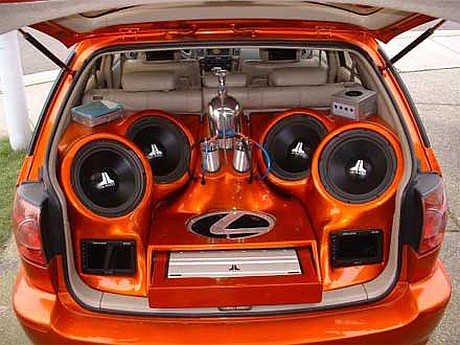
In this article, we’ll show you how to make your car into the theater on wheels you’ve always wanted it to be, and discuss the costs and risks involved in doing so.
Car Speakers
Let’s be honest: Unless you buy a car that has an expensive, brand-name factory stereo option, your standard speakers probably aren’t going to be anything to write home about. Speaker upgrades are a basic and fundamental way to get your car custom sound system started, and probably the easiest way to get immediate, better audio quality in your vehicle.
You’ll want to measure the speakers that came with your car to make sure you buy the right size and shape. For instance, most typical front speakers are four, five or six inches (10, 13 or 15 centimeters) across, while most rear speakers measure 6 by 9 inches (15 by 23 centimeters).
There are two types of speakers to consider: coaxial and component. Coaxial speakers are the cheapest and most common models. They integrate midrange sound by incorporating a woofer (for low range sounds) and a tweeter (for high-pitched sounds) into one unit. These speakers are easier to install, but generally produce lower sound quality. You can put speakers like these into your doors or the rear deck — the area just below the rear glass — by swapping them out with the originals.
Component speakers are a set of multiple units — including both woofers and tweeters — installed at different locations throughout the car, each one producing its own sounds to give a kind of concert quality to your music. These are typically more expensive than standard car speakers and installing them is often much harder, too. In fact, you may end up needing a jigsaw to cut a hole in your A-pillar (where the front door meets the windshield) to install the tweeters [source: Crutchfield]. Then of course, there’s the infamous subwoofer. If you want that throbbing, thumping bass that can be heard (and often felt) from several yards away, you’ll want one of these in your car. Subwoofers provide that deep, low-end bass and are often installed in the trunk or rear compartment of the vehicle.
Above all, listen to the speakers you want before you buy them. Do they produce the quality you’re searching for? Do they suit the type of music you like? Only you can tell what speakers are best suited to your ears, so take them on a test run before you make your purchase.
Speakers are great, but without a receiver to play music, they don’t do much. In the next section, we’ll talk about the latest in receiver technology and how today’s radios do much more than just play music.
For more Detail: How to Build Your Own Custom Car Entertainment System
- How can drivers play their iPods in their cars?
Many car models offer inputs for MP3 players or have internal hard drives to upload music digitally. - What is the easiest way to get better audio quality in a vehicle?
Speaker upgrades are considered the basic and fundamental way to start a custom sound system. - Which speaker type integrates midrange sound into one unit?
Coaxial speakers integrate a woofer and tweeter into a single unit. - Where might you need to cut a hole to install component speaker tweeters?
You may need to use a jigsaw to cut a hole in your A-pillar where the front door meets the windshield. - What is the best place to install a subwoofer?
Subwoofers are often installed in the trunk or rear compartment of the vehicle. - Why should you listen to speakers before buying them?
Only you can tell what speakers suit your ears and the type of music you like. - What happens if you have speakers but no receiver?
Speakers do not do much without a receiver to play music. - Can component speakers produce concert quality music?
Yes, because they are installed at different locations with each unit producing its own sounds.
