
Summary of Intel Introduces Loihi – A Self Learning Processor That Mimics Brain Functions
Intel's Loihi is a groundbreaking self-learning neuromorphic chip that mimics animal brain functions using an asynchronous spiking model. Unlike traditional CNNs, it combines training and inference on a single chip, enabling real-time adaptation without cloud dependency. This energy-efficient technology offers up to 1,000 times better efficiency than general-purpose computing and demonstrates a million-fold improvement in learning rates, making it ideal for autonomous vehicles, robotics, and industrial applications in unstructured environments.
Parts used in the Loihi Project:
- Asynchronous spiking model
- Digital circuits mimicking brain mechanics
- Neuron behavior simulation
- Synapse behavior simulation
- On-chip learning system
Intel has developed a first-of-its-kind self-learning neuromorphic chip – codenamed Loihi. It mimics the animal brain functions by learning to operate based on various modes of feedback from the environment. Unlike convolutional neural network (CNN) and other deep learning processors, Intel’s Loihi uses an asynchronous spiking model to mimic neuron and synapse behavior in a much closer analog to animal brain behavior.
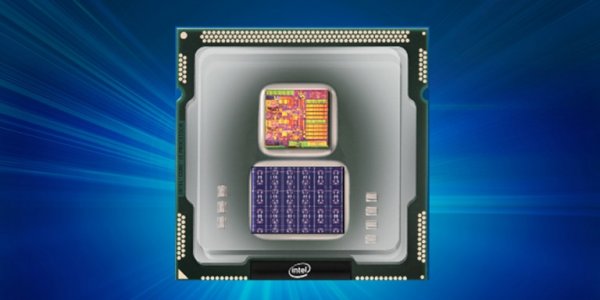
Machine learning models based on CNN use large training sets to set up recognition of objects and events. This extremely energy-efficient chip, which uses the data to learn and make inferences, gets smarter over time and does not need to be trained in the traditional way. The Loihi chip includes digital circuits that mimic the brain’s basic mechanics, making machine learning faster and more efficient while requiring much lower computing power.
The chip offers highly flexible on-chip learning and combines training and inference on a single chip. This allows machines to be autonomous and to adapt in real time instead of waiting for the next update from the cloud. Compared to convolutional neural networks and deep learning neural networks, the Loihi test chip uses many fewer resources on the same task. Researchers have demonstrated learning at a rate that is a 1 million times improvement compared with other typical neural network devices.
The self-learning capabilities prototyped by this test chip have huge potential to improve automotive and industrial applications as well as personal robotics – any application that would benefit from the autonomous operation and continuous learning in an unstructured environment. For example, recognizing the movement of a car or bike for an autonomous vehicle. More importantly, it is up to 1,000 times more energy-efficient than general purpose computing.
Read more: Intel Introduces Loihi – A Self Learning Processor That Mimics Brain Functions
- How does Loihi differ from convolutional neural networks?
Loihi uses an asynchronous spiking model to mimic neuron and synapse behavior, whereas CNNs rely on large training sets. - Does the Loihi chip require traditional training methods?
No, it learns from data to make inferences and gets smarter over time without being trained in the traditional way. - Can machines using Loihi adapt in real time?
Yes, it allows machines to be autonomous and adapt in real time instead of waiting for cloud updates. - What is the energy efficiency improvement of Loihi?
The chip is up to 1,000 times more energy-efficient than general purpose computing. - How much faster is the learning rate compared to other devices?
Researchers demonstrated a learning rate that is a million times improvement compared with other typical neural network devices. - What are the potential applications for this technology?
Potential applications include automotive, industrial, and personal robotics requiring autonomous operation in unstructured environments.
