
Summary of LEGALLY TRACK SMARTPHONES USERS WITH ESP8266
This project by engineering student Amine Mehdi Mansouri creates a legal smartphone tracker using custom devices that capture probe request frames sent by mobile phones to identify connected Wi-Fi networks. By deploying a mesh network of these boards with Wi-Fi repeaters, the system successfully tracked over 500 unique MAC addresses and their proximity in a library setting within two days.
Parts used in the Smartphone Tracker:
- 12 surface mount components (0805 package)
- Eight tracker boards
- Kortex Xtend Lite NAT (Wi-Fi) repeaters
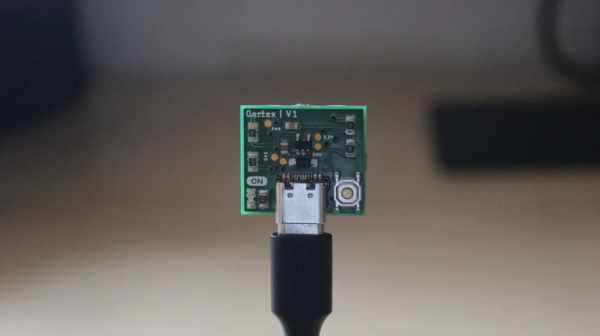
With a vast majority of the world population owning a smartphone, being able to track someone through their phone is not such a bad idea after all, especially if it is done within legal limits. This is the end result of a recent project developed by engineering student Amine Mehdi Mansouri, whose initial efforts on creating a quick project to check the connection status of plant sensors, has resulted in the development of a tiny little custom device that is able to track over 500 people legally.
Speaking on the project and its morphing, Amine said his curiosity heightened when he discovered that devices use probe requests frames sent by mobile devices to announce the SSID they were connected to. So, phones, laptops, and WiFi devices constantly search for all WiFi networks that you must have connected with in the past and share the information with anyone who is listening for those public packets, well except if you changed as “saved”. Else, anyone can get access to where you have been before and your unique device MAC address.
The tracker board, according to Mansouri, is made up of 12 components, all of which are surface mount and easy to solder with an 0805 package. For proper device operation, Mansouri had to create a mesh-like network with eight of these boards, along with a series of Kortex Xtend Lite NAT (Wi-Fi) repeaters used to get the list of those connected to the Wi-Fi.
For tests, Mansouri used his local library, with the boards set up in different places. The devices were used to collect addresses from mobile phones based on which of the devices they were connected to or had been connected to. In two days, Mansouri had been able to target 526 MAC addresses, with their respective RSSI values that indicated the proximity of each person to the nearest device.
I just had to sit and watch how my database was getting filled with new unique (not randomized) MAC addresses,” says Mansouri.
Read more: LEGALLY TRACK SMARTPHONES USERS WITH ESP8266
- How does the device track smartphones?
The device captures probe request frames sent by mobile phones to announce previously connected SSIDs. - Can anyone access where you have been before?
Yes, unless users change settings to not share information, anyone can access this data via public packets. - What is the purpose of the Kortex Xtend Lite NAT?
These Wi-Fi repeaters are used to get the list of those connected to the Wi-Fi for the mesh network. - How many people were tracked during the test?
Mansouri targeted 526 MAC addresses during his two-day test at the local library. - What do RSSI values indicate?
RSSI values indicate the proximity of each person to the nearest device. - Are the components easy to solder?
Yes, all 12 components are surface mount and use an easy-to-solder 0805 package. - Does the device collect randomized MAC addresses?
No, the database was filled with new unique non-randomized MAC addresses. - What initial goal led to this project?
The project started as an effort to check the connection status of plant sensors.
