
Summary of Linux embedded SOM from NI
National Instruments launched an embedded System-on-Module (SOM) development board featuring a Xilinx Zynq-7020 SoC with dual-core ARM Cortex-A9 and an Artix-7 FPGA. This 2" x 3" module runs a Linux-based real-time operating system (RTOS) and includes integrated middleware, a validated board support package, and device drivers. It supports Gigabit Ethernet, USB, SDHC, and RS232 interfaces while consuming 3 to 5 watts of power.
Parts used in the NI Embedded SOM:
- Xilinx Zynq-7020 all programmable SOC
- Dual core ARM Cortex-A9 processor
- Artix-7 FPGA
- NI Linux real-time OS
- Board support package (BSP)
- Device drivers
- Middleware suite
National Instruments has introduced an embedded System-on-module (SOM) development board with integrated Linux-based real-time operating system (RTOS).
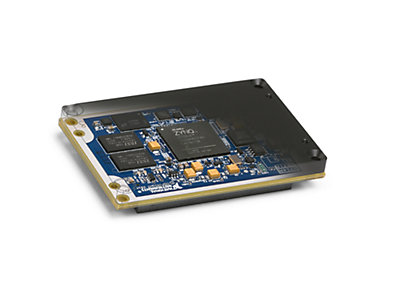
Processing power in the 2” x 3” SOM comes from a Xilinx Zync-7020 all programmable SOC running a dual core ARM Cortex-A9 at 667 MHz. A built-in low power Artix-7 FPGA offers 160 single-ended I/Os and Its dedicated processor I/O include Gigabit Ethernet USB 2.0 host, USB 2.0 host/device, SDHC, RS232 and Tx/Rx. Power requirements of the SOM are typically 3 to 5 W.
The Ni SOM integrates a validated board support package (BSP) and device drivers together with the NI Linux real-time OS. The SOM board is supplied with a full suite of middleware for developing an embedded OS, custom software drivers and other common software components.
For more detail: Linux embedded SOM from NI
- What is the processing power source of the NI SOM?
The SOM uses a Xilinx Zynq-7020 all programmable SOC running a dual core ARM Cortex-A9 at 667 MHz. - Does the SOM include a real-time operating system?
Yes, it integrates a validated board support package and device drivers together with the NI Linux real-time OS. - How much power does the SOM typically require?
Power requirements are typically 3 to 5 W. - What FPGA is built into the SOM?
A low power Artix-7 FPGA is built into the module. - What I/O interfaces are available on the SOM?
It offers Gigabit Ethernet, USB 2.0 host/device, SDHC, RS232, and Tx/Rx ports. - Can developers create custom software drivers for this board?
Yes, the SOM is supplied with a full suite of middleware for developing custom software drivers.
