
Summary of SOURIAU PA&E Announces New HTCC Micro-D Connector
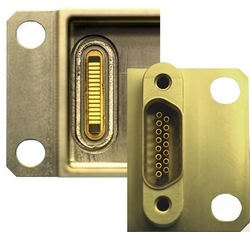
SOURIAU PA&E introduces HTCC Micro-D connectors, merging High Temperature Co-Fired Ceramic technology with the Micro-D form factor. This design replaces traditional pins with an engineered HTCC board, offering superior wire bonding density and space savings while maintaining MIL-PRF-83513 compliance for harsh environments like aerospace and defense.
Parts used in the HTCC Micro-D Connectors:
- High Temperature Co-Fired Ceramic (HTCC) board
- Metalized circuit patterns
- External sockets
- Aluminum electronic housings
- Titanium electronic housings
- Iron/nickel alloy electronic housings
Wenatchee, WA (PRWEB) November 22, 2010
SOURIAU PA&E has brought High Temperature Co-Fired Ceramic (HTCC) technology to its popular line of Micro-D connectors, providing design engineers with a new connector option that delivers high levels of mechanical performance and superior wire bonding density.
HTCC technology is typically used in high-reliability applications, such as defense/aerospace electronics, infrared sensors and optoelectronics. SOURIAU PA&Es newest Micro-D connectors external interface resembles a standard rectangular connector, with rows of sockets providing an electrical connection. In this new, patent-pending design, however, the external sockets are mated to a specially engineered HTCC board (that integrates metalized circuit patterns), rather than traditional pins. This approach can save space and reduce wire-bonding complexity while still maintaining SOURIAU PA&Es high standards for harsh-environment reliability and electrical performance.
These new HTCC Micro-D connectors are MIL-PRF-83513 interface compliant and designed to be laser welded into aluminum, titanium or iron/nickel alloy electronic housings. They provide greater than 5,000 megohms of insulation resistance at 500 VDC and exhibit no evidence of dielectric withstanding voltage breakdown when tested in accordance with MIL-STD-1344, Method 3003. These new Micro-D connectors have a leak rate of less than 1X10⁻⁹ cc/second of helium at one atmospheric differential pressure. SOURIAU PA&Es HTCC Micro-D connectors can be configured with 9, 15, 21, 25, 31 and 37 pin counts and will operate reliably at temperatures from -65
- What technology does SOURIAU PA&E use in their new Micro-D connectors?
The connectors utilize High Temperature Co-Fired Ceramic (HTCC) technology. - How are the external sockets connected in this new design?
The external sockets are mated to a specially engineered HTCC board rather than traditional pins. - Can these connectors be welded into different housing materials?
Yes, they are designed to be laser welded into aluminum, titanium, or iron/nickel alloy electronic housings. - What insulation resistance do these connectors provide?
They provide greater than 5,000 megohms of insulation resistance at 500 VDC. - Do these connectors meet specific military standards?
Yes, they are MIL-PRF-83513 interface compliant and tested according to MIL-STD-1344, Method 3003. - What is the leak rate performance of these connectors?
They have a leak rate of less than 1X10⁻⁹ cc/second of helium at one atmospheric differential pressure. - Which pin counts are available for configuration?
They can be configured with 9, 15, 21, 25, 31, and 37 pin counts. - What temperature range do these connectors operate within?
They operate reliably at temperatures from -65 degrees Fahrenheit up to the maximum limit mentioned in the text.
