Device

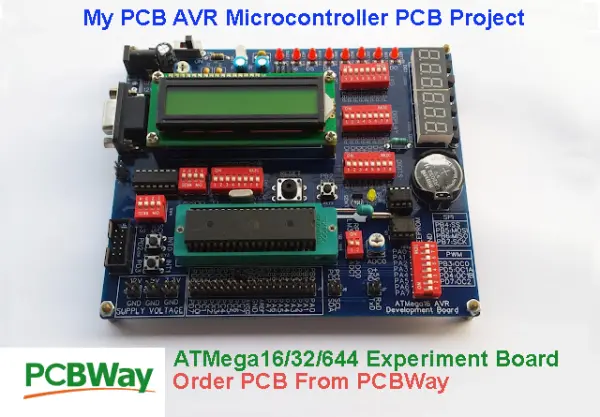
ATMega16 ATMega32 Experiment Board PCB from PCBWay

Mastering Atmega32: Exploring EEPROM Programming

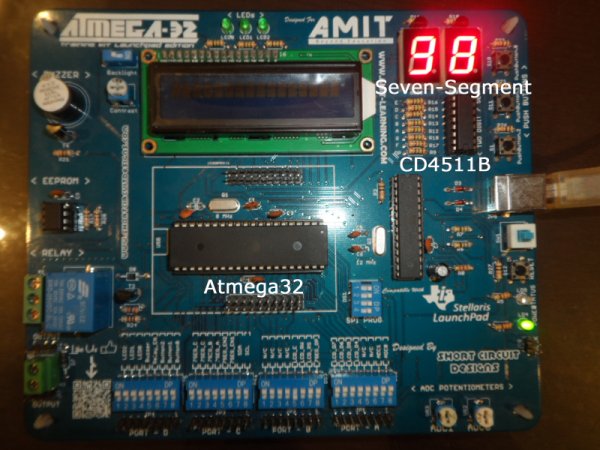
The Atmega32 microcontroller consists of two primary memory spaces: the Data Memory and the Program Memory, along with an additional EEPROM Memory designated for data storage. This EEPROM Memory is non-volatile, contributing to the controller’s three distinct memory spaces, all of which exhibit linear and regular properties. The EEPROM memory space stores a maximum of […]

Mastering Atmega32: Exploring EEPROM Programming Read More »
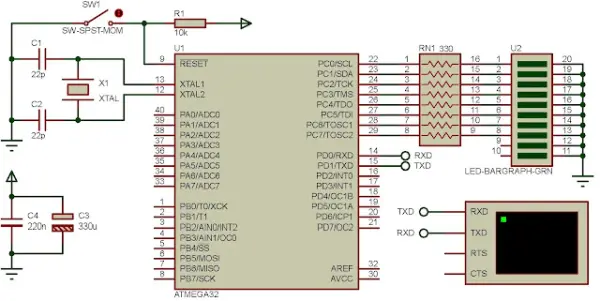
schematic diagram

ATMega32 AVR USART C programming examples

In the previous article, I discussed the USART module of the ATMega32 device, providing some practical examples. In this article, I will present additional USART examples that involve AVR C programming techniques. These techniques include creating conditions based on received characters and utilizing the ANSI C string functions library. In this straightforward illustration, the user

ATMega32 AVR USART C programming examples Read More »

AVR Simulation with the ATMEL

AVR Simulation with the ATMEL

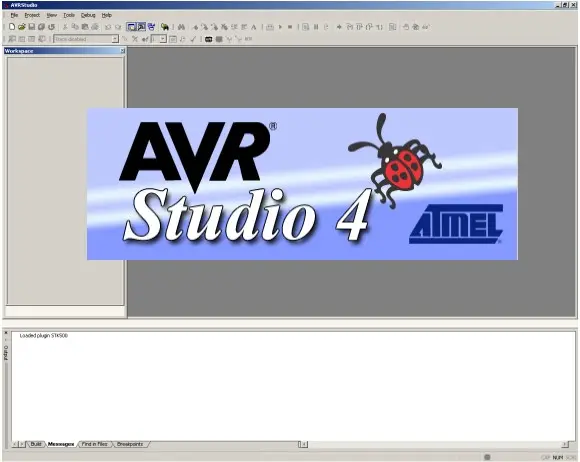
Introduction AVR Studio 4 is a user-friendly Integrated Development Environment (IDE) designed for debugging AVR software. It offers chip simulation and in-circuit emulation capabilities for the AVR microcontroller family. The user interface is intuitively designed to provide comprehensive information and is suitable for both simulation and emulation, enabling users to quickly grasp its functionalities. Getting

AVR Simulation with the ATMEL Read More »

Scroll to Top