signals

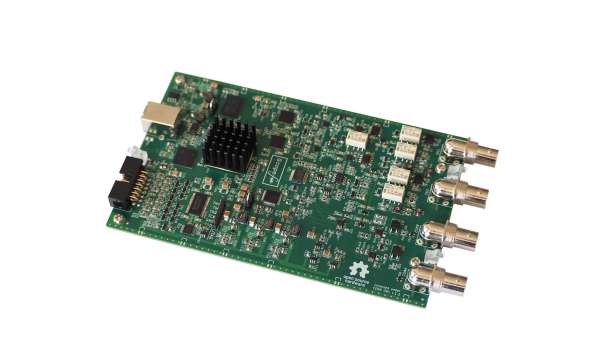
SCOPEFUN – OPEN SOURCE ALL IN ONE INSTRUMENTATION

SCOPEFUN – OPEN SOURCE ALL-IN-ONE INSTRUMENTATION

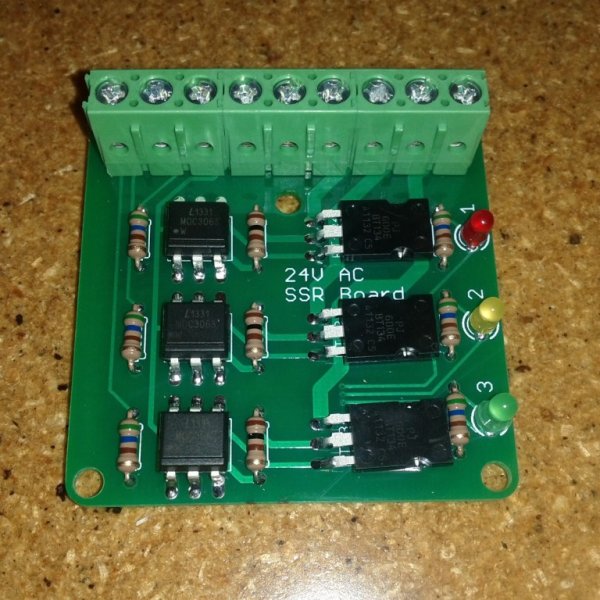
Five Benchtop Tools in One Open Source Device. ScopeFun in an open source, all-in-one instrumentation platform. It includes an oscilloscope, arbitrary waveform generator, spectrum analyzer, logic analyzer, and digital pattern generator. Hardware Hardware is built around Xilinx Artix-7 FPGA with an onboard RAM available for buffering samples (512 MB DDR3 SDRAM). All hardware settings are controlled via software GUI. USB connectivity

SCOPEFUN – OPEN SOURCE ALL-IN-ONE INSTRUMENTATION Read More »

This Wearable Stick On Ultrasound Patch Can Measure Blood Pressure Deep Inside Body

This Wearable Stick-On Ultrasound Patch Can Measure Blood Pressure Deep Inside Body

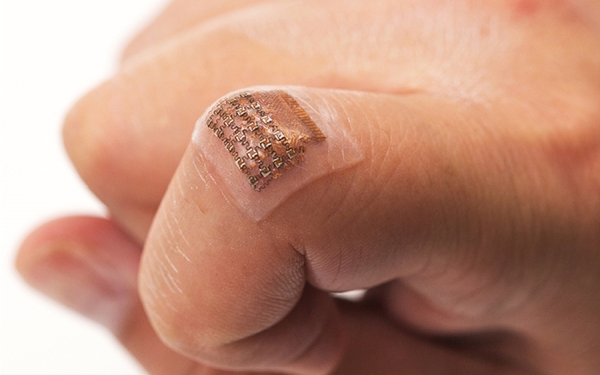
Scientists at the University of California San Diego created a new wearable ultrasound patch that non-invasively monitors blood pressure in arteries deep beneath the skin such as the jugular vein and carotid artery. The new patch could be helpful in detecting cardiovascular problems earlier on and with greater precision. In a proof-of-concept study, the patch

This Wearable Stick-On Ultrasound Patch Can Measure Blood Pressure Deep Inside Body Read More »

DECODING RUSSIAN METEOR M2 SATELLITE IMAGES IN REAL TIME

DECODING RUSSIAN METEOR-M2 SATELLITE IMAGES IN REAL TIME

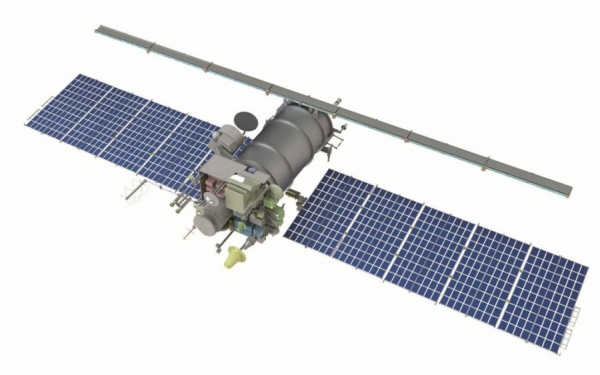
The Meteor-M N2 is a polar orbiting Russian weather satellite that was launched on July 8, 2014. Its main missions are weather forecasting, climate change monitoring, sea water monitoring/forecasting and space weather analysis/prediction. Meteor-M N2  transmits images using the digital LRPT protocol at around 137.1 MHz with can be received with an RTL-SDR. The chipset of RTL

DECODING RUSSIAN METEOR-M2 SATELLITE IMAGES IN REAL TIME Read More »

Femtosecond Electronics With Plasmonic Hot Electron Nano emitters

Femtosecond Electronics With Plasmonic Hot Electron Nano-emitters

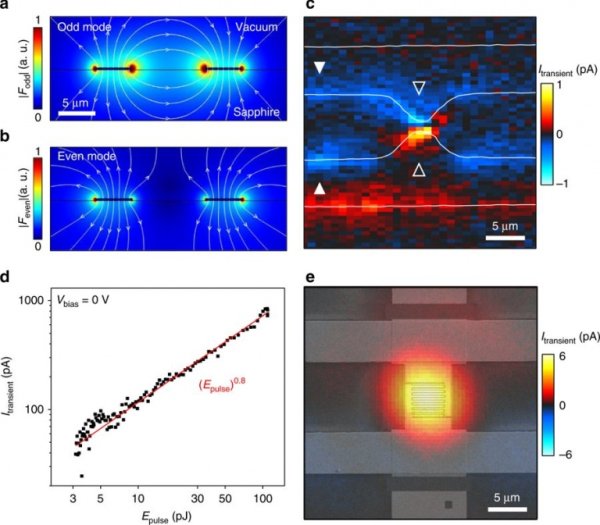
A team led by the Technical University of Munich (TUM) physicists Alexander Holleitner and Reinhard Kienberger has found success for the first time in generating ultrashort electric pulses on a chip. They made this possible by using asymmetric metal antennas only a few nanometers in dimension, then running the signals a few millimeters above the

Femtosecond Electronics With Plasmonic Hot Electron Nano-emitters Read More »

Scroll to Top