
Summary of ATMEGA162 LCD OSCILLOSCOPE CIRCUIT
Summary: This article describes an ATmega162-based digital LCD oscilloscope project using common parts to offer a portable, low-cost alternative to CRT and PC-based scopes. Key specs include up to 40 MSPS sample rate, 5 MHz input frequency, 20 MHz input bandwidth, 240×128 display, various timebases down to 500 ns/div, 40 mV/div sensitivity, DC coupling, 10 kΩ input impedance, and single 8–10 V DC supply.
Parts used in the ATMEGA162 LCD Oscilloscope:
- ATmega162 microcontroller
- LMG6402PLF Hitachi LCD screen (or similar 240×128 LCD)
- Analog front-end components for input coupling and impedance (resistors, capacitors)
- Input protection components (diodes, resistors)
- Sample-and-hold or ADC front-end circuitry supporting up to 40MSPS
- Clock/generator for ADC sampling
- Power supply components for single DC 8V–10V, 1A (voltage regulator, capacitors)
- User interface components (buttons, rotary encoder or switches)
- PCB / circuit board
- Connectors and cabling for signal input and power
A very nice project cost is a bit high in our country, even hard to find parts Atmel AVR microcontroller series dealing with this type of project is ideal for those who want to… Electronics Projects, ATMEGA162 LCD Oscilloscope Circuit “avr project, microcontroller projects, “
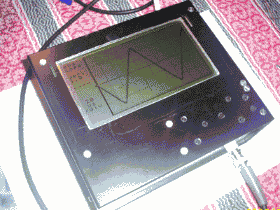
A very nice project cost is a bit high in our country, even hard to find parts Atmel AVR microcontroller series dealing with this type of project is ideal for those who want to learn about
I think part of that is difficult to have the most expensive LCD LMG6402PLF Hitachi LCD Screen LCD Oscilloscope ATMEGA162 microcontroller circuit board have all the details on
ATMEL AVR LCD OSCILLOSCOPE
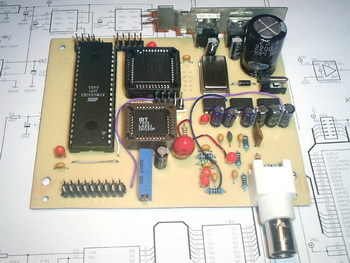
The oscilloscope is one of the the most important tools to be used by any electronics hobbyist but not everybody can afford to have one. As commercial scopes are often too expensive, almost every electronics hobbyist thought at a certain time to build one from scratch. The classical oscilloscope (cathode ray tube) is difficult to build at home because of its size, mechanical fragility, high voltages presence, etc. An alternative solution is the modern “PC oscilloscope”, having the advantage of post-processing and recording capabilities, and kind of reduced complexity. However, this solution is often non-portable, expensive (requires an PC) and dangerous for the PC if not isolated from it’s chassis. The third solution, commonly used these days by all commercial oscilloscope manufacturers, is the digital oscilloscope with LCD screen. Therefore, the authors decided to use this solution, and tried to develop it using common parts from today’s component retailers.
Maximum sample frequency: 40MSPS
Input frequency: 5MHz
Maximum displayed frequency without aliasing: 10MHz
Input circuit bandwidth: 20MHz
Display resolution: 240×128 total, trace resolution 200×125
Sensitivity: 40mV/div
Coupling: DC
Input impedance: 10K
Power supply: single DC source 8V..10V, 1A
No incremental mode
Time base: 1s/div, 500ms/div, 200ms/div, 100ms/div, 50ms/div/, 20ms/div, 10ms/div, 5ms/div, 2ms/div, 1ms/div, 500us/div, 200us/div, 100us/div, 50us/div, 20us/div, 10us/div, 5us/div, 2us/div, 1us/div, 500ns/div
Trigger: digitally adjustable
Trace offset: digitally adjustable
source: LCD OSCILLOSCOPE CIRCUIT LCD Oscilloscope Circuit files alternative link:atmega162-lcd-oscilloscope-circuit.rar alternative link3 alternative link4
- What is the maximum sample frequency of the oscilloscope?
The maximum sample frequency is 40MSPS. - What is the maximum input frequency supported?
The input frequency is 5MHz. - What is the input circuit bandwidth?
The input circuit bandwidth is 20MHz. - What display resolution does the oscilloscope use?
The display resolution is 240×128 total with a trace resolution of 200×125. - What sensitivity does the oscilloscope provide?
The sensitivity is 40mV/div. - What is the input impedance?
The input impedance is 10K. - What power supply is required?
The power supply is a single DC source 8V to 10V, 1A. - Which coupling mode is used?
The coupling is DC. - Does the oscilloscope have an incremental mode?
No, there is no incremental mode. - What timebase ranges are available?
Timebase options range from 1s/div down to 500ns/div, including 500ms/div, 200ms/div, 100ms/div, 50ms/div, 20ms/div, 10ms/div, 5ms/div, 2ms/div, 1ms/div, 500us/div, 200us/div, 100us/div, 50us/div, 20us/div, 10us/div, 5us/div, 2us/div, and 1us/div. - Is the trigger adjustable?
Yes, the trigger is digitally adjustable.
