lcd

Pacemaker Challenge on AVR/Butterfly Boards

The design and development of safety-critical embedded systems demand a rigorous methodology that ensures reliability, timing accuracy, and correct functionality under all conditions. This article presents an in-depth commentary and technical walkthrough of a model-based development framework centered around the use of AVR/Butterfly boards, heart simulators, and pacemaker controller systems. We explore the theoretical modeling, […]

Pacemaker Challenge on AVR/Butterfly Boards Read More »
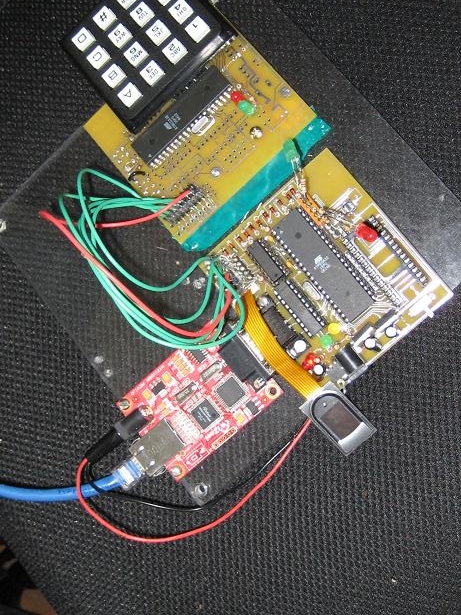
Advancements in Networked Biometric Authentication Systems

Advancements in Networked Biometric Authentication Systems

Introduction: With the growing imperative to safeguard data and premises, the biometric authentication sector is witnessing significant market expansion. Our endeavor focuses on creating a scalable, compact, and efficient device tailored for securing doorways within a complex. Leveraging a FingerPrint Cards capacitance-based fingerprint scanner, our system employs an ATMega32 microcontroller for data capture, storing the

Advancements in Networked Biometric Authentication Systems Read More »

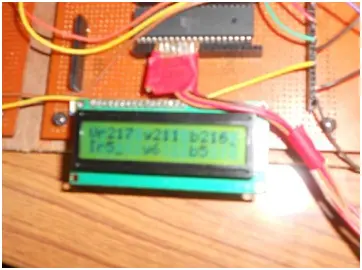
LCD display with phase voltage and phase current 1

Building a Reliable RFID-Based Security System with AVR ATmega32

A cost-effective and dependable safeguarding solution has been developed to protect a three-phase induction motor from various electrical anomalies including unbalanced voltages, under voltage, over voltage, short circuits, and overheating. To maintain affordability, the design utilizes components such as the Atmega32 microcontroller, MOSFETs, relays, as well as small current transformers (CTs) and potential transformers (PTs).

Building a Reliable RFID-Based Security System with AVR ATmega32 Read More »

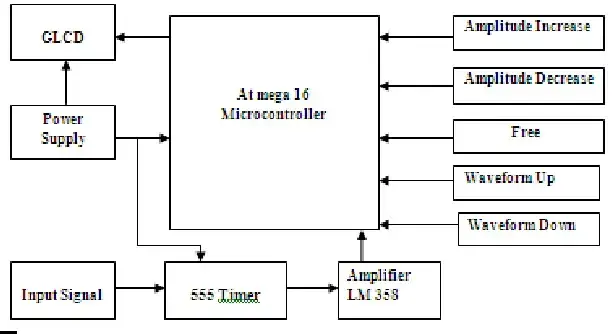
Block Diagram 3

Graphical LCD Oscilloscope using ATmega16Microcontroller

Introduction The popularity of microcontrollers is on the rise, thanks to their compact size and impressive capabilities. Embedded systems are being constructed around microcontrollers and peripheral devices [3]. An oscilloscope is frequently employed to observe the waveform of an electrical analog signal, typically representing voltage, time, and frequency. Parameters such as peak-to-peak voltage, frequency of

Graphical LCD Oscilloscope using ATmega16Microcontroller Read More »

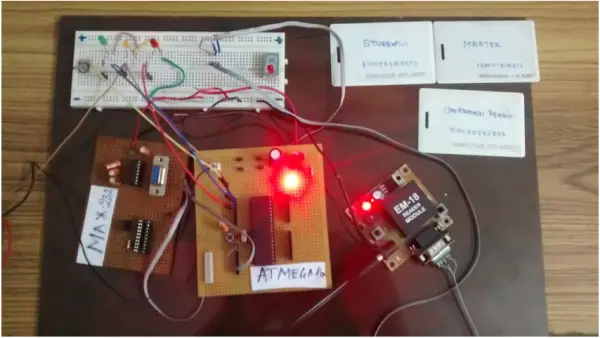
RFID based security system using AVR ATmega32 microcontroller

RFID based security system using AVR ATmega32 microcontroller

RFID technology has significantly revolutionized our lives by streamlining machine communication. Its widespread use spans across various sectors such as schools, hospitals, industries, and more. This article provides guidance on constructing a straightforward yet dependable RFID-based security system utilizing an AVR microcontroller, a solution that proves both reliable and cost-effective. Prior familiarity with RFID principles

RFID based security system using AVR ATmega32 microcontroller Read More »

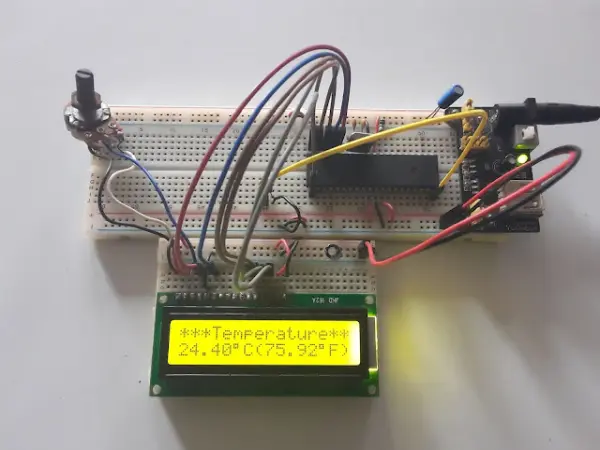
LM35 Temperature Sensor with ATmega32 and LCD

DIY Temperature Measurement Setup with LM35 Sensor, ATmega32 Microcontroller, and LCD

In this instructional guide, you’ll be introduced to utilizing the LM35 temperature sensor alongside the ATmega32 microcontroller. You’ll gain insights into the process of interfacing the temperature sensor with the ATmega32 and displaying the temperature readings on an LCD screen. This tutorial covers displaying temperature values in both Celsius and Fahrenheit. Moreover, you’ll delve into

DIY Temperature Measurement Setup with LM35 Sensor, ATmega32 Microcontroller, and LCD Read More »

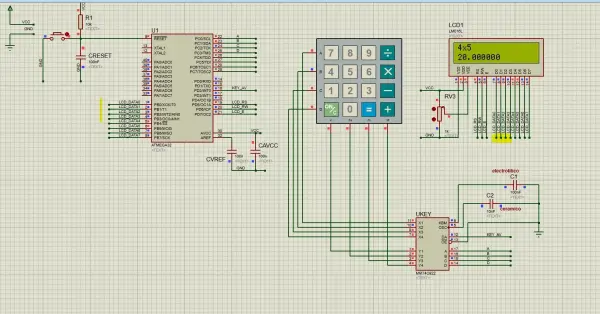
Building a Basic Calculator using ATmega32 Microcontroller

Building a Basic Calculator using ATmega32 Microcontroller

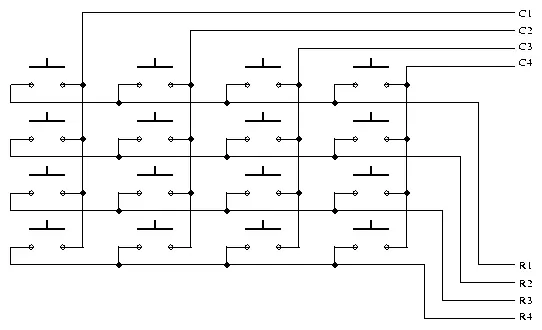
A calculator stands as a fundamental tool in daily life, and building one from scratch can serve as both an engaging and educational project. Utilizing the ATmega32 microcontroller presents a potent avenue, offering programmability for a diverse array of functionalities. This blog post aims to guide you through constructing a straightforward calculator using the ATmega32

Building a Basic Calculator using ATmega32 Microcontroller Read More »

Atmel studio 6.1 progisp or flash magic

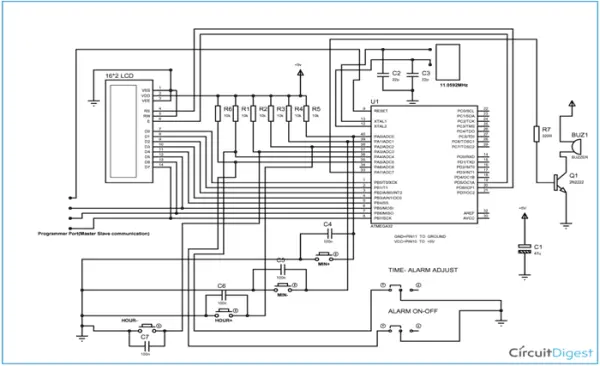
Alarm clock DPR

In this project, we will create a straightforward alarm clock using the timers of the ATmega32 microcontroller. The ATmega32A microcontroller features a 16-bit timer, which will be utilized for tracking seconds and constructing a digital clock. Hardware components include the ATmega32 microcontroller, an 11.0592MHz crystal, two 22pF capacitors, a 5V power supply, AVR-ISP PROGRAMMER, a

Alarm clock DPR Read More »

Scroll to Top