
Summary of X-FAB EXPANDS ITS 180NM BCD-ON-SOI TECHNOLOGY PLATFORM WITH NEW HIGH-VOLTAGE DEVICES
X-FAB Silicon Foundries SE introduced new high-voltage NMOS/PMOS and depletion transistors for automotive 48V systems and battery management ICs. These devices operate between 70V and 125V on the XT018 BCD-on-SOI platform with deep trench isolation, supporting AEC-Q100 Grade 0 standards. The technology offers low on-resistance, robust safe-operating areas, effective ESD protection, and up to 200V flexibility for Li-Ion battery stacks.
Parts used in the High-Voltage Primitive Devices Project:
- Complementary NMOS devices
- Complementary PMOS devices
- High-voltage N-channel depletion transistors
- XT018 BCD-on-SOI platform
- Deep trench isolation (DTI)
- ESD protection mechanism
X-FAB Silicon Foundries SE, the leading analog/mixed-signal and specialty foundry today announced the availability of new high-voltage primitive devices targeted at the growing market for automotive 48V board net and battery management system (BMS) ICs.
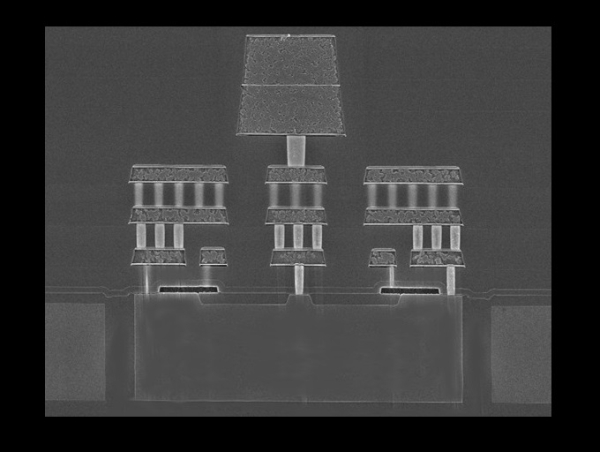
Covering voltages of 70V to 125V, these complementary NMOS/PMOS devices are based on the company’s XT018 BCD-on-SOI (https://www.xfab.com/en/technology/soi/018-um-xt018/) platform with deep trench isolation (DTI) and support for automotive AEC-Q100 Grade 0 products. They deliver competitive on-resistance (Rdson) figures, while still providing robust safe-operating areas for Rdson, Idsat and Vth. A highly effective ESD protection mechanism has been incorporated to ensure long-term operational reliability. In addition, high-voltage N-channel depletion transistors based on the new voltage classes are also available. These will enable simple, area efficient start-up circuitry and voltage regulator implementations to be realized.
48V subsystems are being increasingly adopted by the world’s leading automakers as a means to improve fuel efficiency and reduce CO2 emissions. Mild hybrid cars are the first to utilize 48V-rated components, which will initially focus on a number of core elements, like starter/generators, DC-DC converters and battery management subsystems, as well as other high-current functions, such as water pumps and cooling fans.
At the same time, the fast growing Li-Ion battery markets for electric vehicles and energy storage is moving to taller battery cell stacks which require higher voltages. The XT018 BCD-on-SOI platform now provides an even more flexible voltage offering up to 200V to support the increasing number battery cells that need to be monitored by a single BMS IC.
BCD-on-SOI is superior in many aspects when compared to conventional bulk BCD technologies, making it attractive to designers. Key advantages include virtual latch-up free circuits, strong EMC performance (due to complete isolation with buried oxide/DTI) and simplified handling of below ground transients. Furthermore, through the potential for significant die size reduction along with first-time-right implementation, development periods can be accelerated and lower costs per die can be achieved.
Read more: X-FAB EXPANDS ITS 180NM BCD-ON-SOI TECHNOLOGY PLATFORM WITH NEW HIGH-VOLTAGE DEVICES
- What voltage range do the new devices cover?
The complementary NMOS/PMOS devices cover voltages from 70V to 125V. - Can these components support automotive Grade 0 products?
Yes, they support automotive AEC-Q100 Grade 0 products. - How does BCD-on-SOI compare to conventional bulk BCD technologies?
BCD-on-SOI offers virtual latch-up free circuits, strong EMC performance, and simplified handling of below ground transients. - What is the maximum voltage offering available on the XT018 platform?
The platform provides a flexible voltage offering up to 200V. - Why are 48V subsystems being adopted by automakers?
They are adopted to improve fuel efficiency and reduce CO2 emissions. - Do the new devices include specific protection mechanisms?
A highly effective ESD protection mechanism has been incorporated to ensure long-term operational reliability. - What applications can benefit from the high-voltage N-channel depletion transistors?
They enable simple, area efficient start-up circuitry and voltage regulator implementations.
