Voltage

Complete Guide to Transient Voltage Suppressor Diodes

Complete Guide to Transient Voltage Suppressor Diodes

Introduction With many upgrades and improvements in the electronics industry, meeting the challenge of shielding delicate parts from occurrences such as voltage surges and ESD requires a strategic approach. Unfortunately, these transient events may turn forgotten or neglected, which results in excessive damage. This is a common case for system failures, breach of confidence in […]

Complete Guide to Transient Voltage Suppressor Diodes Read More »

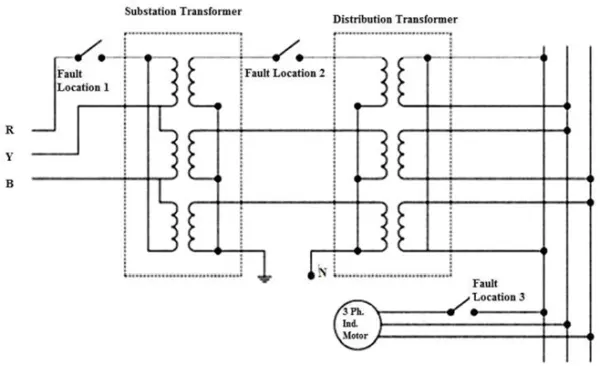
Different fault locations of single phasing

Advance Protection for Three Phase Induction Motor using Microcontroller Atmega32

I.      INTRODUCTION Ensuring the protection of induction motors is crucial for their prolonged operational life. While numerous researchers have delved into this domain, many existing protection schemes are deemed impractical and costly within the Indian context. In the event of a phase outage due to fuse failure or protective device activation, three-phase induction motors have

Advance Protection for Three Phase Induction Motor using Microcontroller Atmega32 Read More »

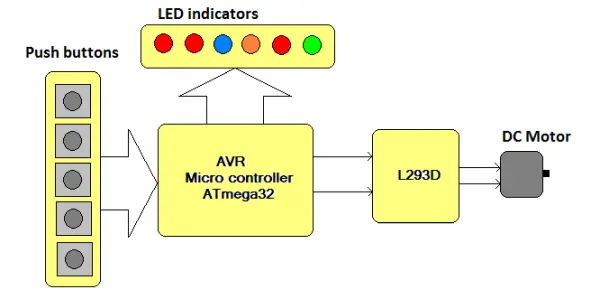
Block Diagram of AVR ATMega32 based DC Motor Controller

Managing DC Motor Speed and Direction with AVR Microcontrollers (Part 20/46)

Managing the speed and direction of a DC motor holds significant importance across various applications: – In robotic applications, altering the speed and direction is crucial for controlling the movement of robots. – Industrial scenarios require the ability to adjust the speed and direction of rotating machinery. – Within domestic settings, regulating the speed of

Managing DC Motor Speed and Direction with AVR Microcontrollers (Part 20/46) Read More »

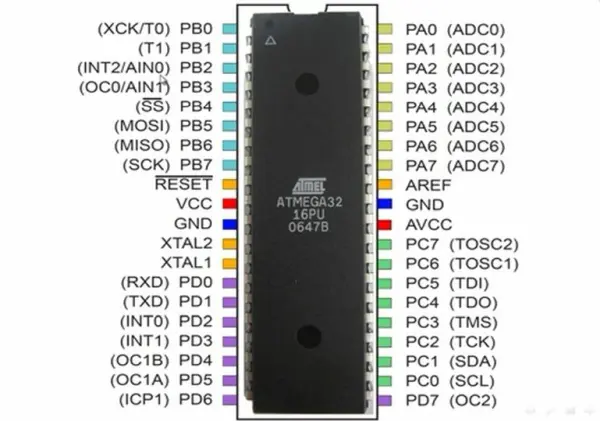
Pinout Diagram ATMega32

ATMega32 Microcontroller: The Ultimate Guide for Beginners

The ATMega32 is an widely used microcontroller from Atmel. It shares many similarities with the ATMega328P but has a more reduced memory capacity. However, the ATMega32 makes up for this with a greater number of input/output pins available. A key advantage of the ATMega32 is that each GPIO pin can exclusively support either digital input/output

ATMega32 Microcontroller: The Ultimate Guide for Beginners Read More »

ATTINY84 OSC CALIBRATOR AND HIGH VOLTAGE FUSE RESETTER

ATTINY84 OSC CALIBRATOR AND HIGH VOLTAGE FUSE RESETTER

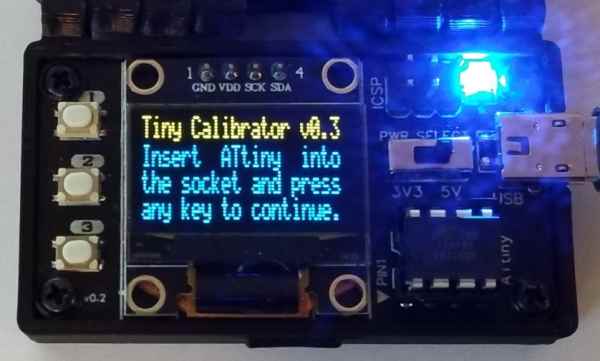
A GitHub user called Wagiminator has posted details about ATtiny84-TinyCalibrator, which is an OSC Calibrator and High Voltage Fuse Resetter for 8-Pin ATtinys. The ATtiny84 was chosen as the microcontroller for the TinyCalibrator because it has exactly the necessary number of GPIO pins. 8-pin ATtinys usually feature few GPIO pins available, so they are usually operated without an external clock.

ATTINY84 OSC CALIBRATOR AND HIGH VOLTAGE FUSE RESETTER Read More »

Digital Wall Clock on PCB using AVR Microcontroller Atmega16 and DS3231 RTC

Digital Wall Clock on PCB using AVR Microcontroller Atmega16 and DS3231 RTC

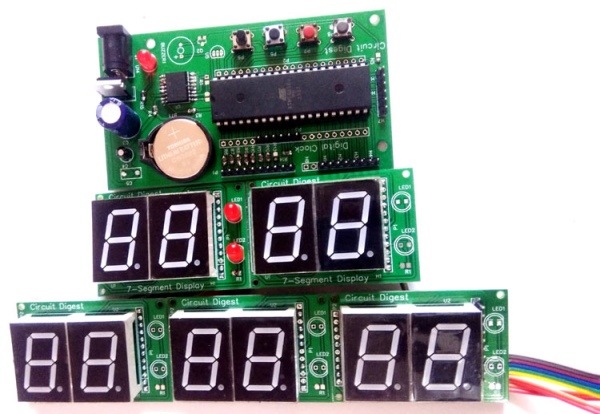
Every digital clock has a crystal inside it to keep track of time. This crystal is not only present in the clock but also present in all computing real-time systems. This crystal generates clock pulses, which is needed for timing calculations. Although there are some other ways to get clock pulses for higher accuracy and frequency, but the

Digital Wall Clock on PCB using AVR Microcontroller Atmega16 and DS3231 RTC Read More »

Understanding Fuse Bits in ATmega328P to Enhance Arduino Programming Efficiency

Understanding Fuse Bits in ATmega328P to Enhance Arduino Programming Efficiency

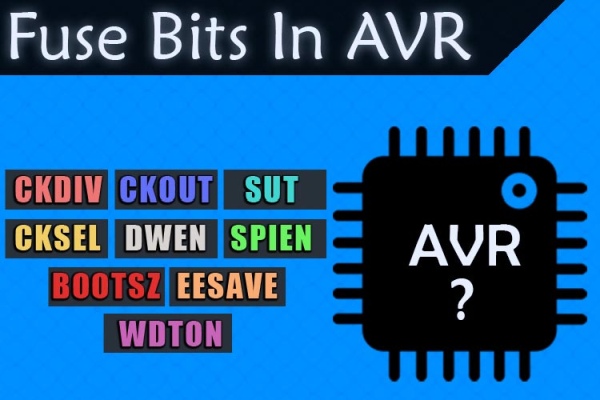
In this tutorial, we are going to talk about fuses. Back when I was in college and learning about all the cool things in electronics, I heard the term fuse in AVR for the first time, my initial thought on the topic was, oh! there is something inside the AVR that will blow if I did

Understanding Fuse Bits in ATmega328P to Enhance Arduino Programming Efficiency Read More »

Scroll to Top