
Summary of FAST FOURIER TRANSFORMATION FFT CIRCUIT ATMEGA8 SCT2024 LED DRIVER
This project implements a Fast Fourier Transform (FFT) circuit using an ATmega8 microcontroller in a TQFP32 package. It processes input signals and visualizes the frequency spectrum on a 16x16 LED matrix driven by an SCT2024 serial interface chip, which controls 256 LEDs. The design demonstrates practical applications of SPI communication and ADC functionality within the AVR architecture, utilizing C source code and hex codes for operation.
Parts used in the FFT Circuit:
- ATmega8 microcontroller (TQFP32 package)
- SCT2024 serial-interfaced LED driver
- 16 × 16 LED display (256 LEDs)
- C source code files
- Hex code files
- Printed circuit drawings
ATmega8 (TQFP32 package) based on FFT Circuit applied the entry signals 16 × 16 led display (SCT2024 serial-interfaced LED driver 256 LEDs), you can see in the FFT circuit source C, hex codes have… Electronics Projects, Fast Fourier transformation FFT Circuit ATmega8 SCT2024 LED driver “atmega8 projects, avr project, microcontroller projects, “
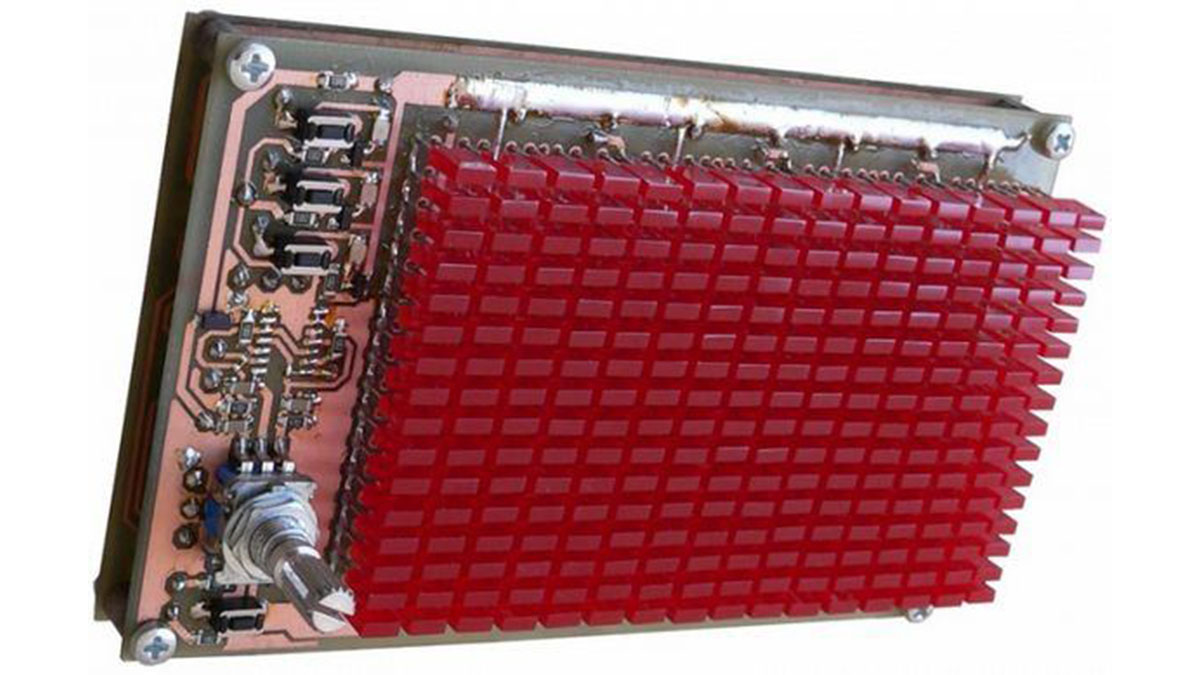
ATmega8 (TQFP32 package) based on FFT Circuit applied the entry signals 16 × 16 led display (SCT2024 serial-interfaced LED driver 256 LEDs), you can see in the FFT circuit source C, hex codes have a parent/child schema for the printed circuit drawings a good example about the use of the SPI, ADC with atmega8
FAST FOURIER TRANSFORMATION
A fast Fourier transform (FFT) is an algorithm to compute the discrete Fourier transform (DFT) and its inverse. Fourier analysis converts time (or space) to frequency and vice versa; an FFT rapidly computes such transformations by factorizing the DFT matrix into a product of sparse (mostly zero) factors. As a result, fast Fourier transforms are widely used for many applications in engineering, science, and mathematics. The basic ideas were popularized in 1965, but some FFTs had been previously known as early as 1805. Fast Fourier transforms have been described as “the most important numerical algorithm of our lifetime”.
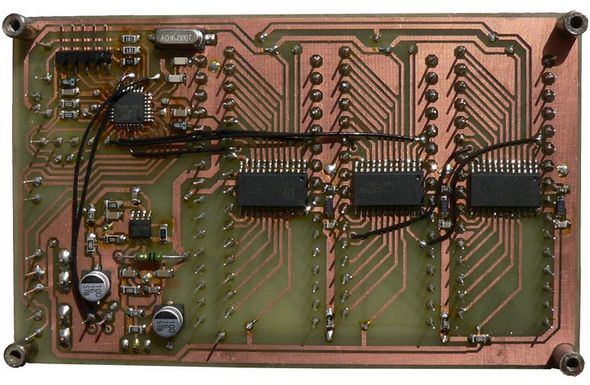
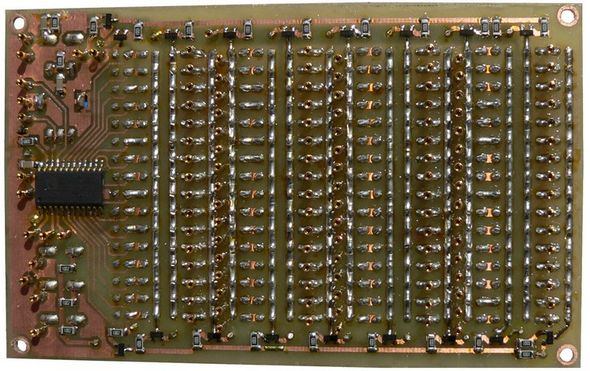
Source: http://hw.cz/ all files: fast-fourier-transformation-fft-circuit-atmega8-sct2024-led-driver.ZIPalternative link2
- What is the primary function of the FFT algorithm described?
The FFT rapidly computes the discrete Fourier transform and its inverse to convert time or space data into frequency. - How many LEDs are controlled by the display driver?
The SCT2024 driver controls a total of 256 LEDs arranged in a 16 × 16 matrix. - Which microcontroller is used as the core processor?
The project uses an ATmega8 microcontroller packaged in TQFP32. - What communication protocol is demonstrated with the ATmega8?
The project provides an example of the use of the SPI protocol. - Does the circuit utilize analog-to-digital conversion?
Yes, the circuit utilizes the ADC feature of the ATmega8. - What file formats are available for the project source?
The project includes C source code and hex code files. - Are printed circuit drawings provided for this design?
Yes, the source includes a parent/child schema for the printed circuit drawings. - When were the basic ideas of fast Fourier transforms popularized?
The basic ideas were popularized in 1965.
