Whether you’re experimenting with microcontrollers, repairing circuit boards, or building your own electronic devices, having a dedicated workspace can make your projects much more enjoyable. There’s something satisfying about having all your tools within reach, enough room to spread out your components, and a setup that makes even the trickiest projects feel manageable.
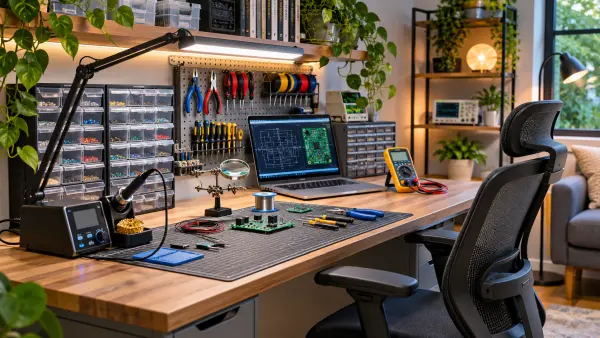
You don’t need an enormous room or an expensive workshop to create the perfect space. With a few thoughtful decisions, you can turn almost any spare corner into a practical electronics workstation.
Choose A Space That Works For Your Projects
Before buying equipment, think about the types of projects you enjoy working on. If you’re regularly soldering components or assembling circuit boards, you’ll need a sturdy desk with enough room for tools, equipment, and materials.
Good ventilation is particularly important when soldering, so consider placing your workstation somewhere you can use suitable fume extraction. You should also have access to several electrical outlets without relying on overloaded extension cords. If space is limited, a compact desk with shelving above it can work surprisingly well. The important thing is having a dedicated area where you can leave unfinished projects without constantly packing everything away.
Invest In The Right Equipment
You don’t need every gadget available to build a functional electronics workspace. Start with the essentials and gradually expand your collection as your projects become more ambitious.
A reliable soldering station, digital multimeter, wire cutters, and adjustable power supply are excellent starting points. If you’re interested in microcontroller development, you’ll also benefit from a breadboard, jumper wires, and a selection of common electronic components. An oscilloscope can be a good investment for more advanced troubleshooting, particularly when you’re working with digital signals or investigating unusual circuit behavior.
Make Sure Your Internet Connection Can Keep Up
Electronics projects increasingly involve software development, online resources, and connected devices. Whether you’re downloading development environments, researching AVR programming techniques, or following technical tutorials, reliable internet access makes everything easier.
If you’re based in Minnesota, looking at Minneapolis fiber internet could be worthwhile when setting up your home workspace, especially if you’re always downloading large software packages or managing multiple connected devices.
A stable connection is also useful when you’re experimenting with IoT projects, accessing cloud-based development tools, or collaborating with other electronics enthusiasts.
Keep Your Components Organized
Few things interrupt a productive afternoon quite like spending twenty minutes searching for a particular resistor or capacitor. Small compartmentalized storage boxes are ideal for organizing components by type and value. Label everything clearly, and think about keeping frequently used items in drawers within easy reach.
You’ll also want to protect sensitive components from electrostatic discharge. An ESD-safe work mat, properly grounded wrist strap, and suitable storage containers can help prevent accidental damage. Keeping your workspace tidy doesn’t mean hiding everything away. It simply means knowing exactly where to find what you need.
Don’t Overlook Lighting And Comfort
Electronics work often involves examining tiny components, reading markings, and making precise connections. Poor lighting can quickly lead to eye strain and unnecessary mistakes.
An adjustable LED desk lamp or magnifying lamp can make detailed work significantly easier. Similarly, a comfortable chair and appropriately positioned work surface will help when projects take longer than expected. Leave enough space for your computer alongside your electronics equipment, particularly if you’re regularly programming microcontrollers or analyzing circuit data.