AVR ATmega Projects

Embedded Controllers Using C and Arduino 2E

Embedded Controllers Using C and Arduino / 2E

1. Course Introduction 1.1 Overview This course serves as an introduction to the C programming language with a specific emphasis on embedded programming. It assumes that you have prior experience with a high-level language such as Python, BASIC, FORTRAN, or Pascal. Given the intricacies of embedded systems, we commence our journey by exploring the language’s

Embedded Controllers Using C and Arduino / 2E Read More »

Atmel studio 6.1 progisp or flash magic

Alarm clock DPR

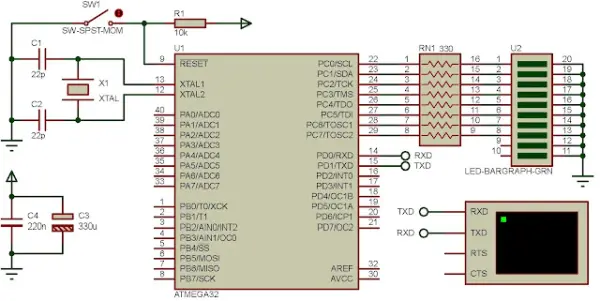
In this project, we will create a straightforward alarm clock using the timers of the ATmega32 microcontroller. The ATmega32A microcontroller features a 16-bit timer, which will be utilized for tracking seconds and constructing a digital clock. Hardware components include the ATmega32 microcontroller, an 11.0592MHz crystal, two 22pF capacitors, a 5V power supply, AVR-ISP PROGRAMMER, a

Alarm clock DPR Read More »

AVR USB Devices and Programming

During this week’s lecture, we delved into a relatively less-explored subject: USB, a widely-used protocol enabling computers to interact with peripheral devices equipped with microcontrollers. Developing a USB device empowers any computer to establish communication without the need for the specialized software and hardware that have been our focus thus far. For the next two

AVR USB Devices and Programming Read More »

Controlling Angular Position of Servo Motor using Pulse Width Modulation

Interfacing Servo Motor with Atmega32 Microcontroller

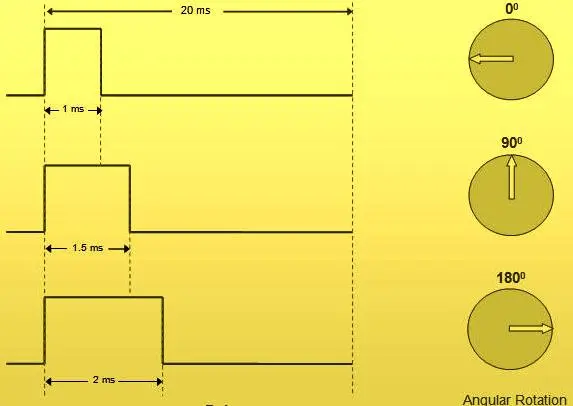
A Servo Motor is a type of DC Motor that incorporates error sensing negative feedback to precisely regulate the angular position of its shaft. Unlike standard DC Motors, servo motors do not rotate continuously but instead perform controlled angular rotations, such as 0-90° or 0-180°. While Stepper Motors can also achieve accurate angular rotations, Servo

Interfacing Servo Motor with Atmega32 Microcontroller Read More »

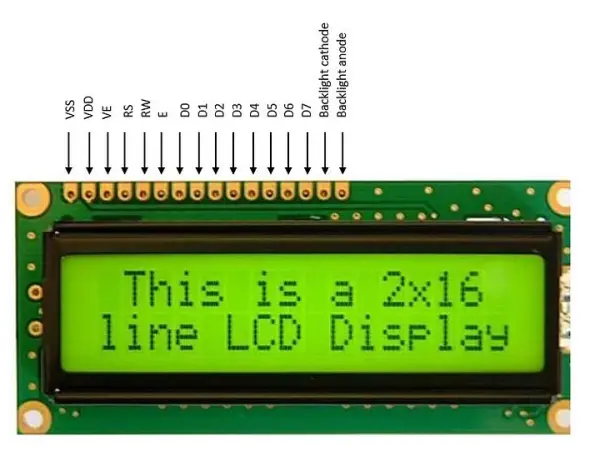
The display has 16 pins

Interfacing LCD 16×2 with ATMEGA32 AVR Microcontroller in 4-bit mode

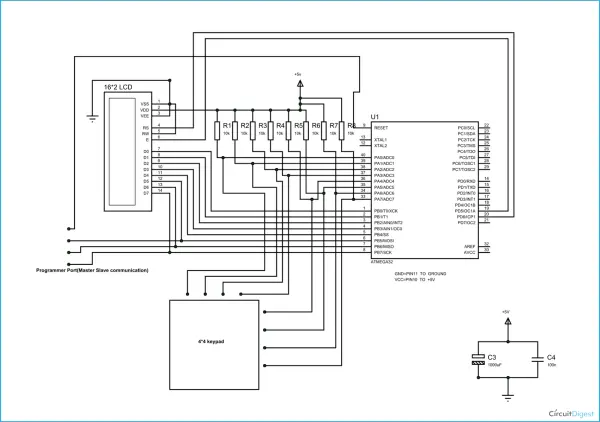
I’ve devised an intriguing and straightforward method for interfacing an LCD with the Atmega32 microcontroller and programming it. I’ve employed a 16×2 LCD module, where “LCD” stands for “liquid crystal display.” This type of electronic display module finds utility in a wide array of applications, including mobile phones, calculators, computers, TV sets, and more. These

Interfacing LCD 16×2 with ATMEGA32 AVR Microcontroller in 4-bit mode Read More »

Scroll to Top