AVR ATmega Projects

Bridge the IoT Gap Seamlessly Connect Your AVR IoT WG Eval Board to Google Cloud IoT

Bridge the IoT Gap: Seamlessly Connect Your AVR-IoT WG Eval Board to Google Cloud IoT

This project will use the Microchip AC164160 AVR-IoT WG Evaluation Board to build an Internet of Things (IoT) development environment and application. The board is designed for prototyping IoT solutions that securely connect sensors to the cloud. Specifically, we will configure the AVR-IoT WG board and Google Cloud to read hardware sensors and transmit real-time […]

Bridge the IoT Gap: Seamlessly Connect Your AVR-IoT WG Eval Board to Google Cloud IoT Read More »

Microcontroller

Ditch Paper Notices for Eye-Catching LED Matrix Displays

Abstract This Internet of Things (IoT) project utilizes speech recognition to display announcements on a light-emitting diode (LED) matrix notice board. By leveraging Google Assistant’s speech-to-text capabilities, notices can be verbally dictated rather than manually typed, saving time and reducing the risk of unauthorized modifications. The proposed system is built around an Arduino microcontroller and

Ditch Paper Notices for Eye-Catching LED Matrix Displays Read More »

Fritzing Parts Pane

Printed Circuit Board for Introductory Animatronics Course

Introduction For many years, freshmen Computer Engineering students at California Polytechnic State University have taken a course introducing electronics manufacturing processes. Lectures cover CAD/CAM design, Design for Manufacture, documentation, prototyping and planning. The lab allows students to build skills in project planning, soldering, automation, tool usage and production methods by manufacturing their own power supply

Printed Circuit Board for Introductory Animatronics Course Read More »

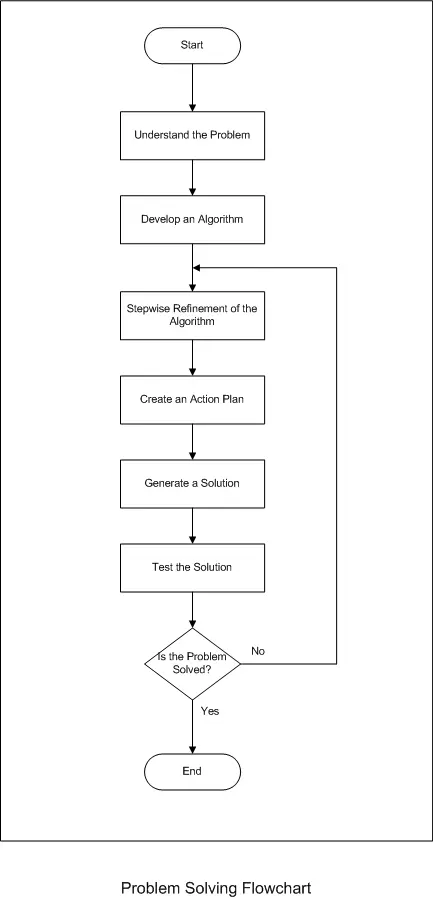
Problem Solving

Master Microcontrollers with C Programming and the ATmega16

Embedded Microcontroller Software: Embedded software presents a distinct challenge due to the critical need for reliability in continuously operating microcontroller systems. To ensure faultless long-term performance, best practices include thorough coding, documentation, and testing. While not specifically designed for microcontrollers, the C programming language remains a popular choice due to its structured approach that compiles

Master Microcontrollers with C Programming and the ATmega16 Read More »
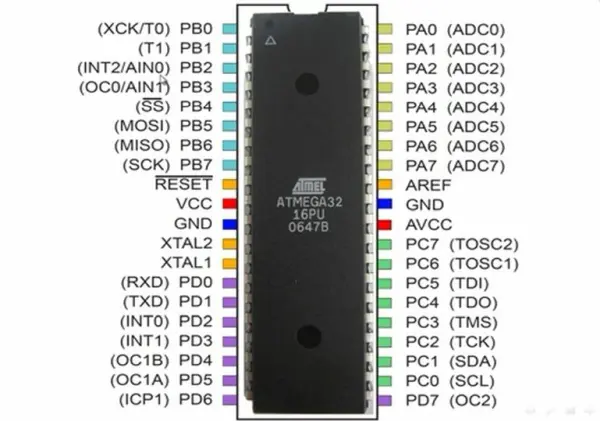
Pinout Diagram ATMega32

ATMega32 Microcontroller: The Ultimate Guide for Beginners

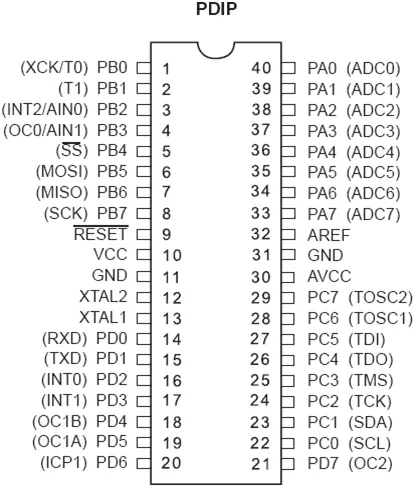
The ATMega32 is an widely used microcontroller from Atmel. It shares many similarities with the ATMega328P but has a more reduced memory capacity. However, the ATMega32 makes up for this with a greater number of input/output pins available. A key advantage of the ATMega32 is that each GPIO pin can exclusively support either digital input/output

ATMega32 Microcontroller: The Ultimate Guide for Beginners Read More »

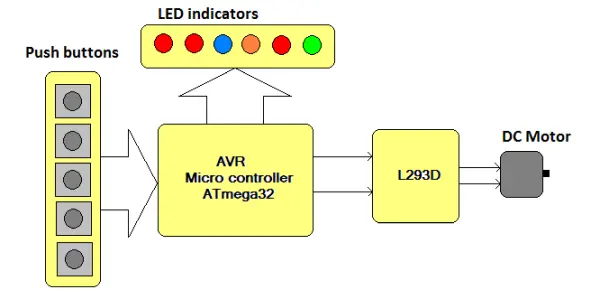
Block Diagram of AVR ATMega32 based DC Motor Controller

Speed and Direction Control of DC Motor using AVR Microcontroller

Controlling the direction and speed of a DC motor is a crucial requirement in various applications, including: 1. Robotics: Adjusting the movement direction and speed of a robot. 2. Industrial Machinery: Modifying the direction and speed of rotating equipment. 3. Home Appliances: Regulating the speed of a battery-operated portable fan. 4. Defense Systems: Rotating radar

Speed and Direction Control of DC Motor using AVR Microcontroller Read More »

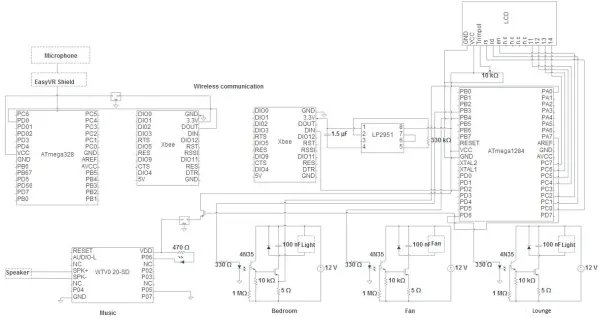
Overview of Hardware Design

A wireless, voice-controllable, household system.

Motivation We have developed a smart home control system that enables individuals to voice-control their household devices. This system operates wirelessly and allows users to manage various home facilities, such as lights, fans, and background music, using voice commands. We have successfully implemented the basic functions of controlling lights, fans, and music. Beyond simple on/off

A wireless, voice-controllable, household system. Read More »

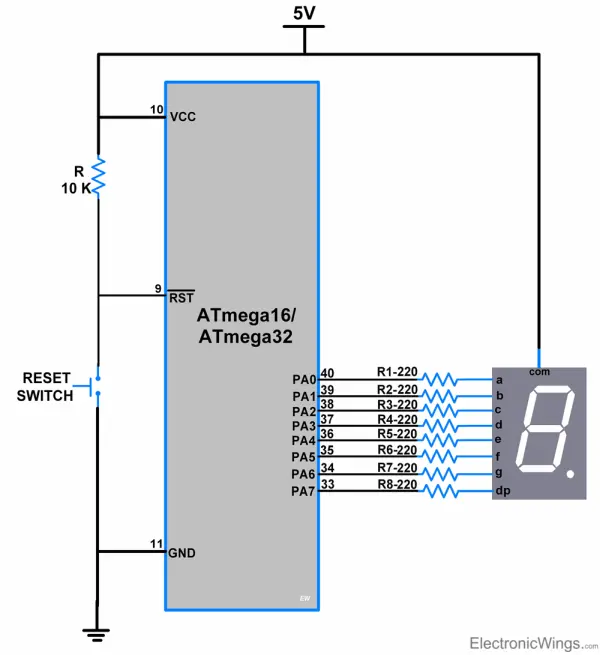
which pins tie to which functional hardware etc

Introduction to the Atmel ATmega16 Microcontroller

Introduction A microcontroller typically serves as the central “intelligence” of a mechatronic system, functioning as a miniature self-contained computer. It can be programmed to interact with both the system’s hardware components and the user. Even the most basic microcontroller can execute elementary mathematical operations, manage digital outputs, and monitor digital inputs. With the continuous evolution

Introduction to the Atmel ATmega16 Microcontroller Read More »

Scroll to Top