Microcontroller

ATmega16 PWM DC motor controller test bench setup

AVR Based DC Motor Controller using ATmega16 with Proteus Simulation

Introduction This project demonstrates an AVR based DC Motor Controller using the ATmega16 microcontroller in Proteus simulation. It is a simple but useful microcontroller project for learning how PWM can control the speed of a DC motor. The circuit uses the ATmega16 to generate a PWM signal and drive a motor through a transistor-based motor […]

AVR Based DC Motor Controller using ATmega16 with Proteus Simulation Read More »
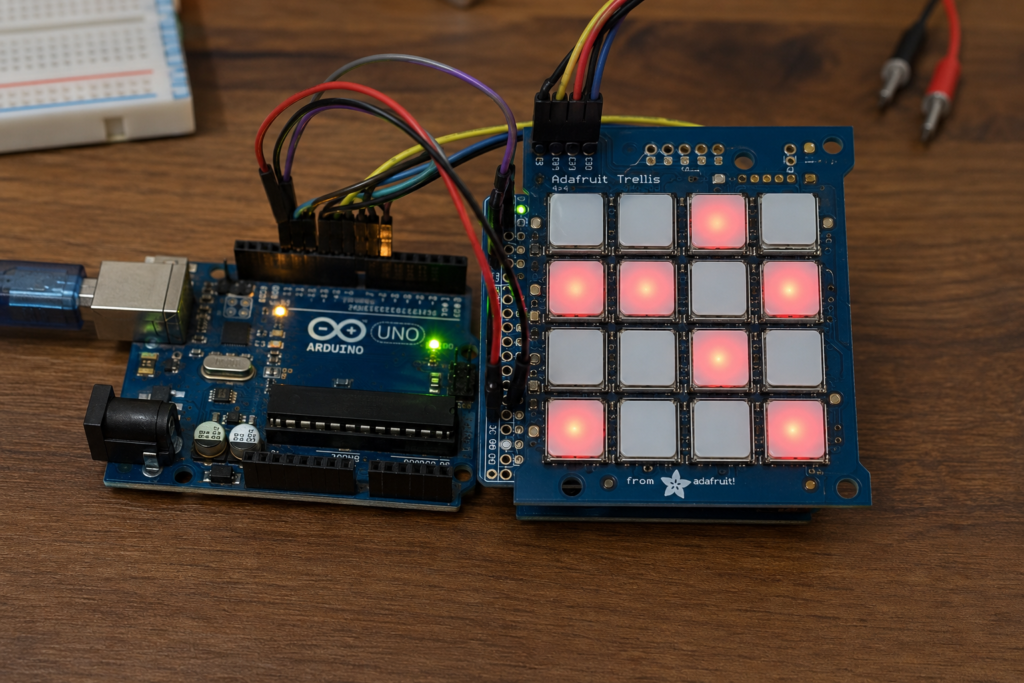
Arduino Uno powering Adafruit Trellis LED keypad

Adafruit Trellis Shield Latching Keyboard Test using ATmega328P with Proteus Simulation

Introduction This project demonstrates an Adafruit Trellis Shield latching keyboard test using the ATmega328P controller in a Proteus simulation environment. It is a simple but useful microcontroller project for learning how a keypad-style LED button matrix works with an Arduino-compatible AVR controller. The system reads button presses from the Trellis keypad and toggles the matching

Adafruit Trellis Shield Latching Keyboard Test using ATmega328P with Proteus Simulation Read More »

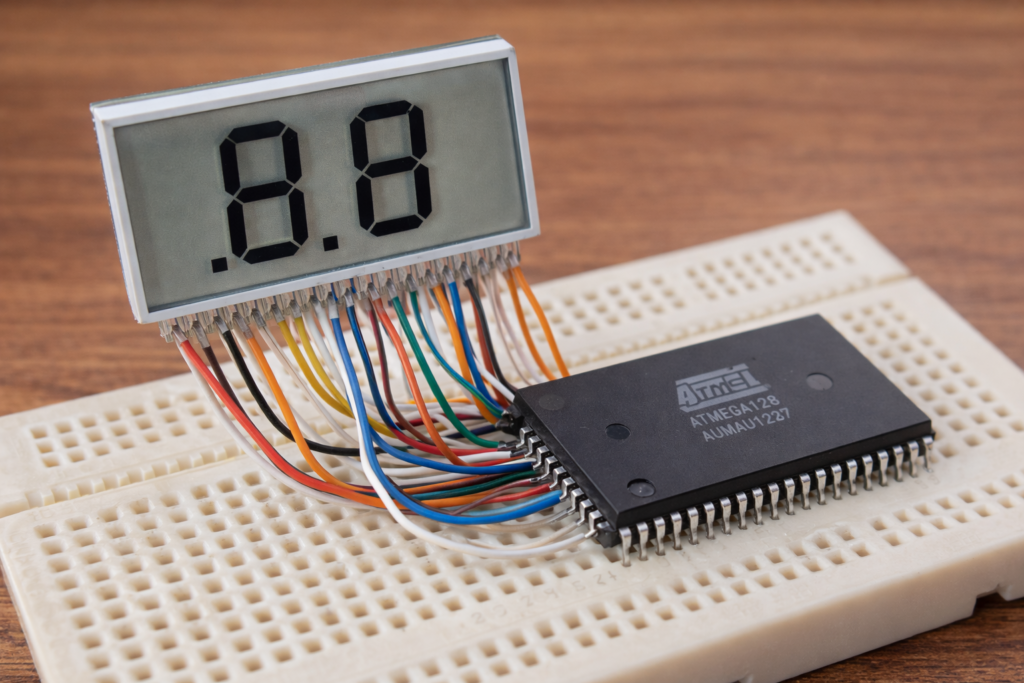
ATmega128 connected to LCD on breadboard

ATmega128 LCD Driver using ATmega128 with Proteus Simulation

Introduction This microcontroller project demonstrates how to directly drive a 2-digit 7-segment LCD using the powerful ATmega128 microcontroller without any dedicated LCD driver IC. Based on the well-known AVR241 application note, this project shows how general I/O pins can be used to control LCD segments efficiently. Using Proteus simulation, this setup helps visualize real-time LCD

ATmega128 LCD Driver using ATmega128 with Proteus Simulation Read More »

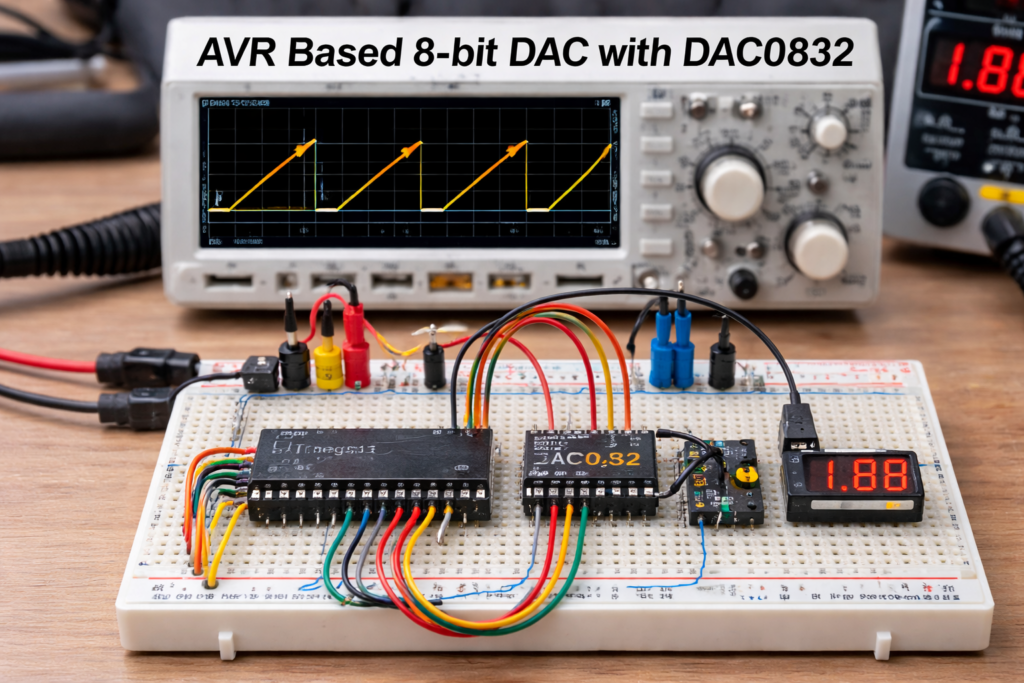
AVR DAC0832 breadboard generating analog waveform output

AVR Based 8-bit DAC using ATmega16 with Proteus Simulation

Introduction The AVR based 8-bit DAC project demonstrates how a digital signal generated by a microcontroller can be converted into an analog waveform using the DAC0832 IC. This is a classic microcontroller project widely used in embedded systems and DIY electronics learning. Using an ATmega16 and Proteus simulation, the project outputs a continuously changing analog

AVR Based 8-bit DAC using ATmega16 with Proteus Simulation Read More »
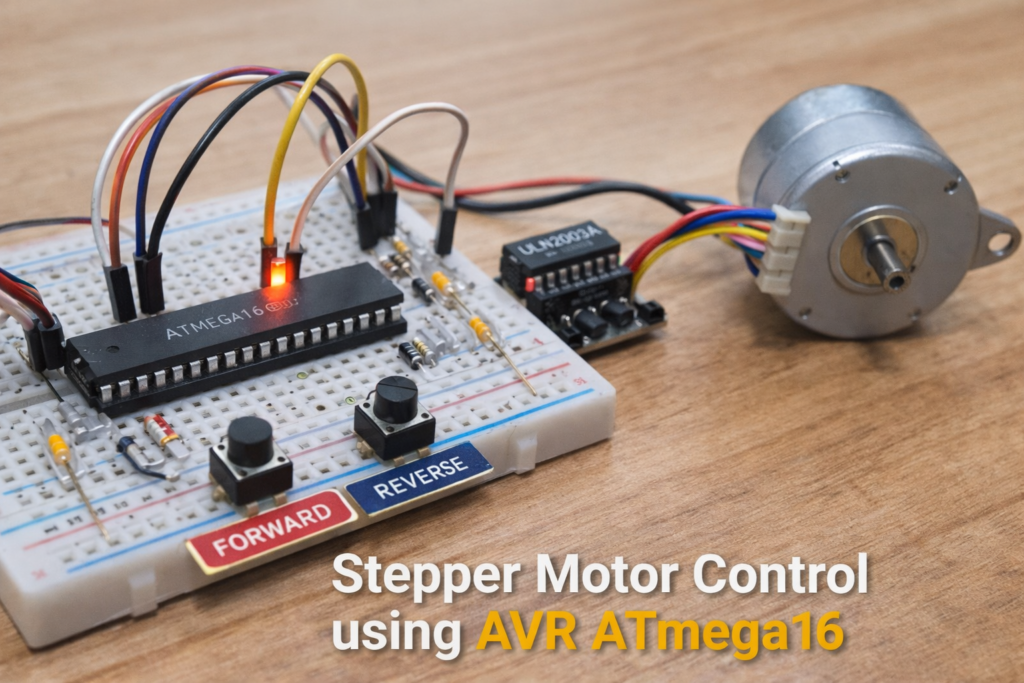
AVR ATmega16 Controlled Stepper Motor using Proteus Simulation

Introduction Stepper motors are widely used in embedded systems and automation projects where precise position control is required. This ATmega16 stepper motor control project demonstrates how an AVR ATmega16 controls a stepper motor using simple forward and reverse commands. The project is simulated using Proteus simulation software, allowing users to test the circuit and firmware

AVR ATmega16 Controlled Stepper Motor using Proteus Simulation Read More »

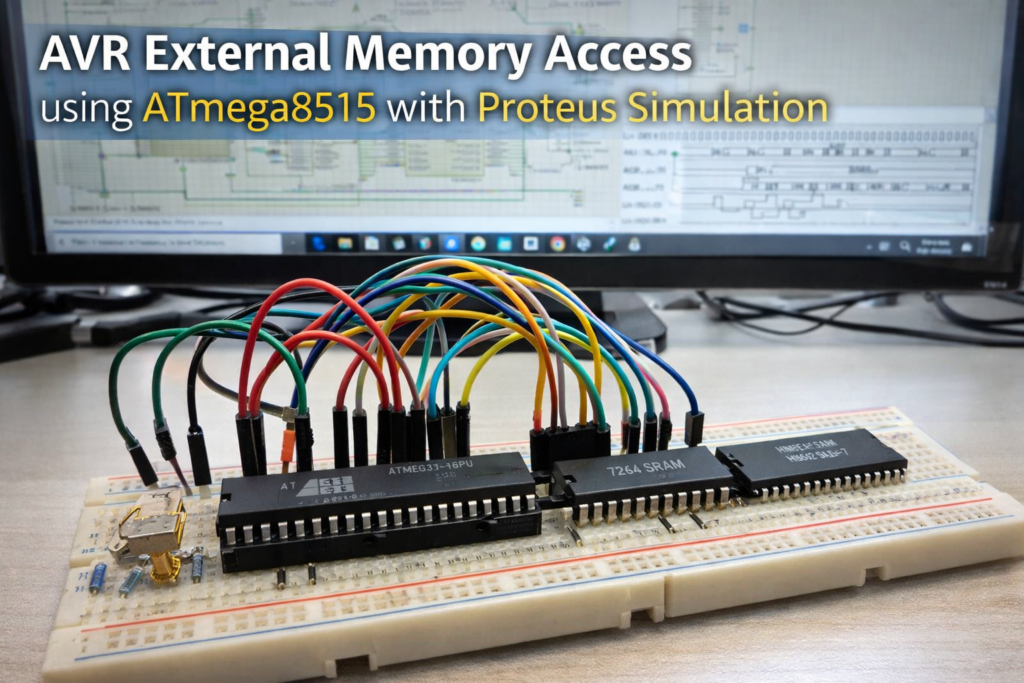
AVR memory access breadboard setup

AVR External Memory Access using ATmega8515 with Proteus Simulation

Introduction This microcontroller project demonstrates how an ATmega8515 communicates with external memory inside a Proteus simulation environment. The design focuses on memory access cycles, showing how the AVR handles external address and data lines when connected to SRAM. It is a useful example for anyone learning embedded systems, memory-mapped interfacing, and practical electronics. Instead of

AVR External Memory Access using ATmega8515 with Proteus Simulation Read More »
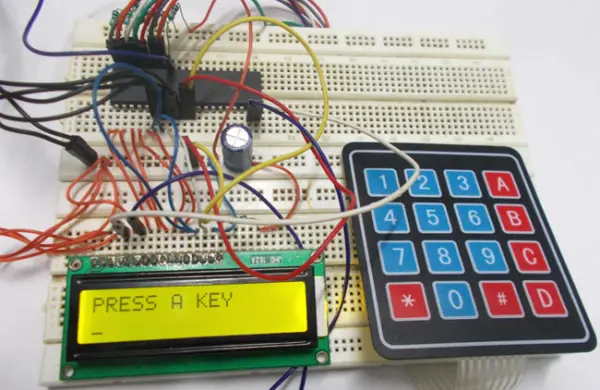
Keypad with ATmega32

Interfacing an ATmega32 Microcontroller with a 4×4 Keypad

Interfacing an ATmega32 microcontroller, this tutorial demonstrates the connection of a 4×4 (16-key) keypad with the ATmega32A microcontroller. Keyboards are recognized as essential input devices in electronic projects, providing a straightforward means to convey commands or directives to an electronic system. Necessary Components Hardware Components: ATmega32 microcontroller, 5V power supply, AVR-ISP programmer, JHD_162A LCD (16×2),

Interfacing an ATmega32 Microcontroller with a 4×4 Keypad Read More »

AVR Simulation with the ATMEL

AVR Simulation with the ATMEL

Introduction AVR Studio 4 is a user-friendly Integrated Development Environment (IDE) designed for debugging AVR software. It offers chip simulation and in-circuit emulation capabilities for the AVR microcontroller family. The user interface is intuitively designed to provide comprehensive information and is suitable for both simulation and emulation, enabling users to quickly grasp its functionalities. Getting

AVR Simulation with the ATMEL Read More »

Scroll to Top